





PCI DSS Certification in Manila
Manila runs on card payments more than ever. Hotel guests in Malate tap at the front desk, wholesale buyers in Binondo pay by card, and students in the University Belt settle tuition online. Every one of those transactions falls under the Payment Card Industry Data Security Standard. PCI DSS certification in Manila is how merchants, banks and service providers show their acquirer and their clients that card data is safe.
Univate Global is a compliance consultancy that gets Manila organizations ready for PCI DSS v4.0.1 validation. We find out where card data really lives, cut the cardholder data environment down to size, and help you fix what falls short. Then we prepare the evidence a Qualified Security Assessor or your Self-Assessment Questionnaire will demand.
No two payment setups in the capital look alike. A casino hotel in Entertainment City, a family trading house in Divisoria and a collections BPO in Ortigas each move card data in different ways. Our consultants start with your actual payment channels and build the compliance plan around them. The result is a program your finance and IT teams can sustain, not a binder that goes stale after the assessment.
Free ConsultationContact Us
Our Clients










PCI DSS Certification in Manila for Banks, Hospitality Groups and Traders
The standard covers every organization that stores, processes or transmits cardholder data. It also reaches any system that could affect the security of that data. Across the City of Manila and the wider metro, several kinds of businesses feel that pressure most.
Banks, e-money issuers and payment processors sit at the center. Manila is home to the Bangko Sentral ng Pilipinas head office in Malate. Much of the country’s financial sector operates nearby in Makati, Bonifacio Global City and Ortigas. Card issuers, acquirers and processors handle huge volumes of card data and usually face the deepest validation requirements.
Hotels, integrated resorts and travel businesses form the second group. Hotels in Ermita and Malate take cards at check-in, in restaurants and through online booking engines. The integrated resorts and casinos of Entertainment City in Pasay add gaming cages, retail outlets and loyalty programs. Airlines, travel agencies and ground handlers working around NAIA process card payments for bookings, upgrades and ancillary fees.
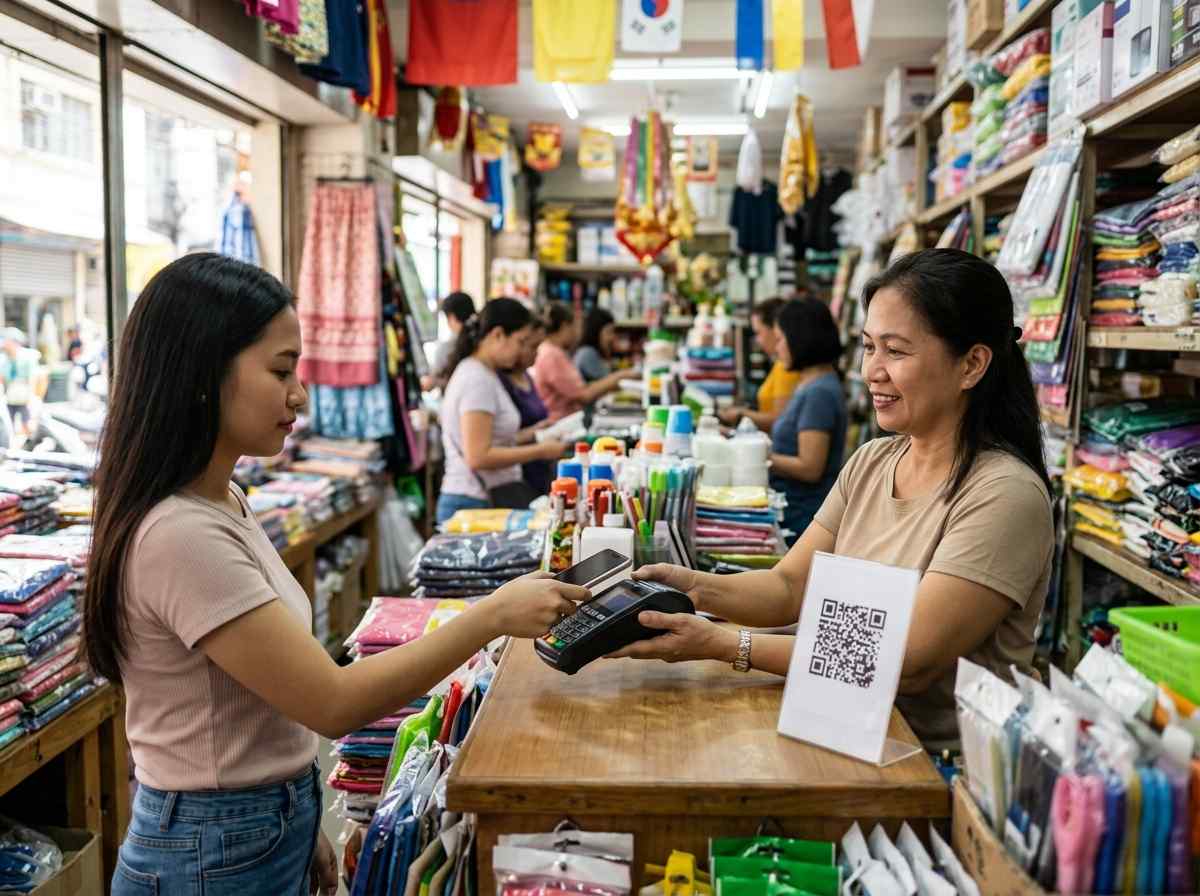
Trading, retail and e-commerce businesses complete the core picture. Wholesalers and retailers in Binondo and Divisoria are moving from cash toward card terminals and QR-linked card acceptance. Online sellers and marketplaces based in Manila run web checkouts that attackers target constantly.
Several other sectors also carry card obligations. BPOs handling collections and customer service for overseas brands often take card numbers by phone. Universities in Sampaloc, Intramuros and Santa Mesa accept tuition by card, and hospitals take card payments at billing counters. Each of these organizations must validate, even if its card volume is modest.
How PCI DSS Certification Works in Manila
PCI DSS is published by the PCI Security Standards Council, an industry body created by the major card brands. Version 4.0.1, released in June 2024, is the version in force today. The requirements that version 4.0 labeled as future-dated became mandatory on 31 March 2025. Every assessment now tests the complete requirement set.
There is a common misunderstanding worth clearing up early. Nobody receives a PCI DSS certificate in the way a company receives an ISO certificate. PCI DSS is a compliance validation, repeated every year. Most Manila businesses still search for “certification,” so we use that word, but the actual outputs are different documents.
Those documents depend on your level. The card brands assign merchant and service provider levels, mainly by transaction volume. Your acquiring bank then confirms how you must validate. Larger organizations need a Report on Compliance (ROC) written by a Qualified Security Assessor (QSA) after an on-site assessment. Smaller merchants usually complete a Self-Assessment Questionnaire (SAQ) suited to how they accept cards. Both routes end with an Attestation of Compliance (AOC), the summary your bank and clients ask to see.
Univate does not act as a QSA and does not sign any of these documents. We prepare your organization, guide the remediation and support your team during the assessment. That separation keeps the validation independent, which is exactly what your acquirer depends on.
Why Manila Businesses Invest in PCI DSS Certification
In Manila, the request usually arrives from a partner. An acquiring bank sets a validation deadline in its merchant agreement. A foreign retailer outsourcing its collections work asks for a current AOC before signing. An online travel platform will not connect to a hotel’s booking system until its payment pages are validated. For businesses in these positions, PCI DSS certification in Manila is a commercial requirement, not an optional extra.
The capital’s payment landscape also raises the stakes. High tourist traffic, busy shopping districts and fast-growing online sales all attract card fraud. A single compromise can lead to forensic investigations, card reissue costs, higher transaction fees and the loss of card acceptance. For a hotel during holiday season or a retailer before Christmas, that would hurt badly.
Continuity matters too. Monsoon flooding regularly disrupts parts of Manila, and payment systems still need to stay secure when staff work remotely or operations move to backup sites. A well-run PCI program makes sure security controls hold up under those conditions, not just on a normal working day.
Card Data, the Data Privacy Act and BSP Expectations
A cardholder’s name and card number count as personal information under the Data Privacy Act of 2012 (Republic Act 10173). The National Privacy Commission therefore expects reasonable organizational, physical and technical safeguards around them. Institutions supervised by the Bangko Sentral ng Pilipinas, from its head office in Malate, must also comply with BSP regulations on IT risk management. PCI DSS replaces neither of these. What it adds is a detailed, testable control set that produces evidence for much of the security work both regimes expect.
PCI DSS Requirements: What Your Organization Will Need
PCI DSS v4.0.1 contains 12 requirements organized under six goals. You must build and maintain secure networks and systems, protect account data and run a vulnerability management program. You must also enforce strong access control, monitor and test networks regularly, and maintain an information security policy. To get through PCI DSS certification in Manila, most organizations will need the following in place:
- A documented cardholder data environment (CDE) scope, with data flow diagrams for every payment channel
- An inventory of in-scope systems, card terminals and third-party service providers
- Network segmentation that isolates the CDE, where segmentation is used to reduce scope
- Secure configuration standards, patching routines and protection against malicious software
- Strong cryptography for stored card numbers and for card data sent over public networks
- Unique user IDs, multi-factor authentication and access limited by business need
- Centralized logging, regular log review and alerting for in-scope systems
- Quarterly external vulnerability scans by an Approved Scanning Vendor (ASV) and an annual penetration test
- Information security policies, security awareness training and an incident response plan
The weight of this list varies enormously. A Malate restaurant using standalone bank terminals may answer a short SAQ. A Makati payment processor storing card numbers in its own databases faces hundreds of sub-requirements. Accurate scoping is therefore the first piece of work, and often the most valuable.
Evidence must also cover the full year. Assessors look for four quarters of passing scans, records of access reviews and proof that logs were actually reviewed. We help your team build these routines into normal operations, so the next assessment draws on records that already exist.
Our Process for PCI DSS Certification in Manila
Every engagement follows six stages with clear outputs. Your finance, operations and technology leads see progress at each step and know what decisions are coming next.
Step 1 – Payment Channel Mapping and Scoping
We walk through each way your business accepts cards. That covers point-of-sale terminals, e-commerce checkouts, phone and mail orders, booking engines, recurring billing and any manual processes. We also look for card data in places it should not be, such as spreadsheets, email and call recordings. The output is a set of data flow diagrams, a scope statement and confirmation of your level with your acquiring bank.
Step 2 – Gap Assessment
Next, we test your current controls against each applicable v4.0.1 requirement. You receive a gap register ranked by risk and effort. Before recommending expensive fixes, we check whether scope reduction is cheaper. Options include network segmentation, tokenization, point-to-point encryption (P2PE) terminals and hosted payment pages.
Step 3 – Remediation Support and Policy Writing
Your teams close the gaps with our consultants beside them. Typical tasks include tightening firewall rules, enforcing multi-factor authentication and setting up central logging. Others include hardening servers, protecting web payment pages and completing the targeted risk analyses v4.0.1 introduced. We write policies and procedures that reflect how your people actually work, so they hold up in staff interviews.
Step 4 – Mock Assessment, Scans and Testing
We run a mock assessment that follows the testing approach a QSA will use. You engage an Approved Scanning Vendor for quarterly external scans and commission the annual penetration test. Segmentation testing is added where segmentation keeps systems out of scope. We help you prioritize findings and confirm that rescans come back clean.
Step 5 – Formal Validation
If you need a ROC, a QSA company performs the assessment and issues the ROC and AOC. We support your team through evidence requests, interviews and any remediation the QSA identifies. If you validate by SAQ, we help you select the correct questionnaire, answer it accurately and prepare the AOC for your acquirer.
Step 6 – Ongoing Compliance and Annual Revalidation
Compliance has to be renewed every year, with passing quarterly scans in between. We can help you set up a compliance calendar and review changes that could affect scope. We can also run periodic control checks and prepare you for the next validation cycle. That keeps your controls working all year rather than only in assessment season.
Typical PCI DSS Timeline for Manila Organizations
The durations below are indicative for a merchant or service provider with one main site and a moderate CDE. Multiple branches, custom payment applications or major network changes will extend them.
| Phase | Key activities | Indicative duration | Main output |
|---|---|---|---|
| Scoping | Map payment channels, find stray card data, confirm level with the acquirer | 1–3 weeks | Data flow diagrams and scope statement |
| Gap assessment | Test controls against applicable v4.0.1 requirements, review scope reduction options | 2–3 weeks | Risk-ranked gap register |
| Remediation | Segmentation, hardening, MFA, logging, policies, staff training | 6–16 weeks | Remediated controls and policy set |
| Mock assessment | QSA-style testing, ASV scans, penetration and segmentation tests | 2–4 weeks | Readiness report and passing scans |
| Validation | QSA assessment with ROC, or completed SAQ | 2–6 weeks, including scheduling | ROC or SAQ with signed AOC |
Many Manila merchants on an SAQ route are ready in two to four months. Service providers, banks and Level 1 merchants facing a full QSA assessment typically need four to nine months. Remediation workload and the evidence history assessors expect account for most of the difference.
PCI DSS Certification in Manila: Cost and Timeline
A credible quote depends on understanding how cards move through your organization. A single-branch pharmacy and a payment processor serving several banks are not comparable projects. These four factors drive most of the cost of PCI DSS certification in Manila.
Number of Payment Channels and Locations
Each channel adds scope, whether it is a terminal at a branch, a web checkout or a phone payment line. A retail chain with stores across Manila, Pasay and Pasig has more ground to cover than a single shop in Binondo.
Your Validation Route
Organizations validating by SAQ need less assessor involvement than those needing a ROC. Service providers usually face more requirements than merchants of similar size, because they protect card data on behalf of others.
Network Design and Legacy Systems
A flat network can drag every workstation into scope. Older point-of-sale software, shared administrator accounts and missing logs all add remediation work. Segmentation and tokenization usually cost less over time than securing everything to the full standard.
Consulting, QSA, ASV and Testing Fees
Your budget has several separate parts. Our consulting fee covers scoping, gap assessment and remediation guidance. A QSA’s fee covers the assessment and ROC if you need one. ASV fees cover quarterly scans, and penetration testing is normally a separate engagement.
The PCI Security Standards Council qualifies and lists QSA companies and Approved Scanning Vendors. Your bank and the card brands accept results only from listed assessors and vendors in good standing. Check those listings before signing a contract. After we understand your scope, we provide an itemized quote for our part of the work.
On timing, remediation is usually the deciding factor. Moving to hosted payment pages or P2PE terminals can shorten projects considerably. Organizations with operations in the Visayas can coordinate both sites in one program, as described on our PCI DSS certification in Cebu page.
Benefits of PCI DSS Certification for Manila Businesses
Organizations that approach PCI DSS certification in Manila as a security program, not a form-filling exercise, gain far more than a clean AOC. These are the benefits our clients typically aim for.
Secure Relationships With Acquiring Banks
Validated compliance keeps your merchant agreement in good standing. It also gives you a stronger position when negotiating terms or adding new payment channels with your acquirer.
Faster Approval From Partners and Clients
Overseas brands outsourcing collections to Metro Manila want proof before any card data moves. Travel platforms, marketplaces and payment partners ask for the same before integration. A current AOC answers those questions quickly.
Fewer Opportunities for Fraud
PCI DSS targets common attack paths, including skimmed terminals, malicious scripts on checkout pages, weak passwords and unpatched servers. Closing them reduces the likelihood of a breach and the disruption that follows.
Less Card Data to Worry About
Scoping often uncovers card numbers kept in old reservation logs, shared drives or email threads. Removing that data lowers your risk, simplifies future assessments and supports your Data Privacy Act obligations.
Groundwork for ISO and Privacy Programs
Many PCI DSS controls carry straight into ISO 27001 and privacy management. Once your PCI program runs smoothly, extending it to ISO 27001 certification in Manila or ISO 27701 privacy management needs less effort.

Why Manila Companies Choose Univate for PCI DSS
Univate has consulted more than 300 enterprises on cybersecurity and compliance and delivered over 1,000 audit man-days in critical infrastructure and regulated industries. We have also led more than 500 executive sessions on cybersecurity, AI governance and data privacy. Our consultants include CISA-certified professionals and specialists with decades of experience in security, risk and governance. Our Philippine office sits in Makati, a short drive from most Manila clients, which keeps PCI DSS certification in Manila practical to support in person.
We are clear about our role from day one. Univate is a consultant, not a QSA, and we never sign your ROC or AOC. That independence lets us focus on the smallest sensible scope and the most practical fixes. We work closely with your chosen QSA and ASV, so their requests land with a team that is ready.
Manila organizations rarely need PCI DSS alone. Banks, BPOs and SaaS providers often also need SOC 2 reports for US clients or CSA STAR for cloud services. We design your PCI controls so the same evidence supports those programs.
PCI DSS Certification Services Across Manila
We deliver PCI DSS certification in Manila through a hybrid model. Workshops, document reviews and progress meetings mostly run remotely. On-site visits cover card data discovery, terminal and server room checks, and the mock assessment.
Within the City of Manila, we work with hotels, hospitals and financial institutions in Ermita and Malate. We support trading houses, wholesalers and retailers in Binondo and Divisoria, and logistics and port-linked businesses in the Port Area and Tondo. We also work with universities and their service providers in Sampaloc, Intramuros and Santa Mesa, as well as businesses in Paco and Pandacan.
Beyond the city limits, we support banks and fintech firms in Makati and Bonifacio Global City, and BPOs in Ortigas Center. We also work with integrated resorts, airlines and travel firms in Pasay and Entertainment City, and with retailers and hospitals in Alabang. Wherever your Metro Manila team is based, the method and the standard of preparation stay the same.
Planning PCI DSS certification in Manila?
Tell us about your scope, your sites and your timeline, and we will come back with a clear plan.
Client Testimonials
It was really a great partnership with their team.
Sultan
I had the pleasure and opportunity of working with Univate Solutions on a couple of High Maturity (ML5) CMMI appraisals and found them to be one of the best.
Amulya P
Team Univate holds many professional approaches.
Ashish Sherlekar
PCI DSS Certification in Manila: Frequently Asked Questions
What is the usual timeframe for PCI DSS certification in Manila?
Merchants that validate by SAQ often finish in two to four months. Banks, service providers and Level 1 merchants needing a QSA assessment generally take four to nine months. Scope size and remediation effort set the pace.
Will we receive a PCI DSS certificate at the end?
Not in the ISO sense. You receive a validated compliance status, documented in a ROC or SAQ and summarized in an AOC. Your acquiring bank and clients accept the AOC as proof of compliance.
Our Binondo store only uses a bank-supplied card terminal. What do we need to do?
Your obligations are usually light, but they still exist. Most merchants in this position complete a short SAQ, protect the terminal from tampering and train staff. Your acquiring bank will confirm which questionnaire applies.
Does a BSP-supervised bank still need PCI DSS?
Yes, where it issues, acquires or processes card payments. BSP IT risk management regulations and PCI DSS are separate obligations. A single, well-designed control framework can produce evidence for both.
Can our Ermita hotel keep guest card numbers to guarantee reservations?
Stored card numbers must be strongly protected under Requirement 3, which adds cost and scope. Many hotels avoid storing them by using tokenization through their booking engine or payment provider. We help you choose the approach that fits your systems.
Can Univate perform our QSA assessment?
No. Univate is not a QSA, so we do not issue a ROC or sign an AOC. We prepare your organization and support you while a QSA assesses you, or while you complete your SAQ.
How often are ASV scans and penetration tests required?
External ASV scans are needed every quarter, and failing results must be fixed and rescanned. Penetration testing is required at least annually, with segmentation testing where segmentation reduces scope.
Can a Sampaloc university reduce its PCI scope for online tuition payments?
Yes. Redirecting students to a hosted payment page run by a validated provider keeps card data off university servers. The university still validates, but usually through a much shorter SAQ.
Do PCI DSS and ISO 27001 overlap?
Considerably. Both cover access control, logging, vulnerability management, incident response and policy. Organizations that build PCI controls carefully can reuse much of the work for ISO 27001 certification later.
Start Your PCI DSS Certification Project in Manila
Maybe your acquirer has set a deadline, or a client wants your AOC before renewal. Either way, the first step is a short discussion about how you accept cards today. Our consultants will review your payment channels, outline the likely scope and validation route, and send an itemized proposal for PCI DSS certification in Manila.
Book a Free Consultation Call +63 963 451 6528Prefer to talk first? Call our Philippines team on +63 963 451 6528, or send us your requirements through the contact form.
Email: info@univateglobal.com