





NIST Cybersecurity Framework Implementation in India
Overview of NIST CSF 2.0
NIST CSF 2.0 is a framework for cybersecurity that was made to help businesses handle risks and lower them. It gives a clear plan for keeping tools, data, and operations safe.
We use this framework to understand our current security level and improve it step by step. Any size of business can use it because it’s adaptable.
The 2.0 version expands its focus. It includes governance and stronger alignment with business goals.
In simple terms, NIST CSF helps us build a strong and practical cybersecurity program.
Understanding the 6 Core Functions of NIST CSF 2.0
The NIST CSF 2.0 is based on six main tasks. Each function plays a key role in managing security.
- Govern: We define policies, roles, and responsibilities. This ensures that security is managed at the top level.
- Identify: We understand our assets, systems, and risks. This helps us know what needs protection.
- Protect: We apply safeguards to secure systems and data. Controlling access and encrypting data are part of this.
- Detect: To find risks early, we keep an eye on systems. Quick identification helps keep damage to a minimum.
- Respond: When an event happens, we do something about it. Response plans help us manage situations effectively.
- Recover:We restore systems and services after an incident. Recovery ensures business continuity.
Together, these functions create a complete cybersecurity cycle.
Importance of NIST CSF Alignment in India
- Cyber threats are increasing across industries in India.
- Organizations must protect data and systems from attacks.
- NIST CSF helps us manage these risks in a structured way.
- It also aligns security with business goals.
- Many global clients prefer vendors who follow recognized frameworks.
- Adopting NIST CSF improves trust and credibility.
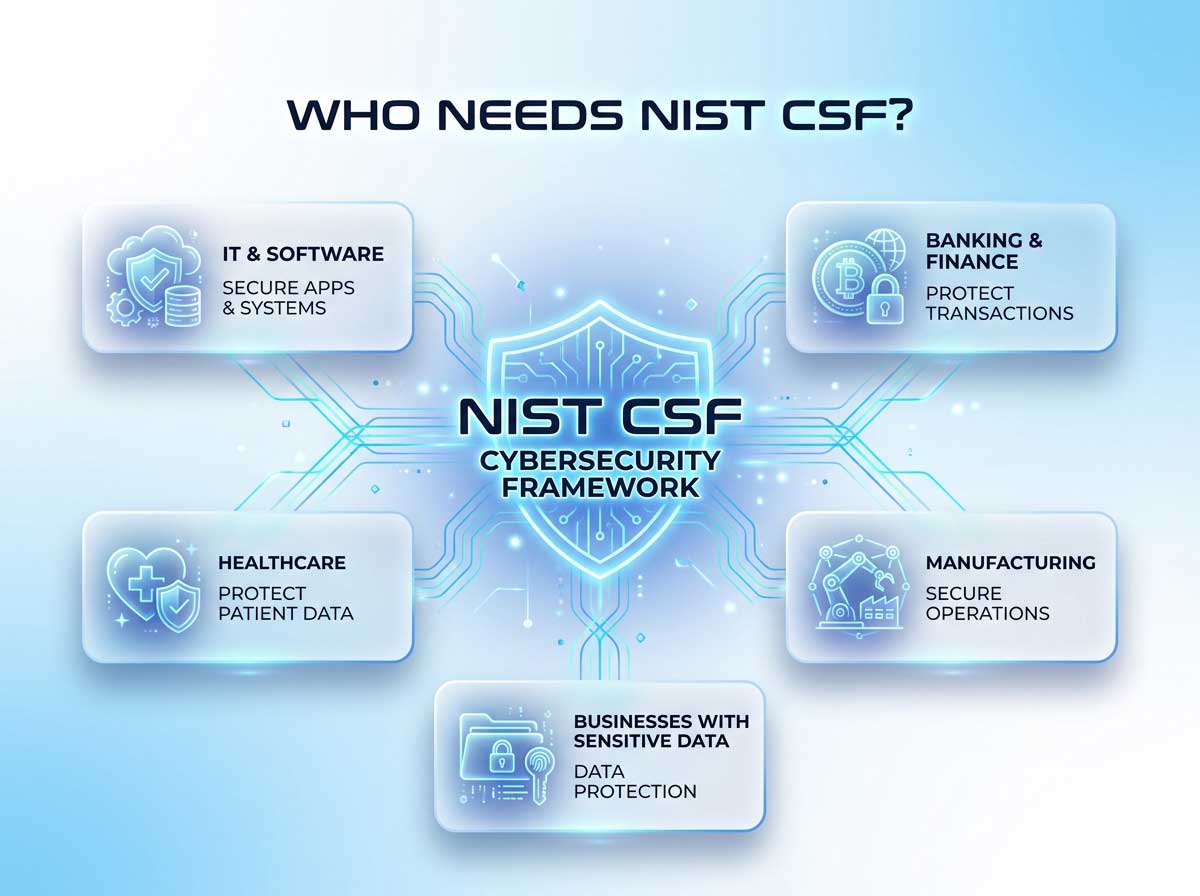
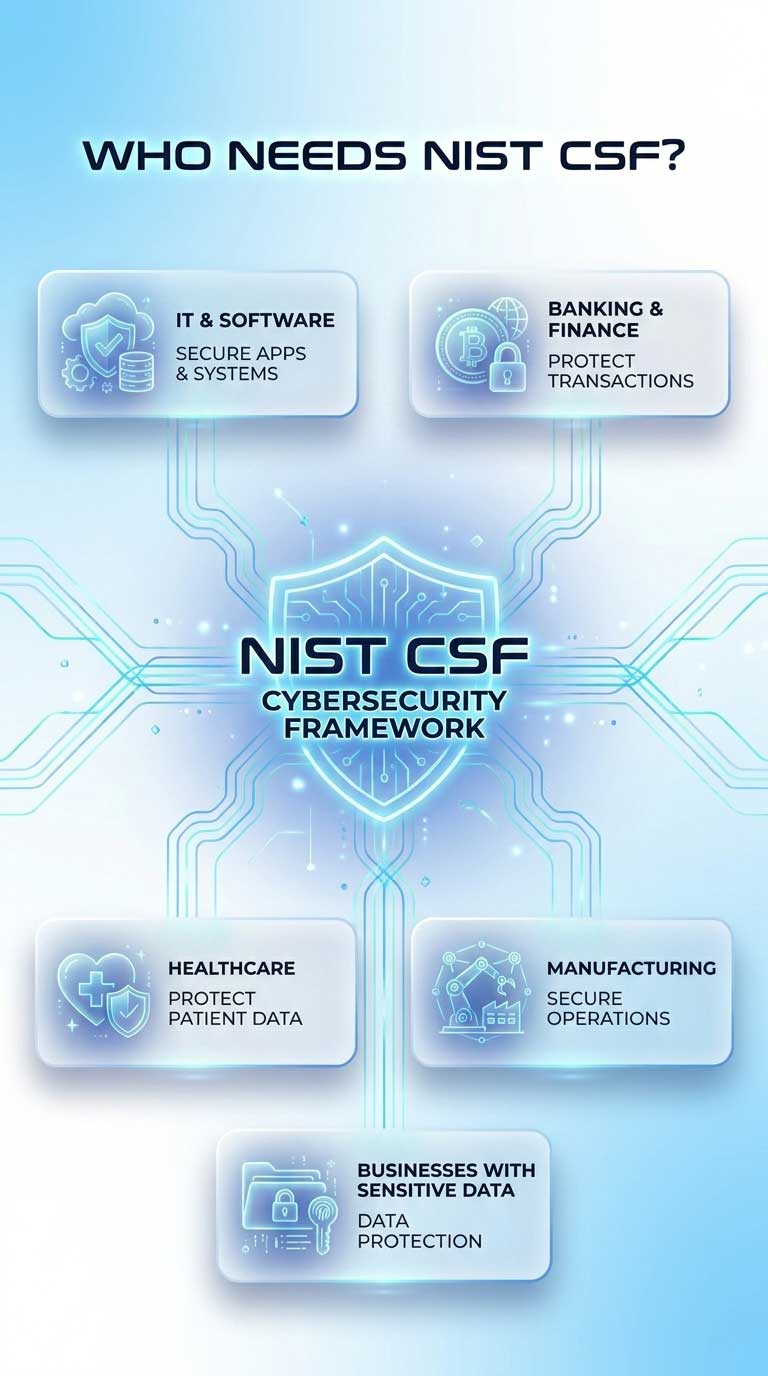
Who Needs to Adopt NIST CSF?
- A lot of different groups can use NIST CSF.
- Software and IT companies use it to keep systems and apps safe.
- To keep transactions safe, banks and other financial companies use it.
- It’s used to keep customer information safe by healthcare providers.
- It is used to protect operating systems by manufacturing companies.
- NIST CSF is useful for any business that deals with private data.
Benefits of Implementing NIST CSF
- NIST CSF offers many advantages.
- It helps us handle online risks better.
- We gain better visibility into our systems.
- Security processes become more organized.
- It helps us respond quickly to incidents.
- Customer trust increases with strong security practices.
Overall, it strengthens our cybersecurity posture.
NIST CSF Implementation Requirements Explained
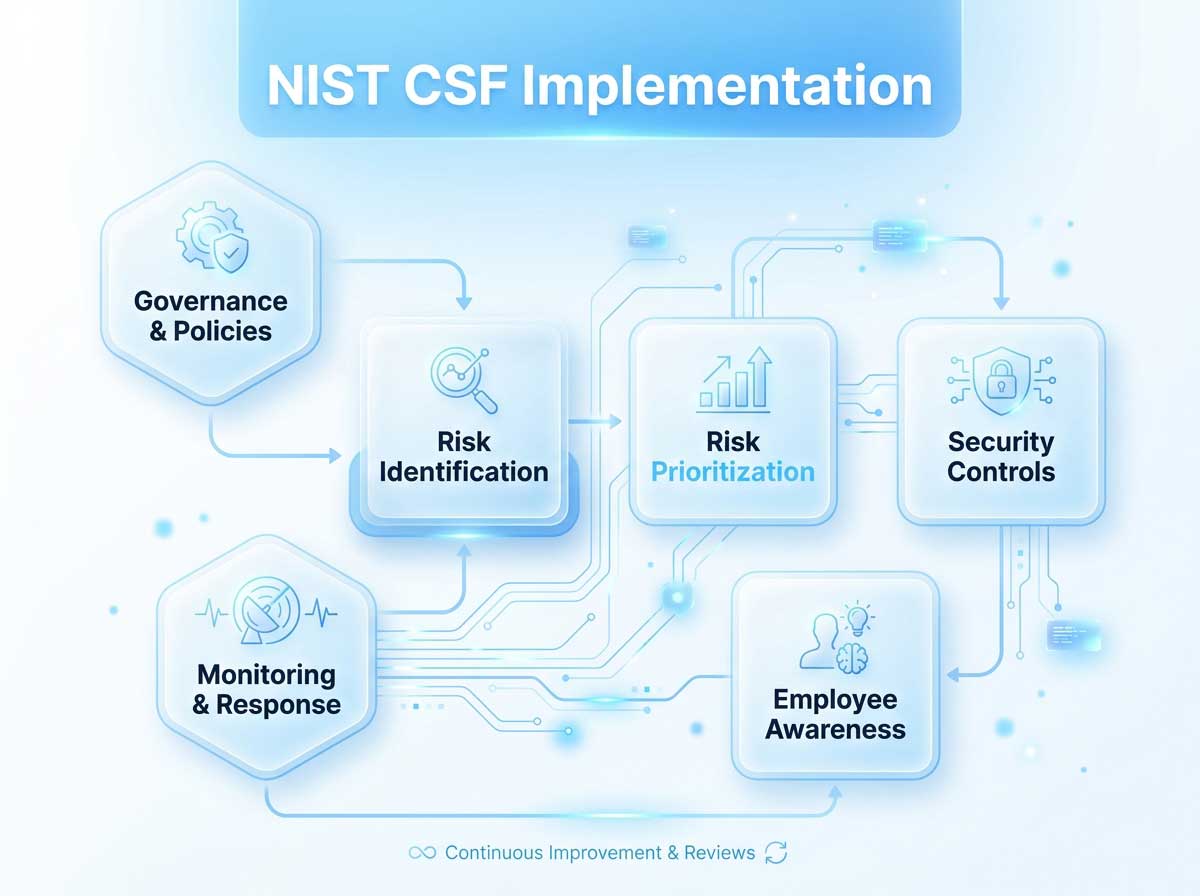
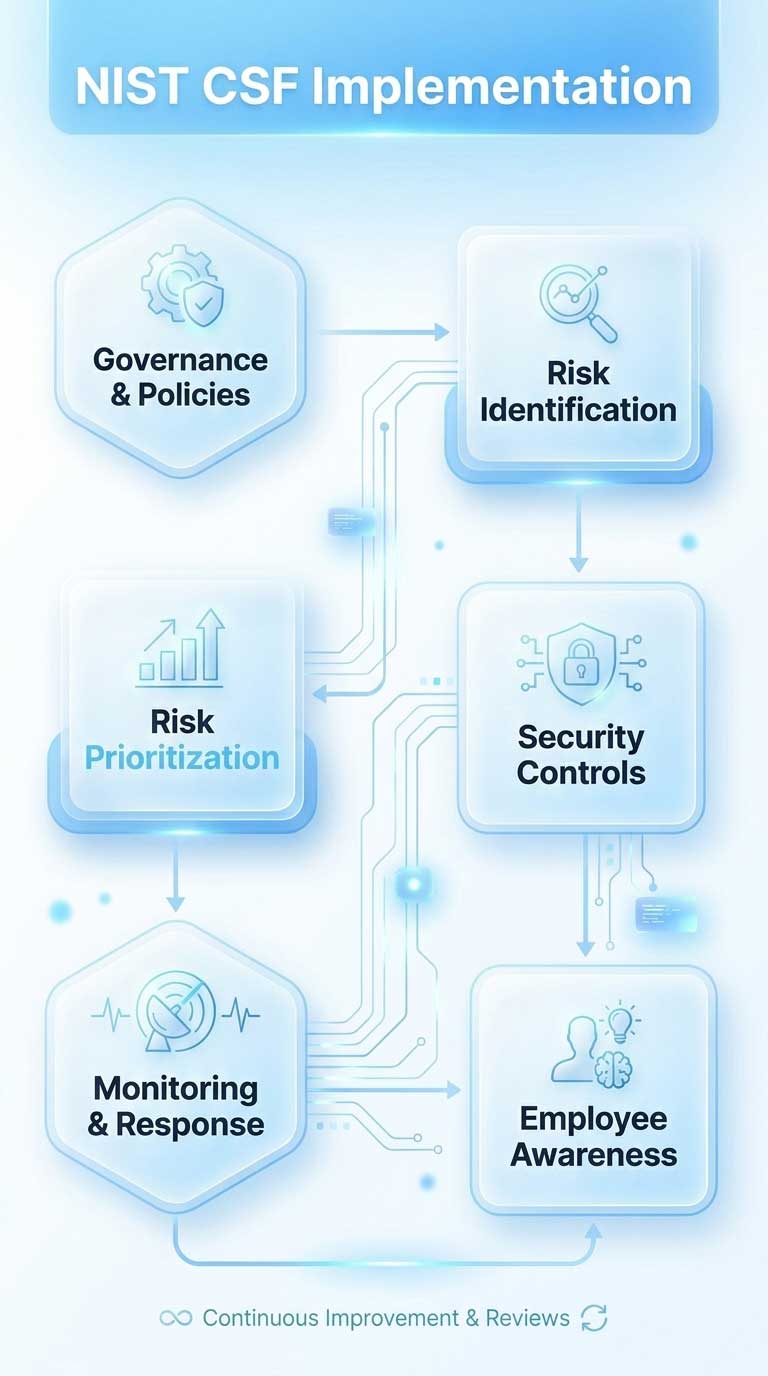
- To implement NIST CSF, we need a clear approach.
- We define governance structures and policies.
- We identify risks and prioritize them.
- Security controls must be applied based on risk levels.
- Monitoring and incident response systems should be in place.
- Employee awareness is also important.
- Regular reviews ensure continuous improvement.
Documents Required for NIST CSF Alignment
- Documentation supports the entire implementation.
- We need cybersecurity policies and procedures.
- Risk assessment and treatment plans must be prepared.
- Asset inventories help track systems and data.
- Incident response and recovery plans are required.
- Monitoring logs and audit records help with compliance.
- These papers help keep things consistent and clear.
NIST CSF Implementation Process in India
- The process begins with an assessment.
- We evaluate current practices and identify gaps.
- Next, we design a roadmap for improvement.
- We implement controls and update systems.
- Training ensures that teams follow new practices.
- Monitoring and reviews done on a regular basis help keep things working well.
- This organized method makes sure that execution goes smoothly.
Timeframe for NIST CSF Implementation
- The time required depends on the organization.
- Small companies may complete it in a few months.
- Larger organizations may take longer due to complexity.
- Preparation, implementation, and monitoring affect the timeline.
- Proper planning helps achieve faster results.
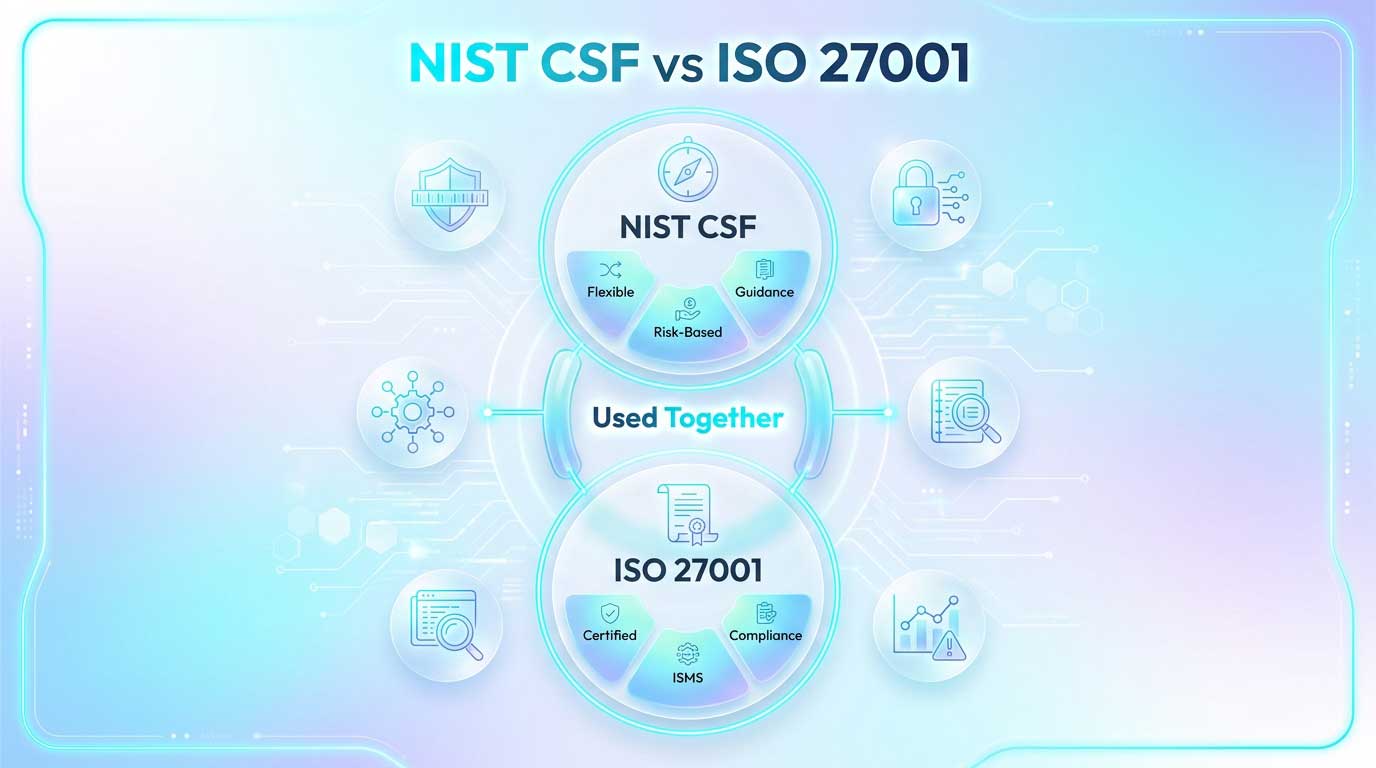
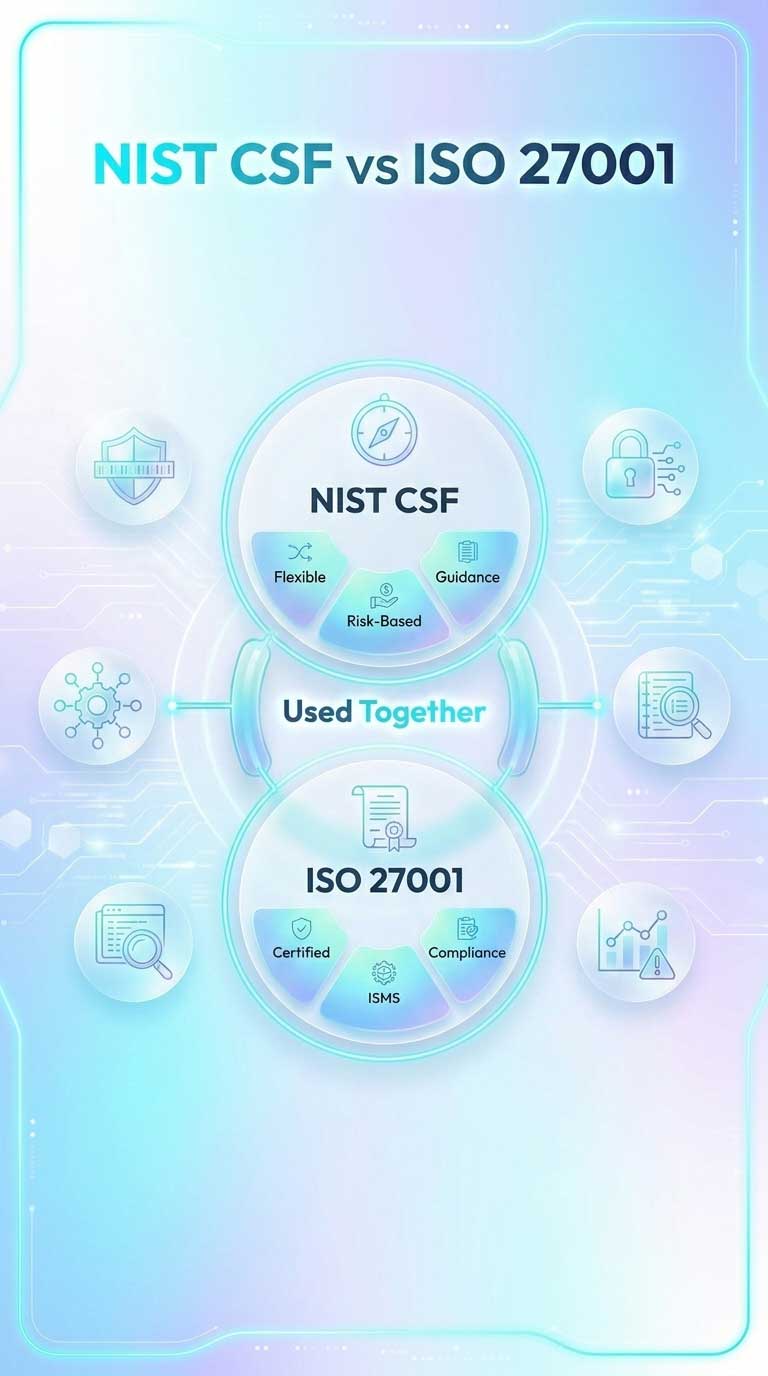
How NIST CSF Differs from ISO 27001?
- NIST CSF is a flexible framework.
- The ISO 27001 standard is for getting certified.
- NIST CSF is all about giving advice and managing risks.
- ISO 27001 focuses on building a formal management system.
- Both can be used together for stronger security.
Why Choose Univate for NIST CSF Consulting
- Univate.in provides expert support for NIST CSF implementation.
- We are led through the process step by step.
- Our team focuses on ideas that can be used in real life.
- We help reduce time and simplify implementation.
- With the right partner, we can achieve strong cybersecurity practices.
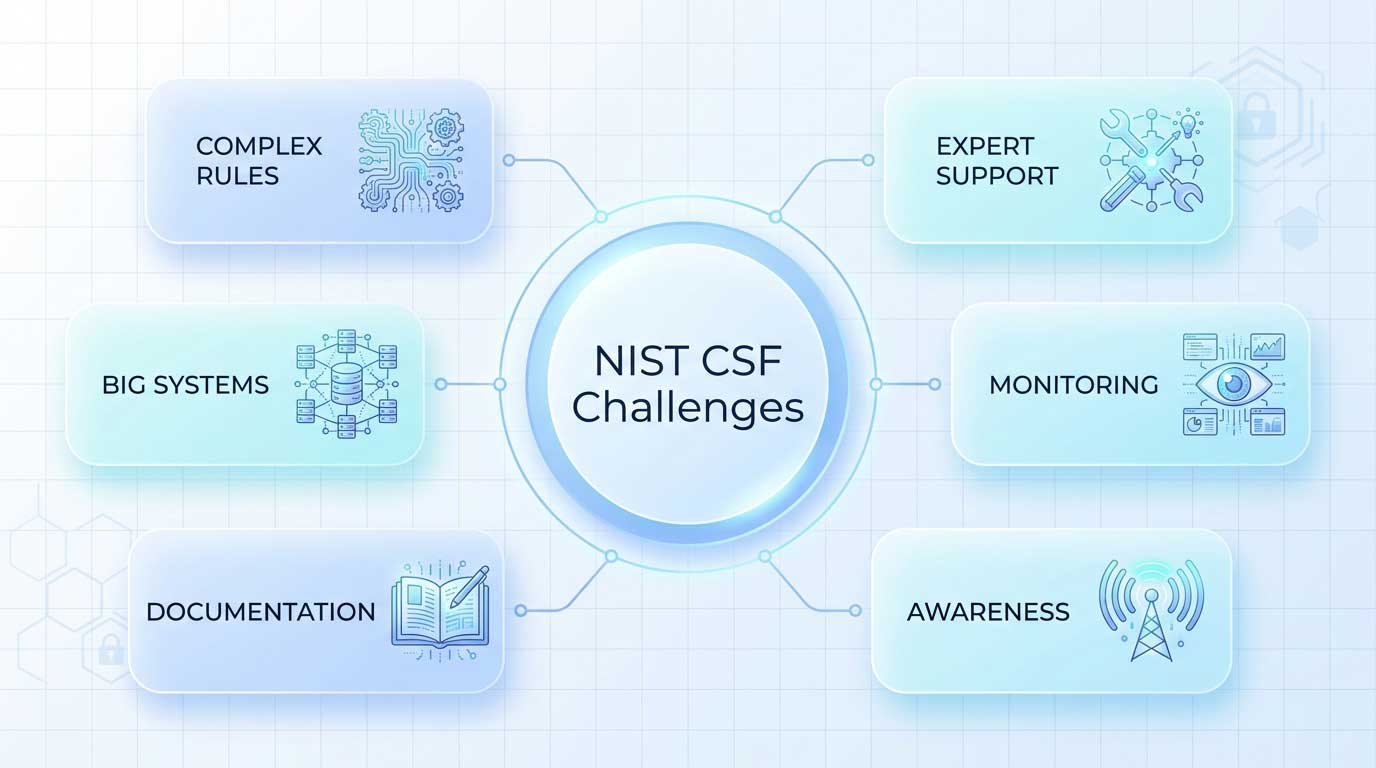
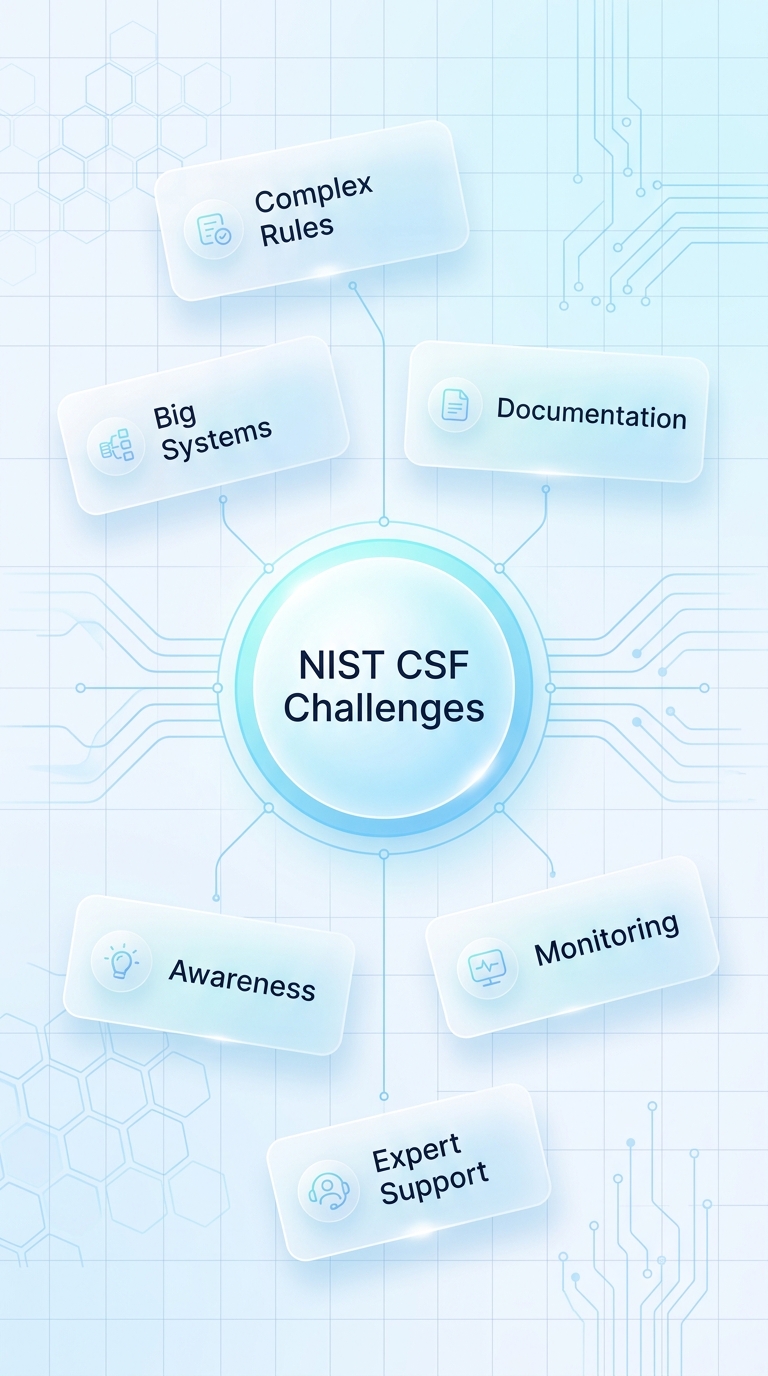
Common Challenges in NIST CSF Implementation
- Organizations often face challenges during implementation.
- Understanding framework requirements can be complex.
- Managing large systems and data can be difficult.
- Maintaining proper documentation requires effort.
- Employee awareness may be limited initially.
- Ensuring continuous monitoring is also a challenge.
We can get past these problems and achieve with the right planning and help from experts.
FAQs
NIST Cybersecurity Framework Implementation in India
No, you don’t get certified for NIST CSF. It’s simply a guide that helps organizations improve their cybersecurity practices step by step.
NIST CSF 2.0 is the advanced version with an extended scope. This version provides more information on governance and is applicable to other kinds of organizations apart from the critical infrastructure ones.
No, there is no compulsion from the Indian government to apply NIST CSF. However, companies in India apply NIST CSF in order to improve their cybersecurity.
Yes, NIST CSF is adaptable for any business regardless of its size. Both startups and SMEs can modify it according to their requirements.
The timeframe will depend on your level of maturity and deficiencies in the area. Therefore, it will take several weeks or even months to implement NIST CSF.
No, NIST CSF is not an absolute framework to be followed by all organizations. It allows organizations to pick the controls they need according to their risk tolerance and other factors.
As a matter of fact, NIST CSF will definitely increase your levels of data protection and risk management. This way, you may meet certain requirements of laws, including the Digital Personal Data Protection Act, 2023.
There is plenty of documentation that can be reviewed remotely. Such an assessment can include your organization’s policies, controls, and even evidence.
PoAM stands for the simplest way to address the vulnerabilities. It will allow you to monitor things that need improvement, responsible persons, and timeframes.
In most cases, Univate.in will help you implement NIST standards without any additional software solutions. However, they can advise which software would work best according to your situation.