





ISO 22000 Certification in India
What is ISO 22000 Certification
- The ISO 22000 standard is used all over the world to handle food safety. It helps us control risks across the food chain.
- We use ISO 22000 to plan, manage, and improve food safety processes. It combines management systems with hazard control methods.
- This measure is used from the farm to the table. It includes making, storing, moving, and distributing.
- In simple terms, ISO 22000 helps us deliver safe food in a consistent way.
Importance of ISO 22000 in India
- Food demand in India is growing quickly. With this growth, safety becomes more important.
- ISO 22000 helps us build strong systems for hygiene and quality. It makes it less likely that food will get germs or other problems.
- It also helps people follow rules set by the government and other countries.
- Certification improves trust with customers, partners, and authorities.
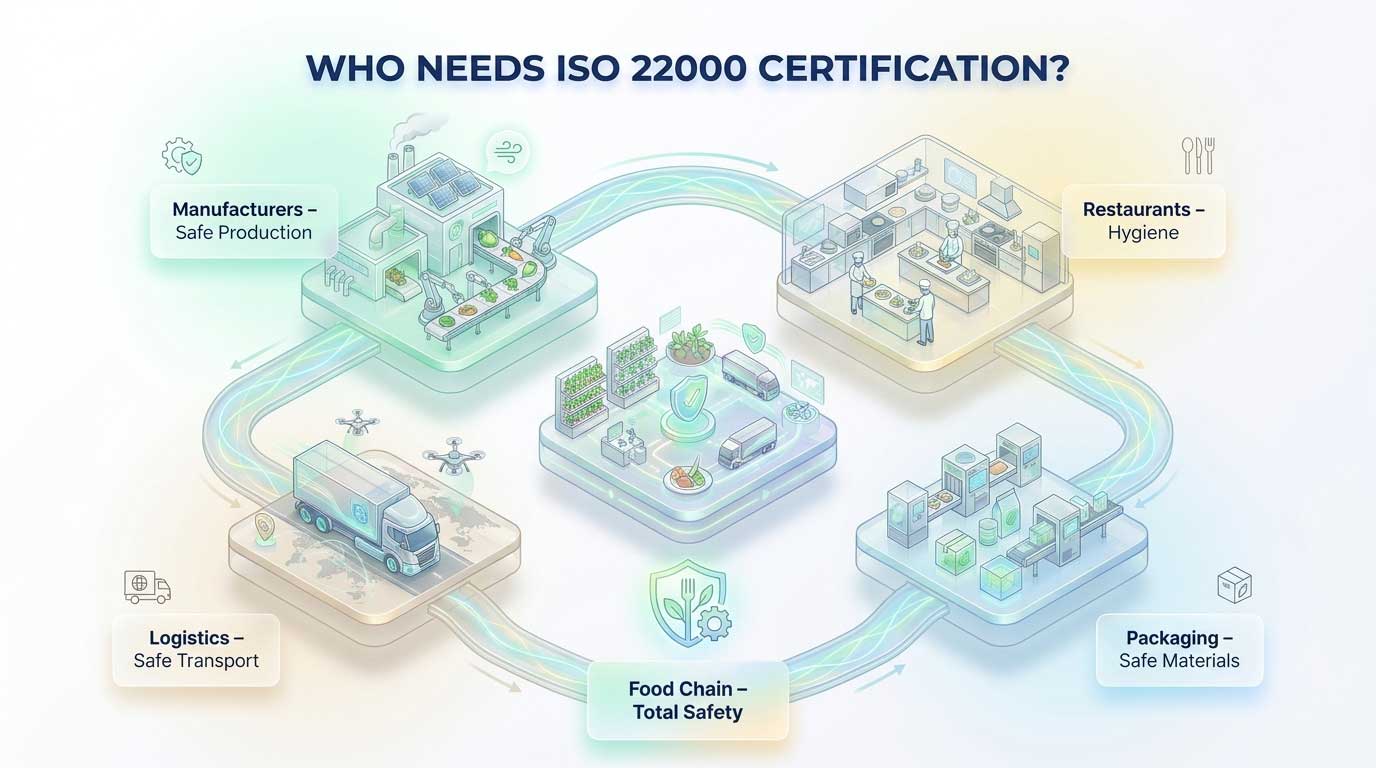
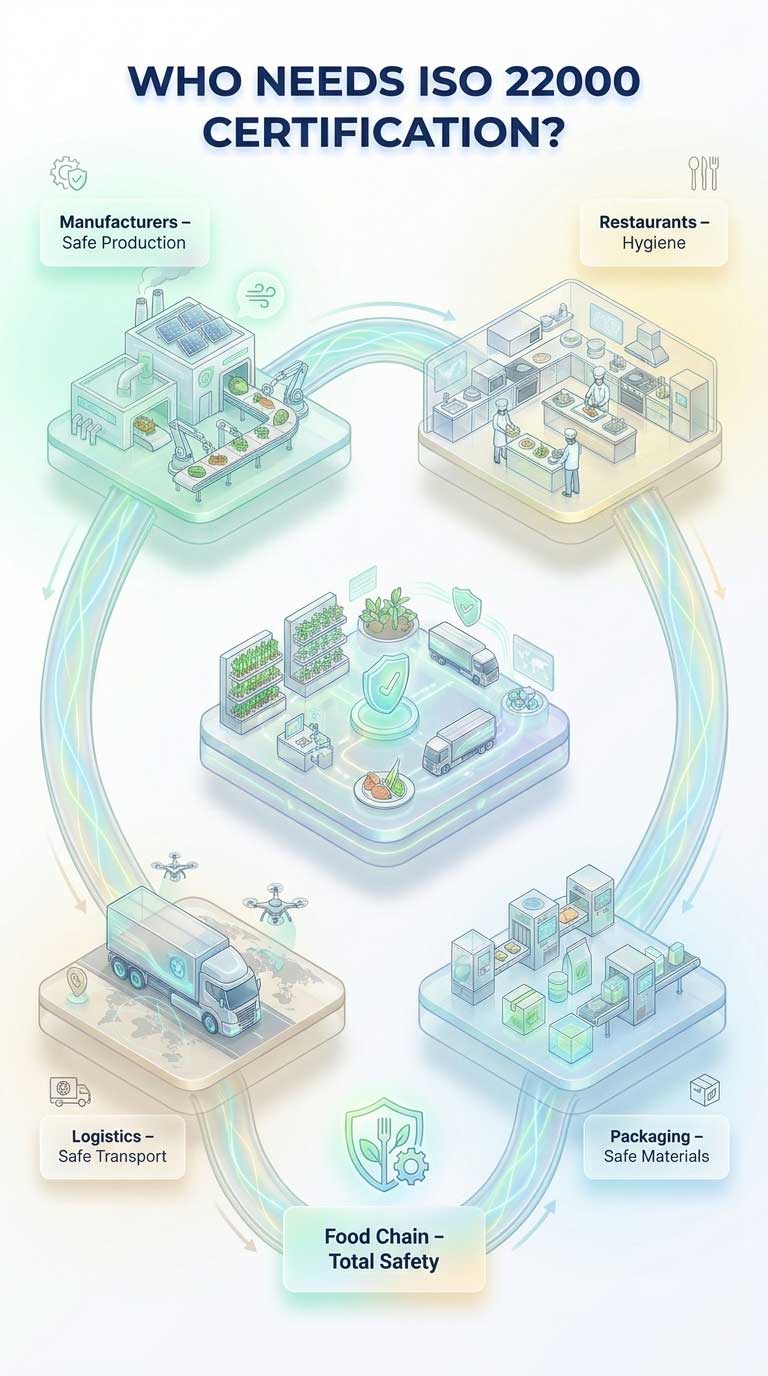
Who Needs ISO 22000 Certification?
- ISO 22000 is useful for all food-related businesses.
- Food manufacturers use it to ensure safe production.
- Restaurants and cloud kitchens use it to maintain hygiene.
- Food packaging companies ensure safe materials and handling.
- Logistics providers use it to maintain proper storage and transport.
- ISO 22000 can help every business in the food chain.
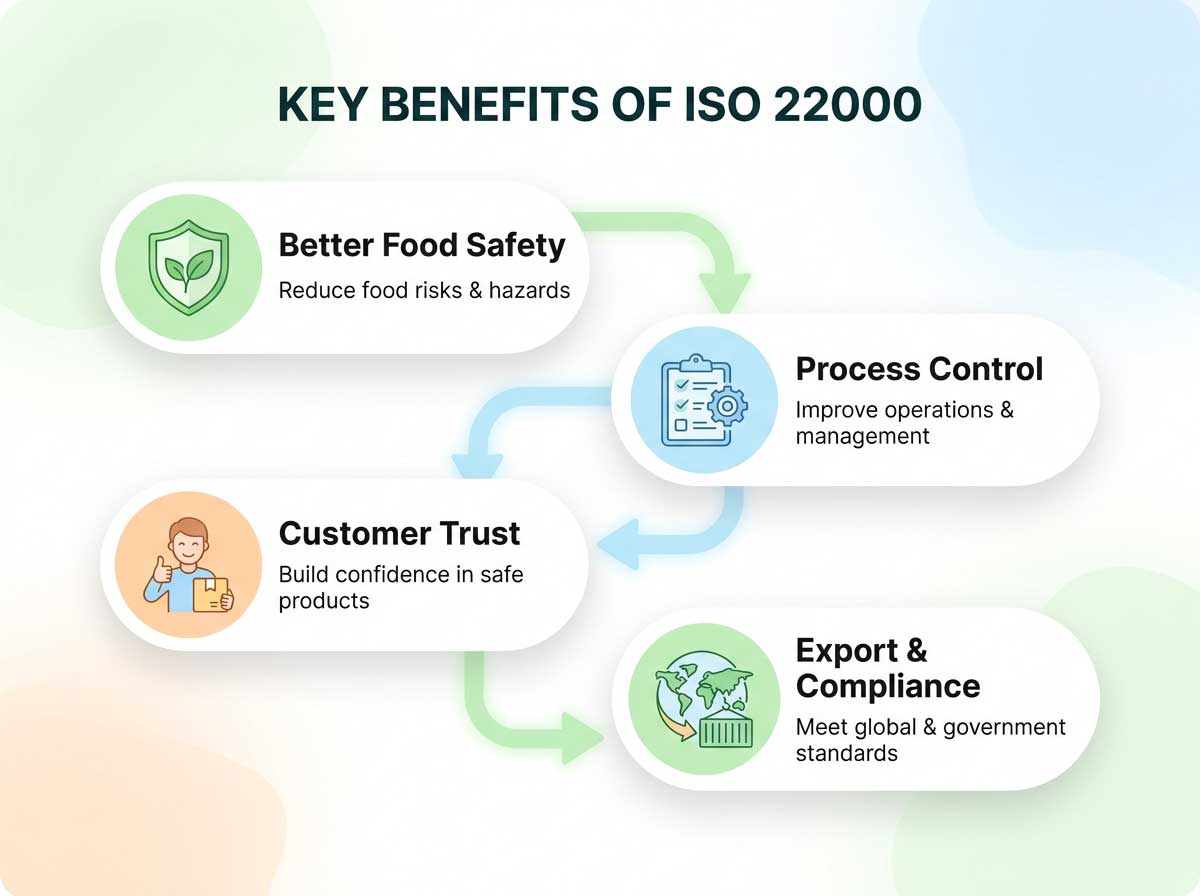
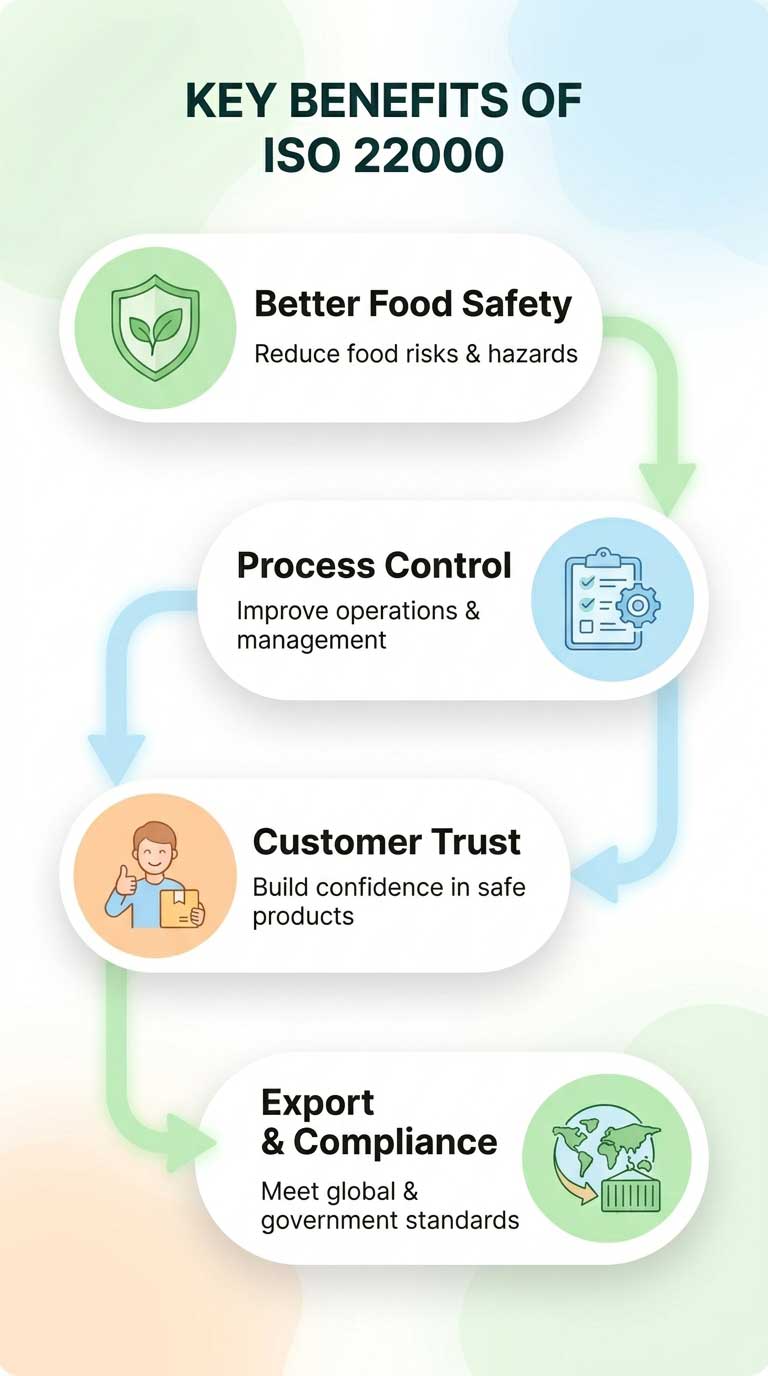
Key Benefits of ISO 22000 Certification
ISO 22000 provides many advantages.
- It improves food safety and reduces risks.
- We gain better control over processes and operations.
- When goods are safe, customers have more faith in them.
- It also helps meet the needs of exports and government rules.
Overall, it strengthens our food safety system.
Core Principles of ISO 22000
Interactive Communication
- Communication is key in food safety.
- We share information across teams, suppliers, and customers.
- Clear communication helps prevent risks.
Prerequisite Programs (PRPs)
- PRPs include basic hygiene and operational practices.
- They cover cleaning, maintenance, and sanitation.
- PRPs form the foundation of food safety.
System Management
- We manage food safety through a structured system.
- This includes policies, processes, and continuous improvement.
- A strong system ensures consistency.
HACCP Principles
- ISO 22000 uses HACCP to control hazards.
- We identify risks and set control measures.
- This helps prevent contamination at critical points.
The ISO 22000 Certification Process
Gap Analysis
- We find holes in the way things are done now.
- We can see what needs to be fixed now.
Internal Audit
- We check if the system works as planned.
- Audits help identify issues and improvements.
PRP & HACCP Development:
- We develop prerequisite programs and HACCP plans.
- These define how we manage risks and controls.
External Certification Audit
- Our method is checked by a certification body.
- They make sure that ISO 22000 standards are being followed.
- If successful, certification is granted.
Implementation & Training
- We apply the system in daily operations.
- Employees are trained to follow procedures.
- Training ensures proper execution.
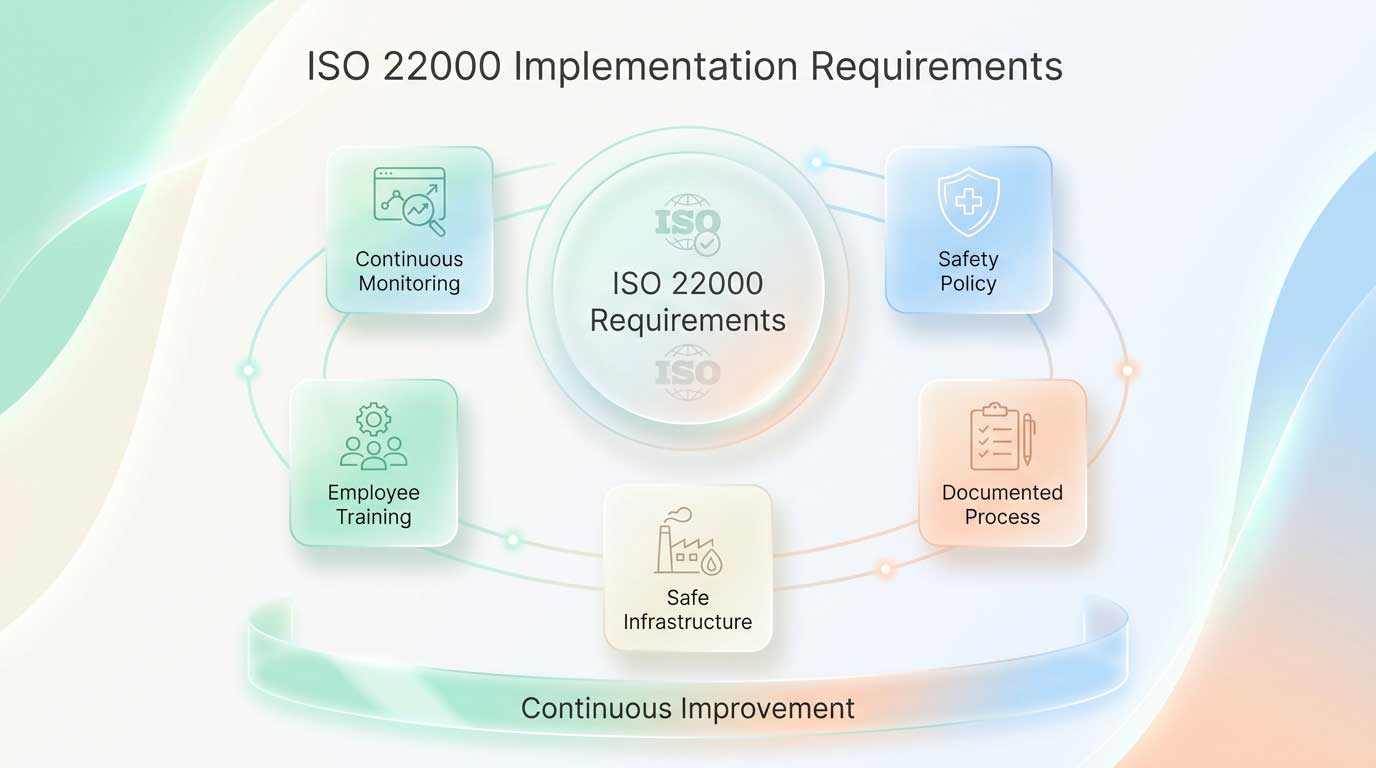
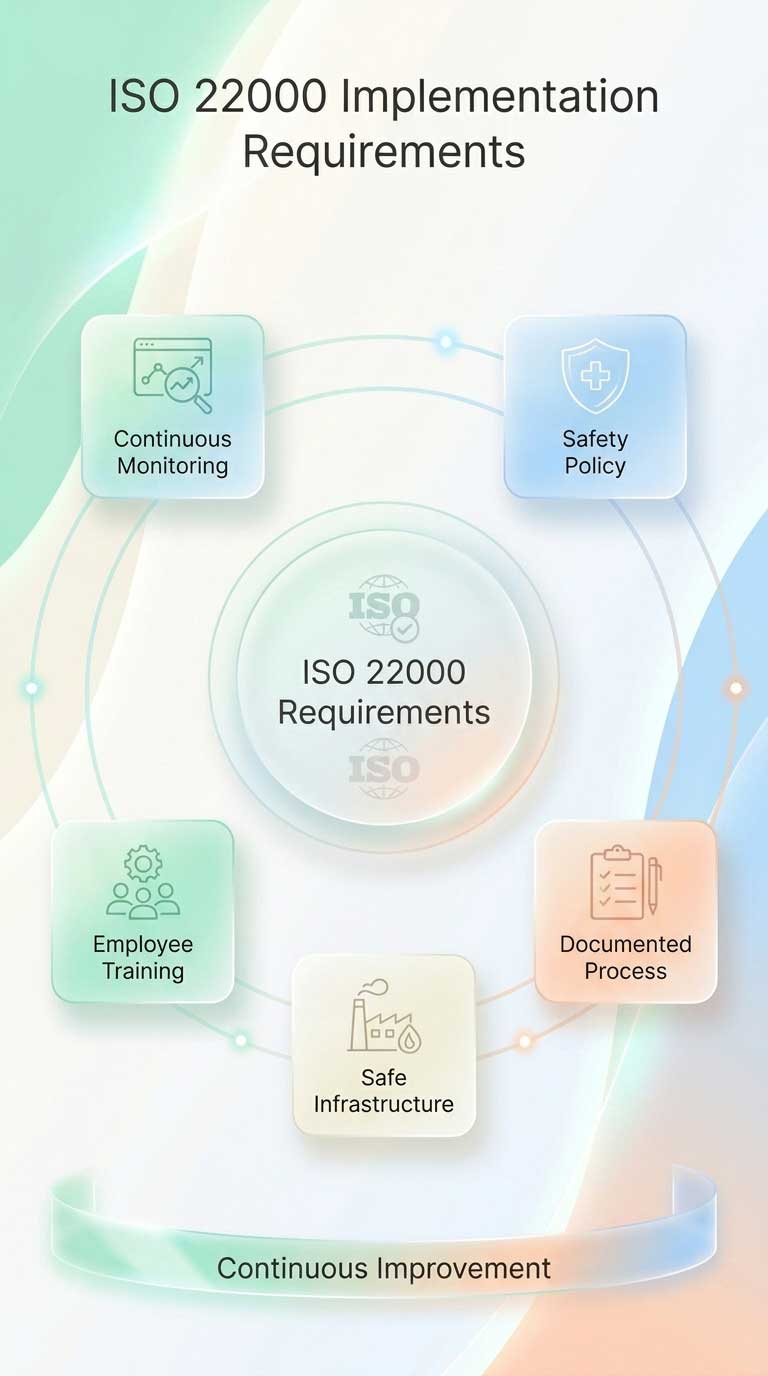
ISO 22000 Implementation Requirements Explained
- To implement ISO 22000, we need a clear structure.
- We define food safety policies and objectives.
- Processes must be documented and followed.
- Infrastructure should support hygiene and safety.
- Employee training is essential for success.
- Regular monitoring ensures continuous improvement.
Common Challenges in ISO 22000 Implementation
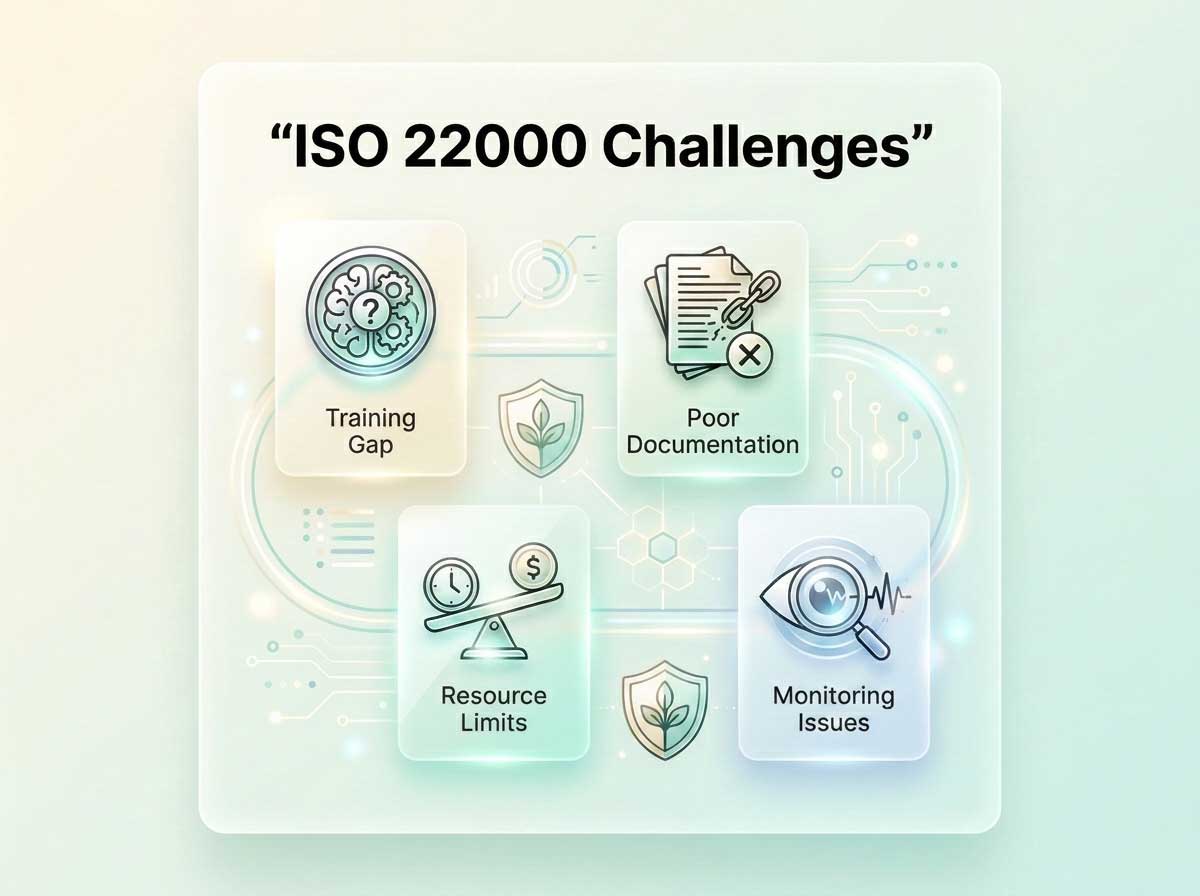
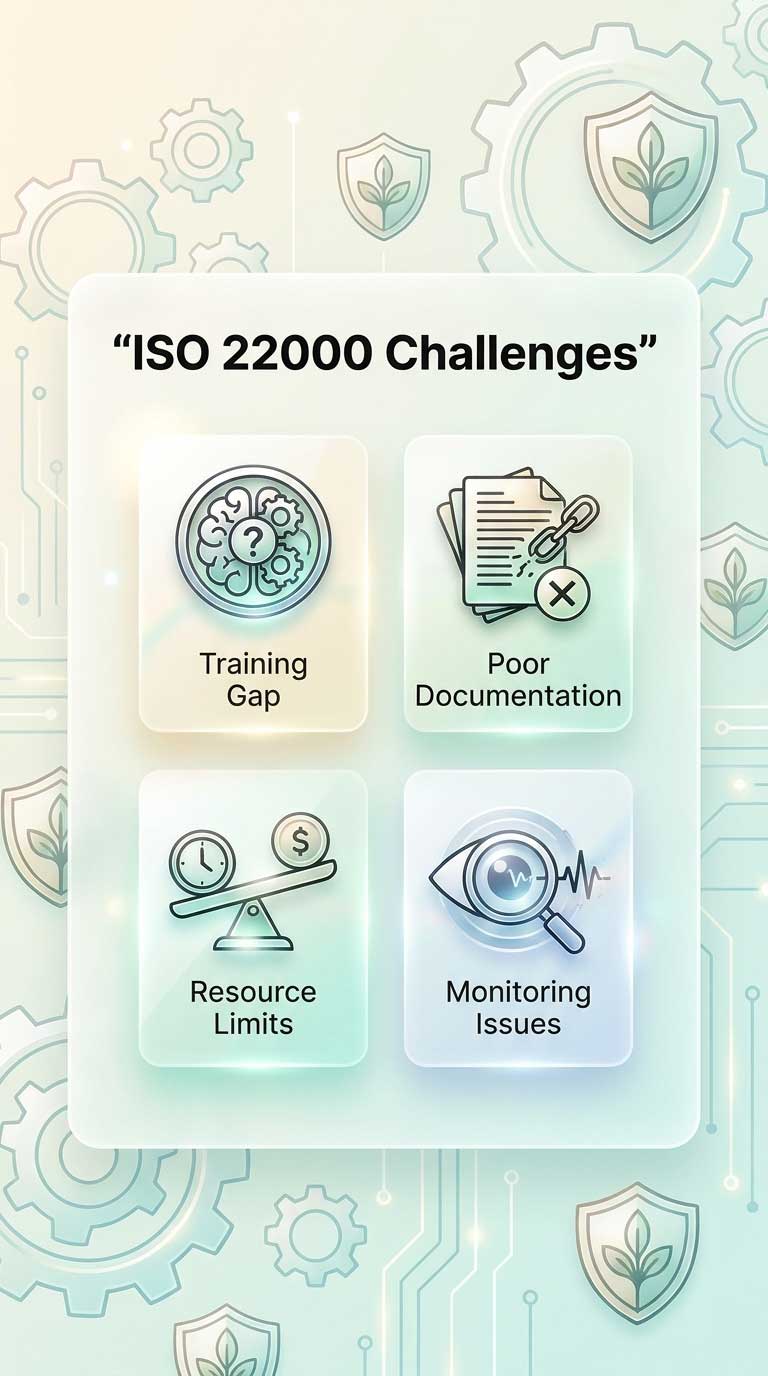
- A lot of businesses have trouble with application.
- A usual problem is that staff don’t know what’s going on.
- Maintaining proper documentation can be difficult.
- Resource limitations may slow progress.
- Ensuring consistent monitoring is also a challenge.
- With proper guidance, we can overcome these issues.
Documents Required for ISO 22000 Certification
- An important part of licensing is proof.
- We need food safety policies and procedures.
- PRP and HACCP plans must be documented.
- Monitoring and corrective action records are required.
- Training records and audit reports support compliance.
- These documents prove that systems are properly managed.
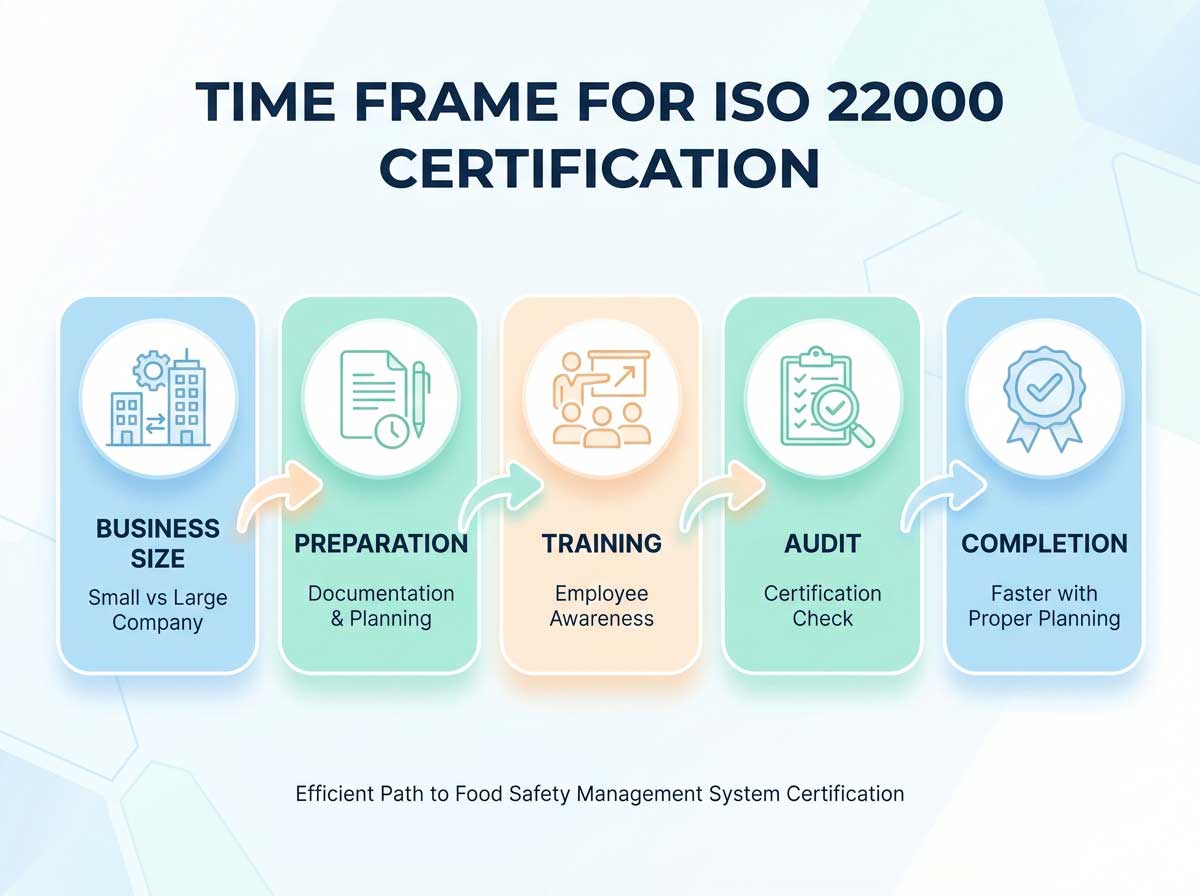
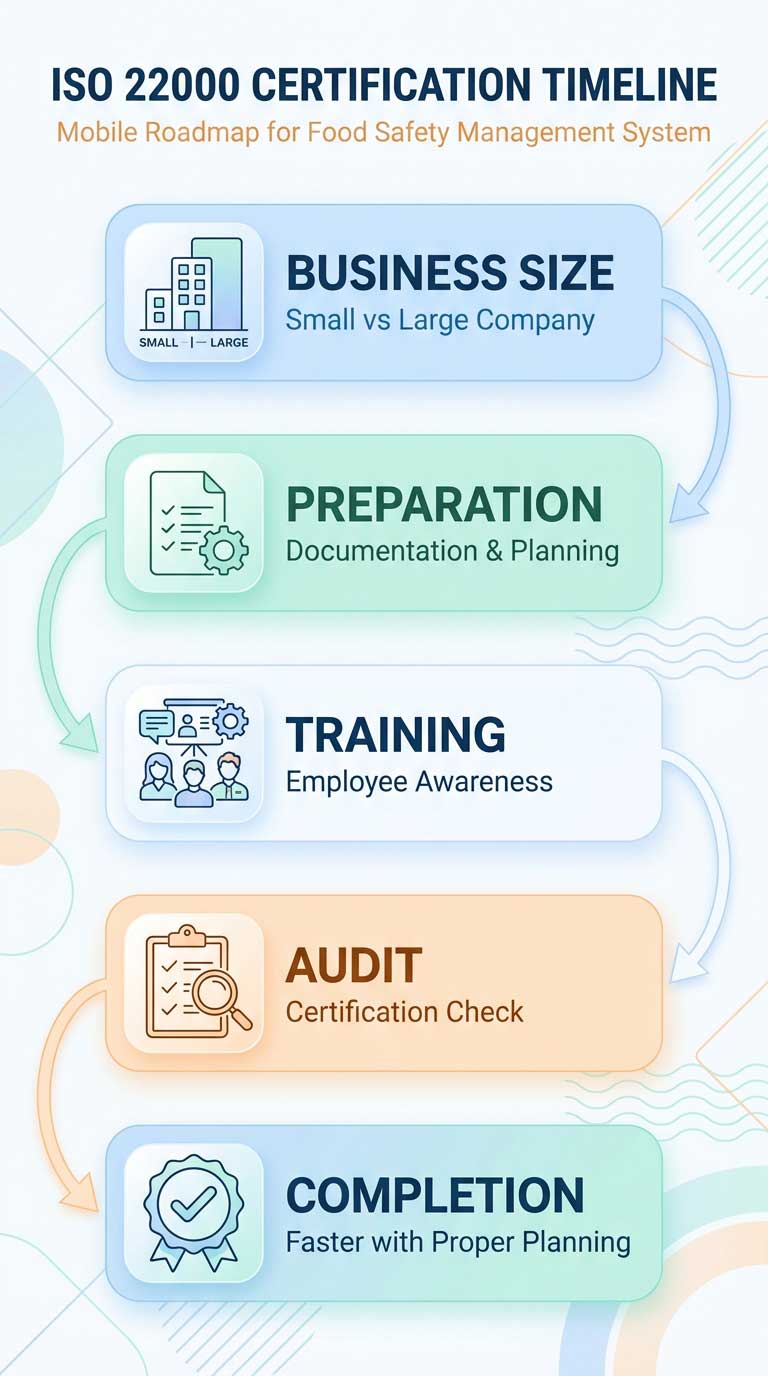
Timeframe for ISO 22000 Certification
- The time required depends on the organization.
- Small businesses might be done in a few months.
- Larger companies may take longer due to complexity.
- The schedule is affected by training, preparation, and exams.
- Making plans ahead of time speeds up the process.
ISO 22000 Certification Cost in India
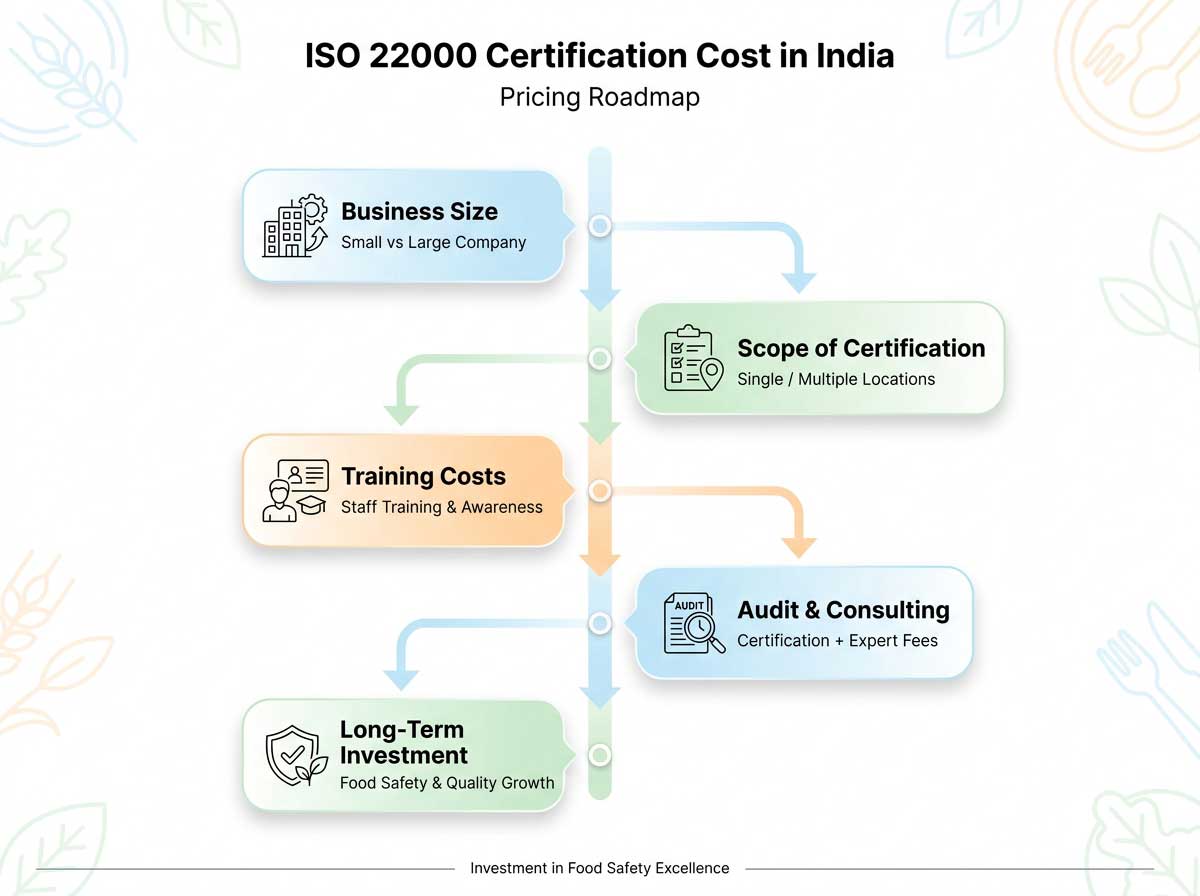
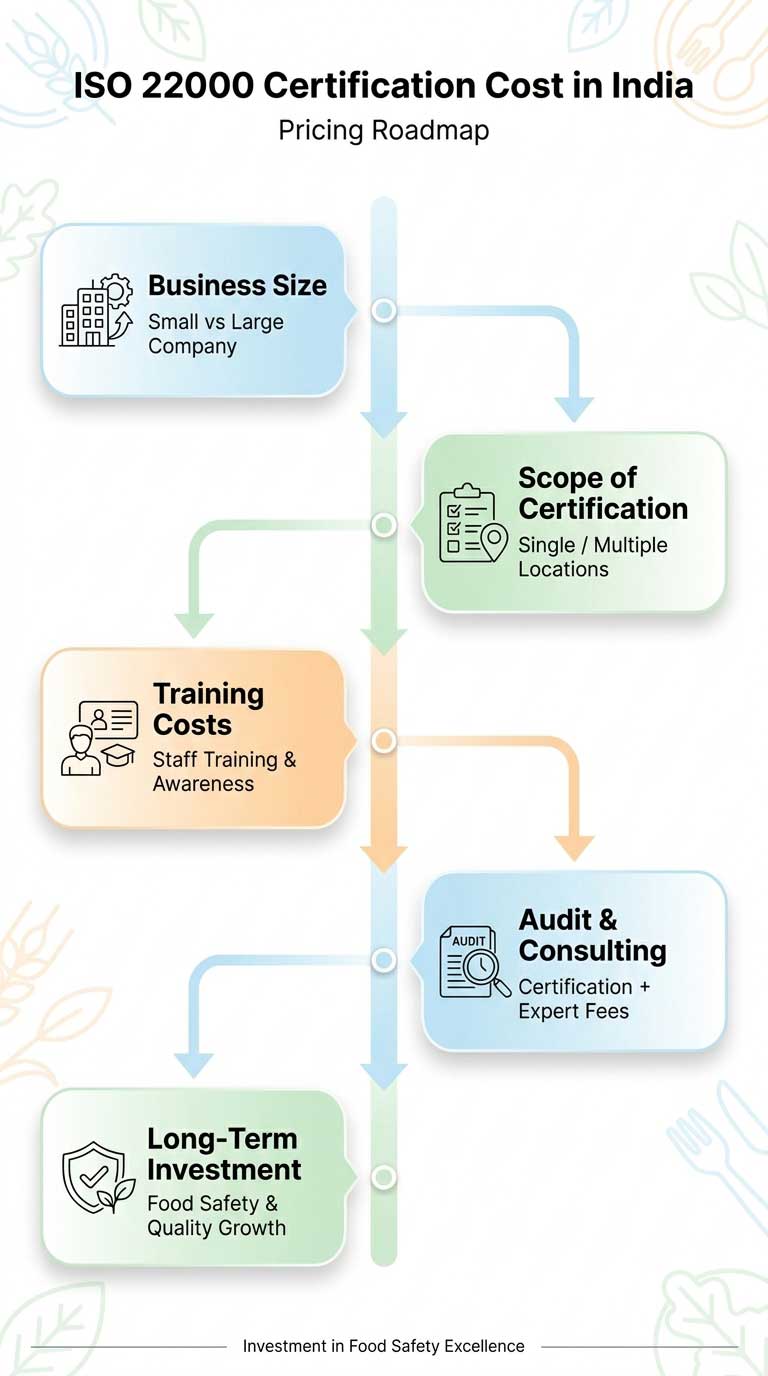
- The price changes based on the size and scope.
- Small organizations may have lower costs.
- Larger businesses require more investment.
- Costs include consulting, training, and audit fees.
- It is an investment in food safety and quality.
Why Choose Univate.in for ISO 22000 Consulting
- Univate.in provides expert support for ISO 22000 certification.
- Every step is made clear to us.
- The team focuses on ideas that are useful and work well.
- We help cut down on time and make things easier.
- With the right partner, we can achieve certification smoothly and confidently.
FAQs
ISO 22000 Certification in India
ISO 22000 is not mandatory in India. However, it helps ensure food safety and may be required by clients, partners, or for export compliance.
While ISO 22000 focuses on food safety concerns and the whole management process, HACCP concentrates only on food safety concerns.
ISO 22000 simply offers a structure for food safety management, whereas FSSC 22000 comprises additional requirements from across the globe.
Incontestably, food firms are not the only firms that can apply ISO 22000. Therefore, packaging firms can also apply ISO 22000.
PRP is a term referring to basic hygiene and other conditions necessary to maintain food safety in the whole process. It implies such activities as cleaning and pest prevention and control.
No, it isn't necessarily the case since testing is dependent on your product type and risk level. Usually, testing comes as a result of risk assessment rather than batch checking.
Yes, their experts will help you redesign your facility for better compliance with the standard. The point of that action would be to minimize contamination and ensure optimal operations.
Of course, there should be a recall of such products. Furthermore, one needs to investigate the origin of the issue and resolve it.
The certificate is usually valid for three years at a time. Regular audits are necessary during that period to monitor your compliance with the standard.
Yes, ISO 22000 can be applied in this situation. It will help improve hygiene standards.