





DIFC Data Protection Law (DPL) Compliance in India
Overview of DIFC Data Protection Law
The DIFC Data Protection Law (DPL) establishes a legal system which safeguards personal information throughout Dubai International Financial Centre. The DIFC DPL serves as a data protection statute which governs the procedures for collecting personal information and storing it and utilizing it. Indian companies working with DIFC entities must follow these rules.
What is DIFC DPL?
The strategy builds trust with stakeholders and lets businesses do what the law requires them to do. The law establishes requirements which organizations must meet to secure and maintain user information.
Importance of DIFC DPL Compliance for Indian Companies
DIFC DPL compliance is important for Indian companies dealing with clients or operations in DIFC. The policy establishes trust with stakeholders while enabling organizations to meet their legal obligations. It also reduces risks related to data breaches and penalties.
Who Needs DIFC DPL Compliance?
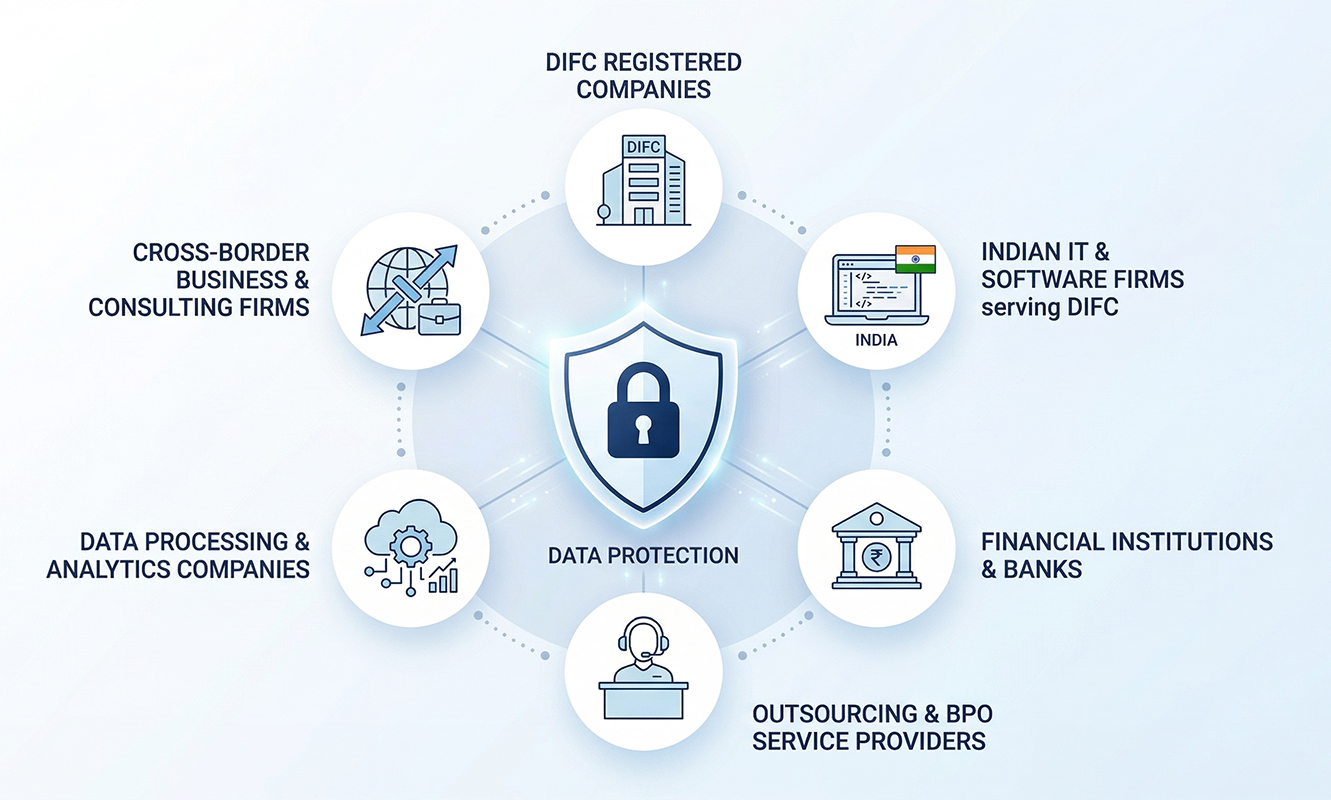
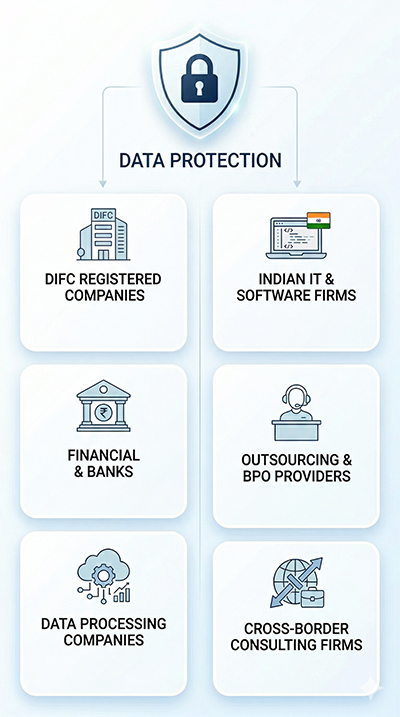
DIFC DPL compliance is required for organizations that handle personal data related to DIFC operations, such as:
- Companies operating within DIFC
- Indian companies serving DIFC clients
- Financial institutions handling sensitive data
- IT and outsourcing service providers
- Organizations processing personal data of DIFC residents
- Businesses managing cross-border data transfers
These organizations must follow DIFC data protection rules to avoid legal issues.
Key Principles of DIFC Data Protection Law
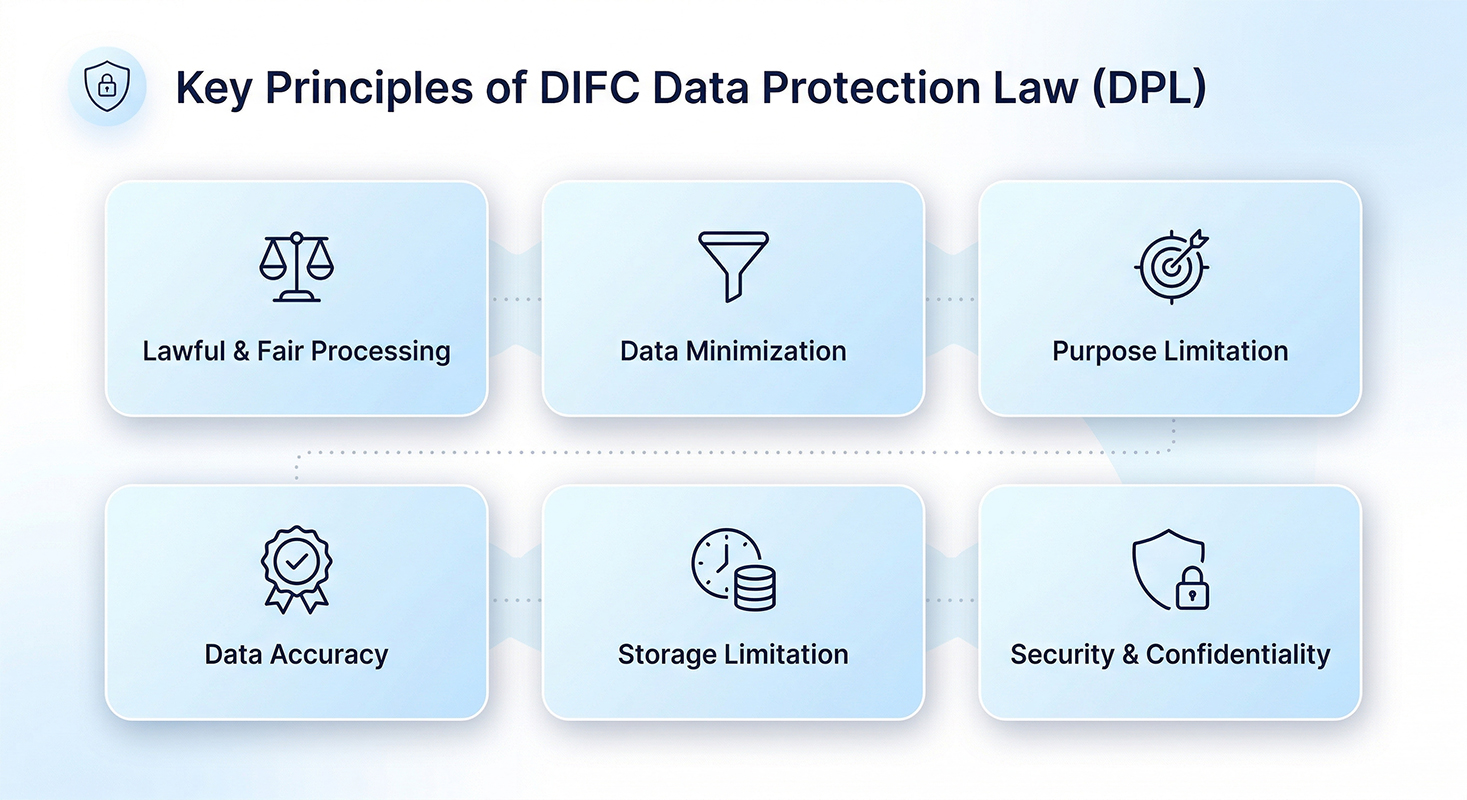
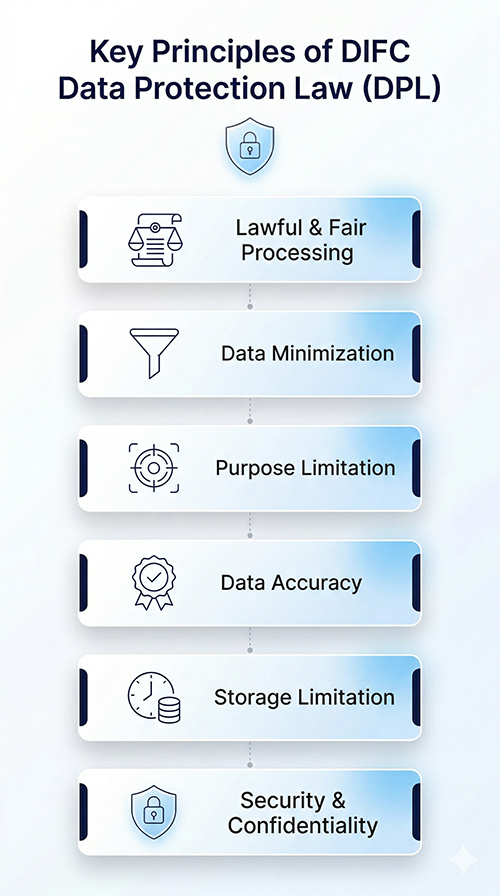
DIFC DPL is based on core principles that ensure proper data handling and protection, including:
- Lawful and fair data processing
- Data minimization
- Purpose limitation
- Accuracy of data
- Storage limitation
- Security and confidentiality
Following these principles helps organizations manage data responsibly.
Rights of Data Subjects under DIFC DPL
DIFC DPL provides several rights to individuals whose data is processed, ensuring transparency and control, such as:
- Right to access personal data
- Right to correct inaccurate data
- Right to request data deletion
- Right to restrict processing
- Right to data portability
- Right to object to processing
These rights empower individuals and improve data privacy.

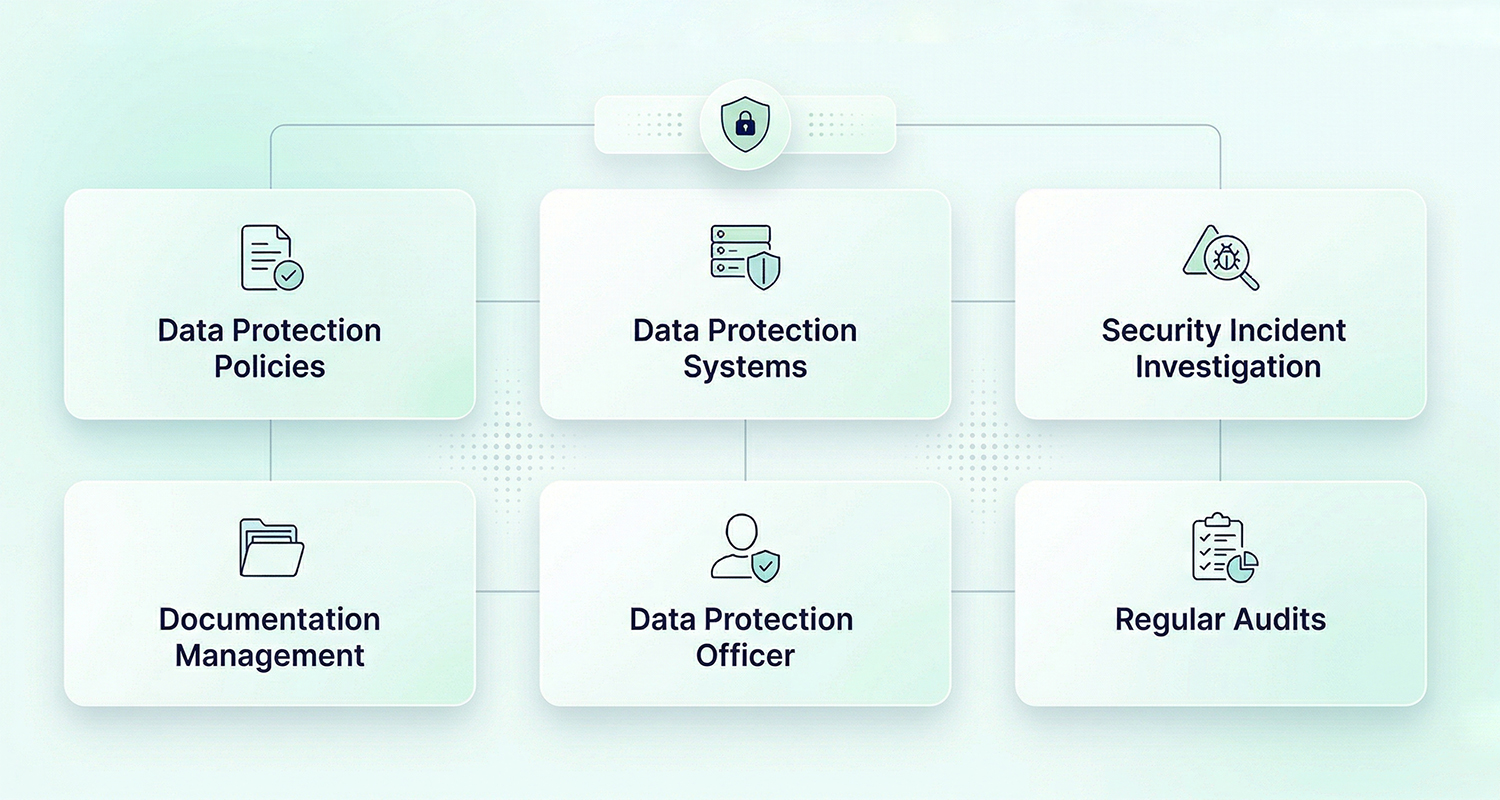
Obligations of Organizations under DIFC DPL
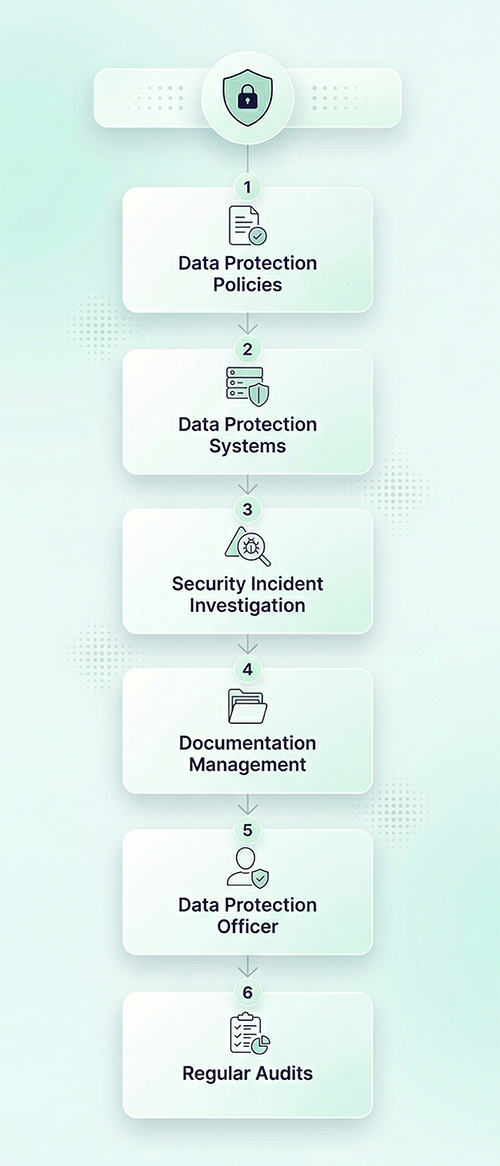
Organizations must follow certain responsibilities to ensure compliance with DIFC DPL, including:
- Establishing data protection policies
- Executing data protection systems
- Investigating data security incidents
- Executing documentation management
- Designating a Data Protection Officer (if required)
- Conducting regular audits
Meeting these obligations ensures proper data governance.
DIFC DPL Compliance Requirements
Organizations must meet specific requirements to achieve DIFC DPL compliance, such as:
- Identifying and classifying personal data
- Implementing security controls
- Maintaining data processing records
- Conducting risk assessments
- Ensuring lawful data processing
- Training employees on data protection
- Identifying and classifying personal data
- Implementing security controls
- Maintaining data processing records
- Conducting risk assessments
- Ensuring lawful data processing
- Training employees on data protection
These requirements help build a strong data protection system.
DIFC DPL Implementation Process
Organizations can follow a structured step-by-step approach to achieve DIFC DPL compliance effectively:
- Assess current data handling practices and identify gaps
- Define scope and create a compliance roadmap
- Implement data protection policies and security controls
- Train employees on data privacy and compliance requirements
- Conduct internal audits and risk assessments
- Monitor, review, and maintain ongoing compliance
This structured process helps organizations achieve compliance smoothly and reduce risks.
DIFC DPL Risk Assessment and Gap Analysis
Risk assessment helps identify potential data protection risks. Gap analysis compares current practices with DIFC requirements. This helps organizations plan improvements and reduce compliance risks.

Integration of DIFC DPL with Other Data Protection Frameworks
DIFC DPL can be integrated with other frameworks to strengthen data protection and compliance, such as:
- ISO 27001 for information security
- GDPR for global data protection
- IT governance frameworks
- Risk management standards
- Internal compliance policies
- Cybersecurity frameworks
- ISO 27001 for information security
- GDPR for global data protection
- IT governance frameworks
- Risk management standards
- Internal compliance policies
- Cybersecurity frameworks
These requirements help build a strong data protection system.
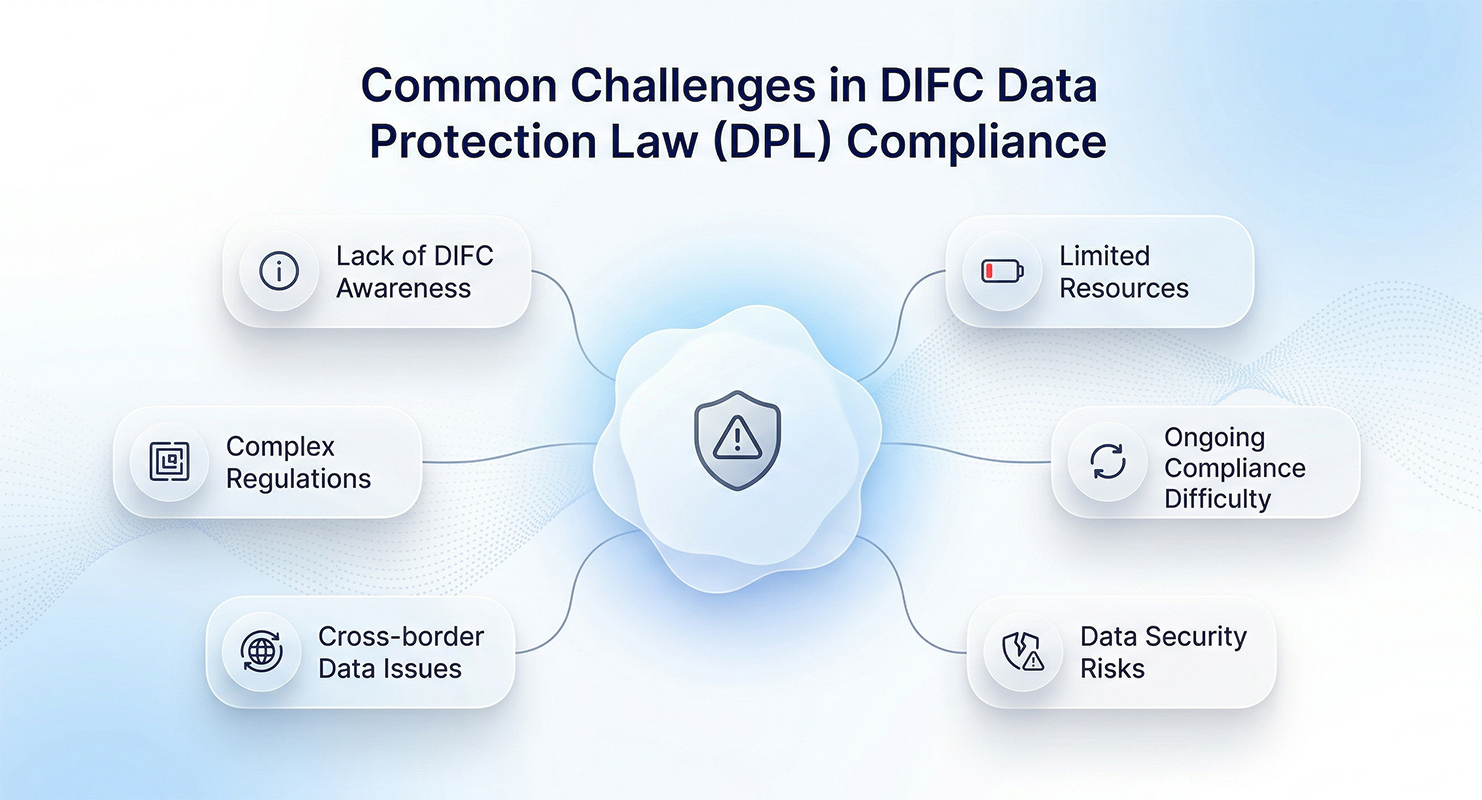
Common Challenges in DIFC DPL Compliance
Organizations may face several challenges while implementing DIFC DPL, especially when dealing with cross-border data and regulations, such as:
- Lack of awareness about DIFC requirements
- Complexity of data protection laws
- Difficulty in managing cross-border data
- Limited resources and expertise
- Maintaining compliance over time
- Ensuring data security across systems
Addressing these challenges early helps ensure smooth compliance.
Penalties for Non-Compliance with DIFC DPL
Organizations that fail to comply with DIFC Data Protection Law may face serious consequences, including:
Heavy Financial Penalties
Heavy Financial Penalties
Heavy Financial Penalties
Understanding these risks helps organizations take compliance seriously and avoid potential damage.
Why Choose Univate for DIFC DPL Consulting
Organizations looking for expert support can choose Univate for DIFC DPL compliance due to the following reasons:
- Experienced data protection consultants
- End-to-end compliance support
- Customized solutions for business needs
- Strong expertise in global regulations
- Practical implementation approach
- Proven success in compliance projects
- Experienced data protection consultants
- End-to-end compliance support
- Customized solutions for business needs
- Strong expertise in global regulations
- Practical implementation approach
- Proven success in compliance projects
These requirements help build a strong data protection system.