





Data Classification Services in India
Overview of Data Classification
The practice of arranging data according to its significance and sensitivity is known as data classification.
We group data into clear categories so we can handle it properly. This assists in determining who has access to it and how best to secure it.
Every business stores different types of data. Some data is public, while some must stay private. Without classification, it becomes hard to manage risk.
In simple terms, data classification helps us treat each piece of data the right way.
Understanding the Standard Data Classification Levels
Public
- Public data is open for everyone.
- We can share this data without any risk. It may include website content, brochures, or marketing materials.
- Even though it is public, we still ensure accuracy and consistency.
Internal
- Internal data is intended for usage only within the company.
- We do not share it outside without approval. Examples include internal emails and basic reports.
- This data has moderate sensitivity and needs basic protection.
Confidential
- Confidential data is more sensitive.
- Only selected people should access it. It may include client data, financial details, or business strategies.
- If leaked, it can cause harm to the company or clients.
Restricted / Highly Sensitive
- This is the most critical level of data.
- Access is restricted to a few permitted individuals.
- Examples include passwords, encryption keys, or critical personal data.
- Any breach at this level can indicate acute destruction.
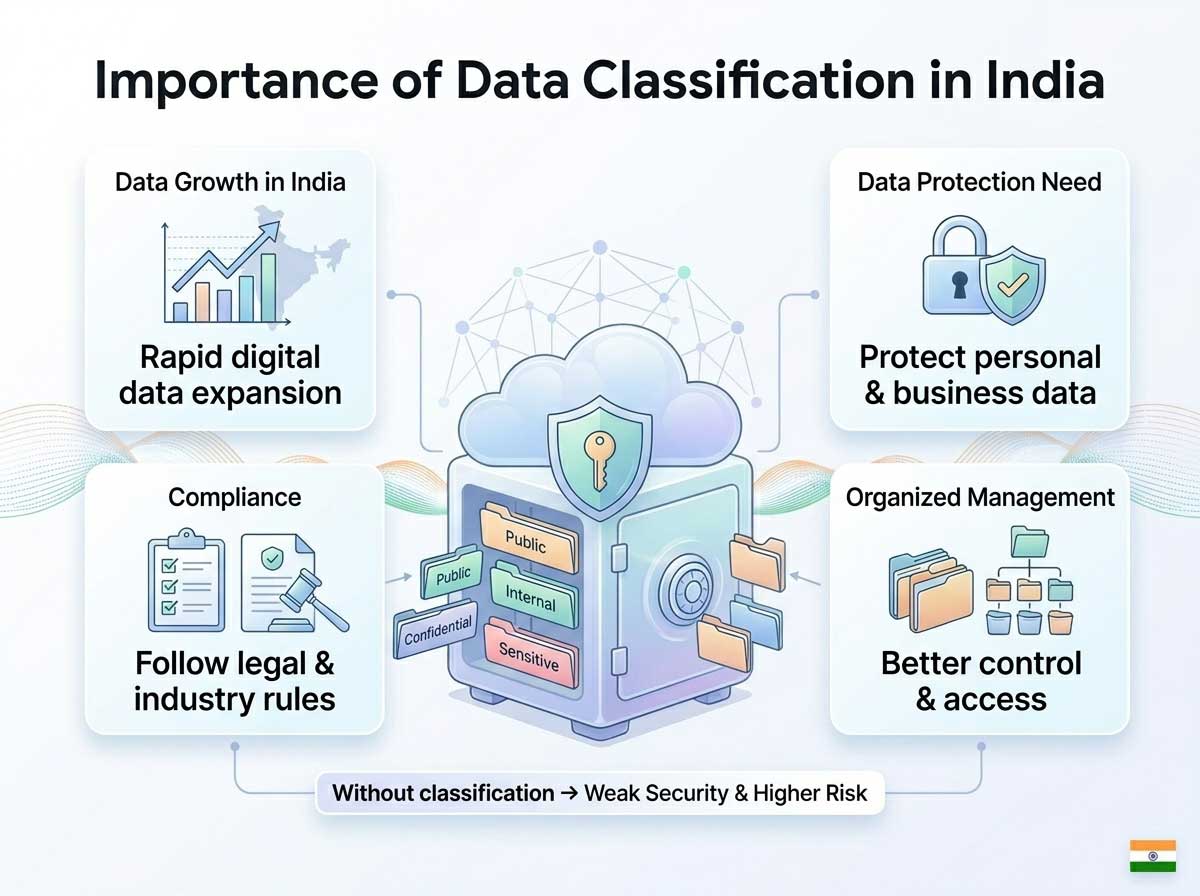
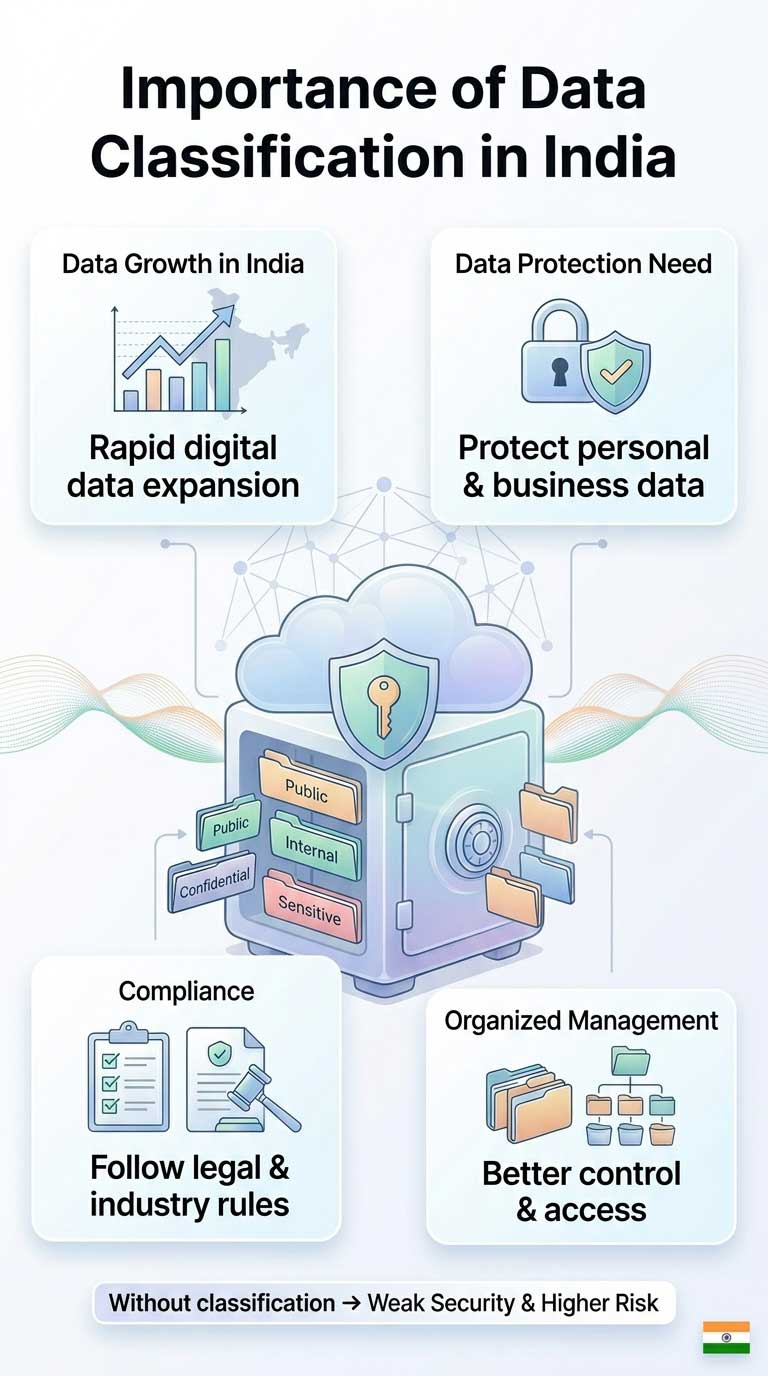
Importance of Data Classification in India
- Data use in India is growing rapidly. Businesses collect and store a lot of data.
- With this growth comes responsibility. We must protect personal and business data.
- Classification of data aids in the management of this obligation.
- Additionally, it encourages adherence to legal requirements and industry norms.
- Without classification, data protection becomes weak and unorganized.
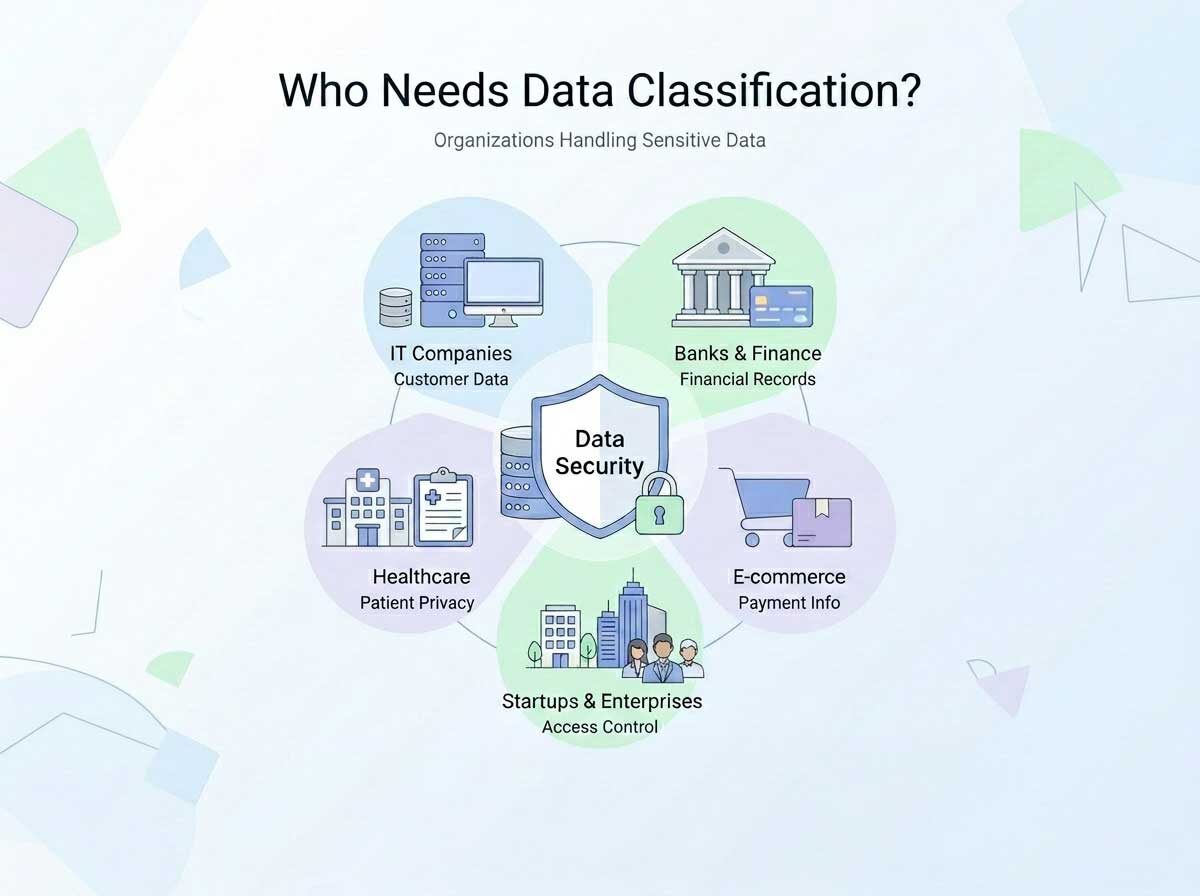
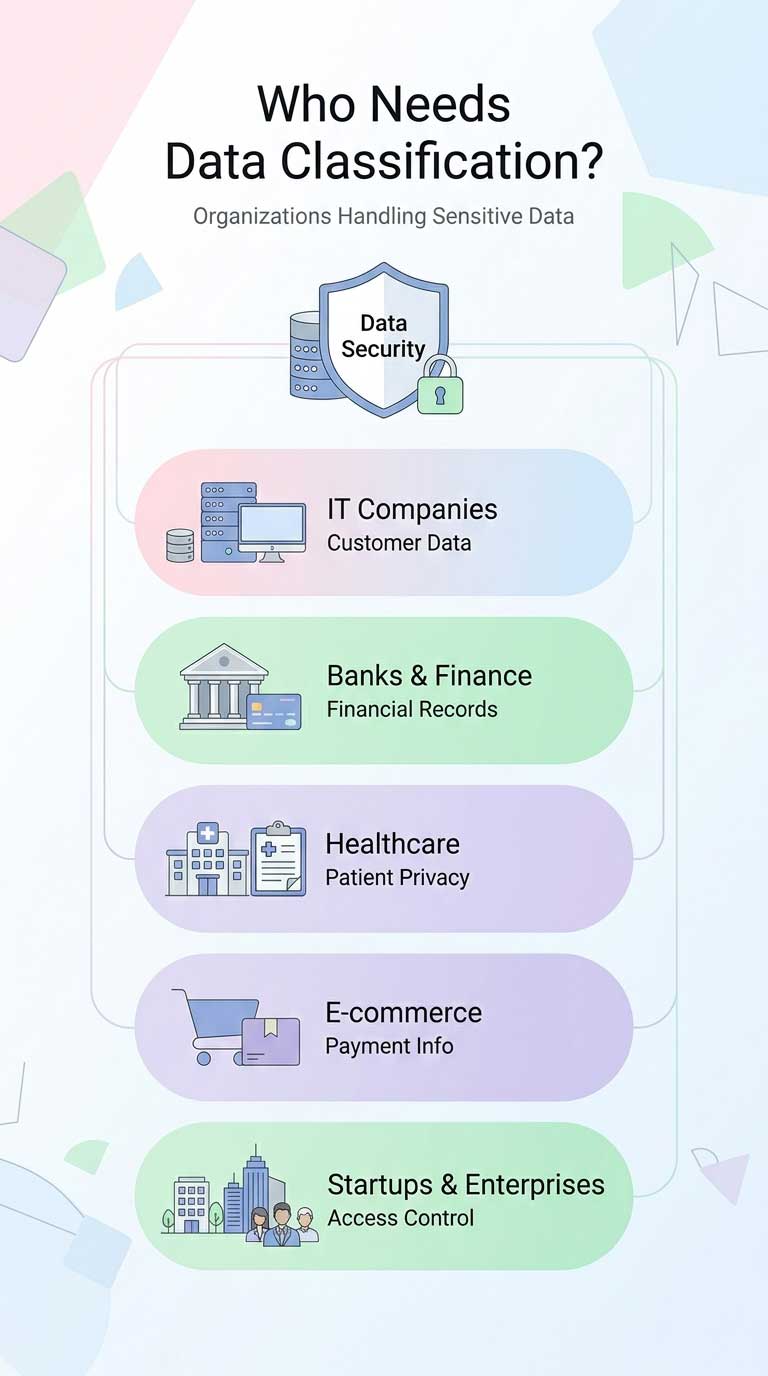
Who Needs Data Classification
Any organization that handles data should use classification.If we store customer information, employee records, or financial data, classification is important.It is useful for:
- IT companies
- Banks and financial institutions
- Healthcare providers
- E-commerce platforms
- Startups and enterprises
No matter the size, proper classification improves control over data.
Benefits of Implementing Data Classification
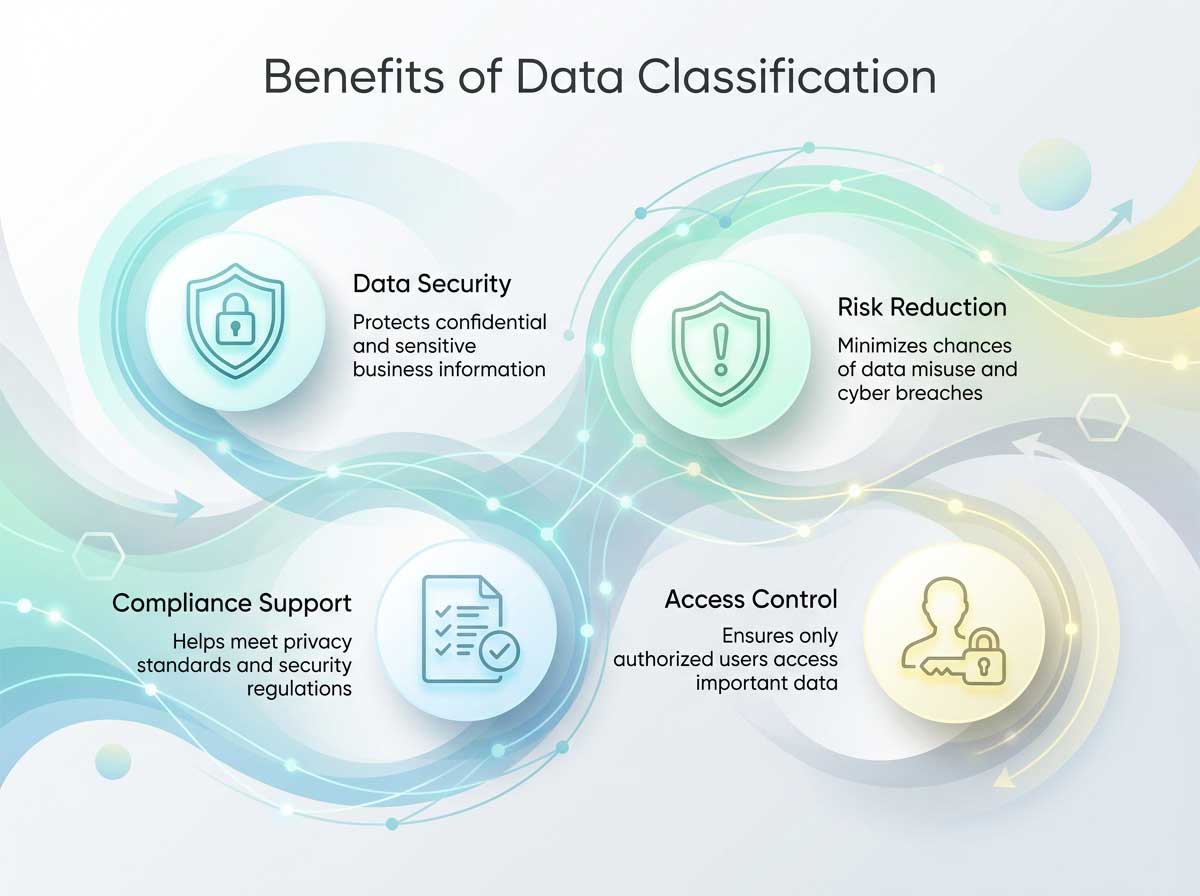
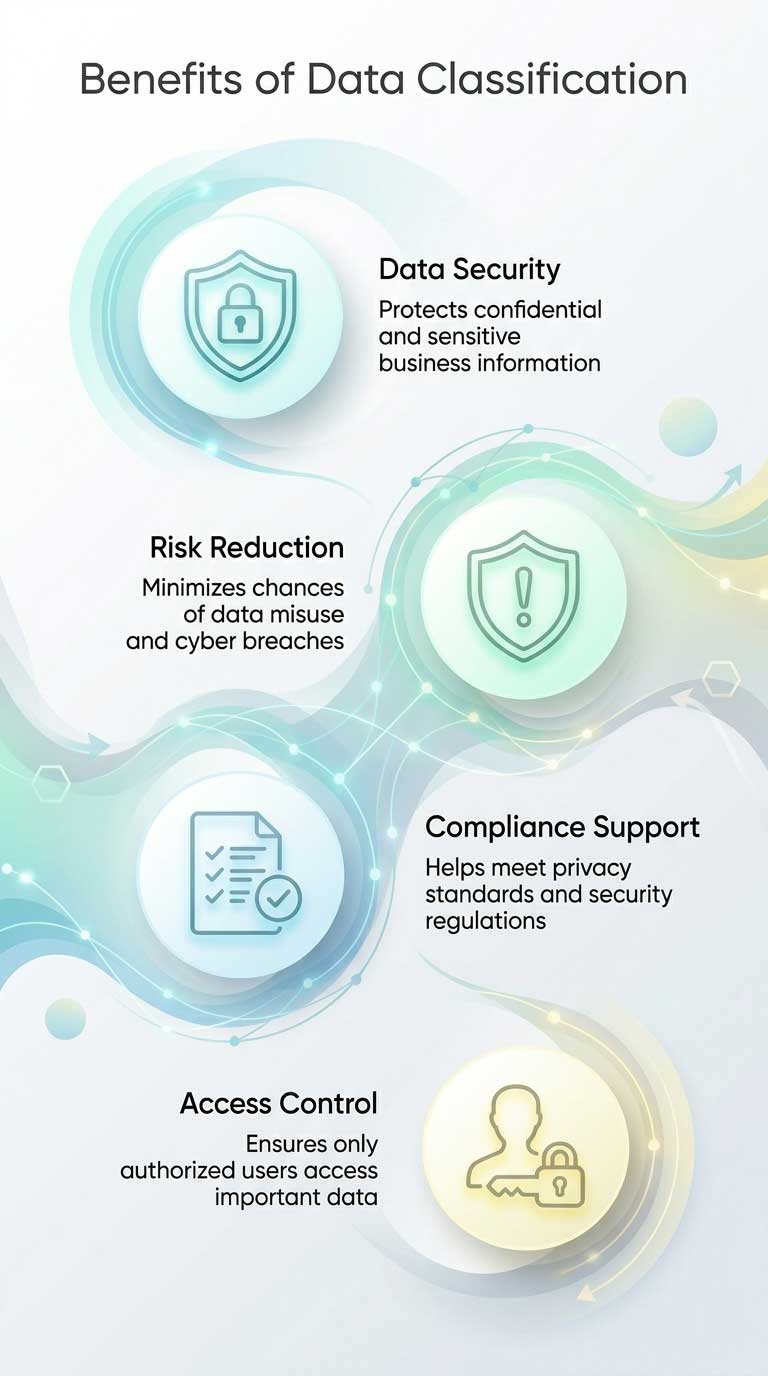
- There are numerous advantages to data classification.
- It improves our ability to safeguard private data.
- We lessen the possibility of data abuse and breaches.
- It also makes access control better. The right info is only visible to the right people.
- Compliance becomes easier with clear data categories.
Overall, it improves efficiency and security together.
Data Classification Requirements Explained
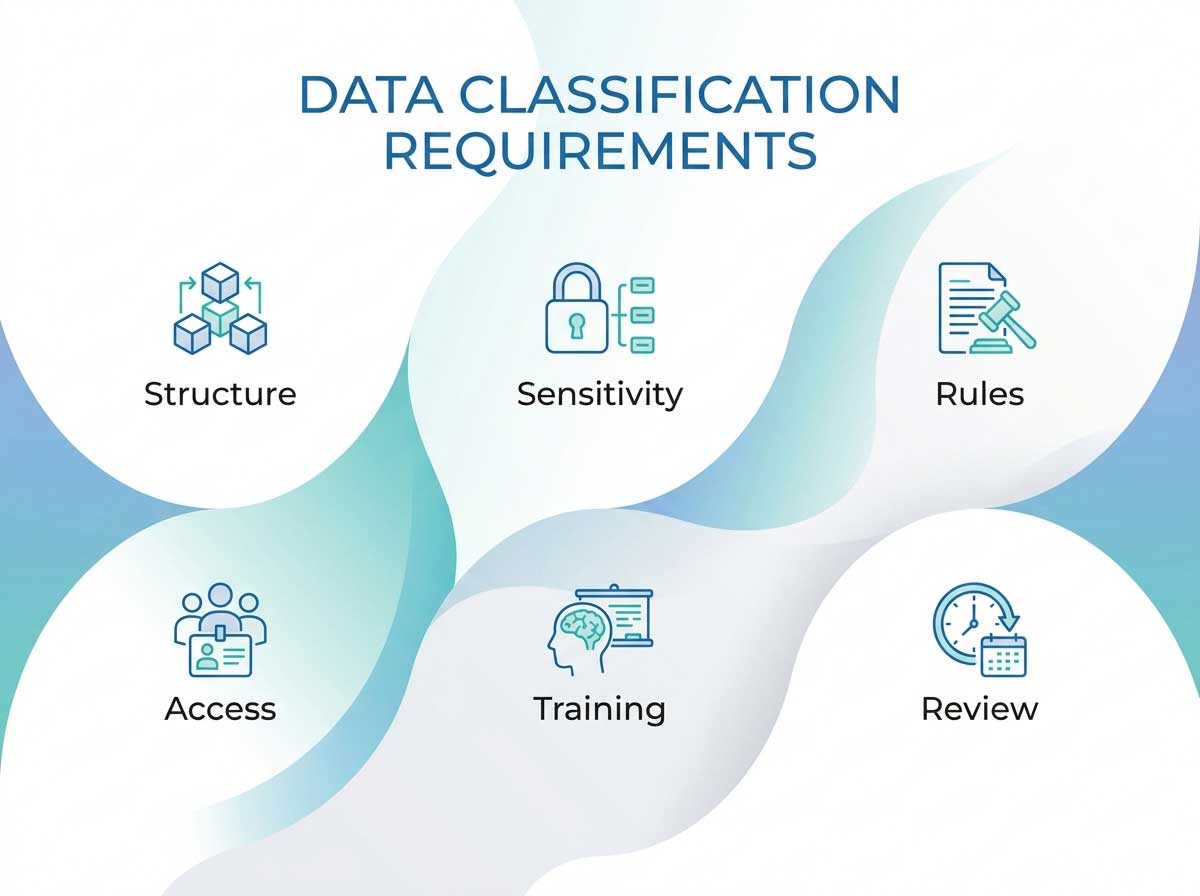
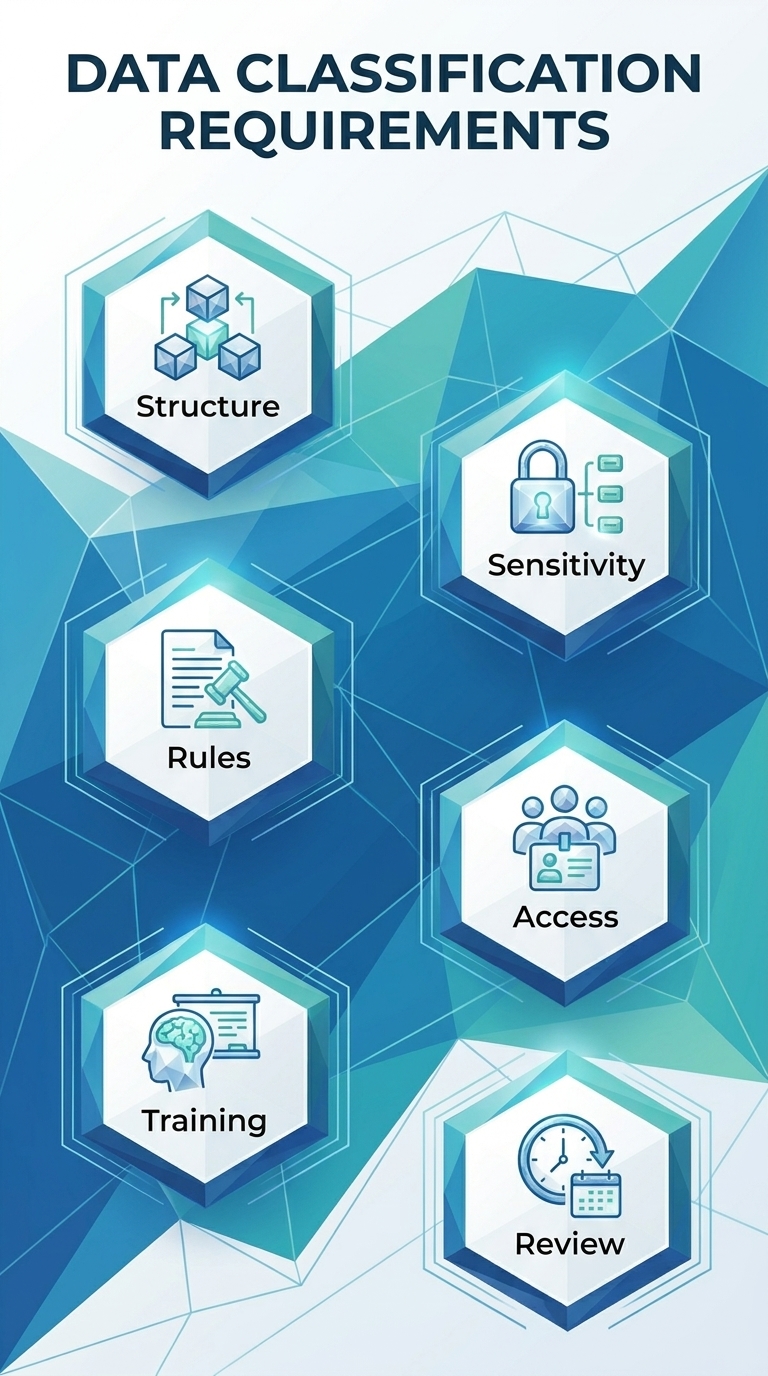
- To implement classification, we need a clear structure.
- We define categories based on data sensitivity.
- We create rules for how each category is handled.
- Classification levels must be the basis for setting access controls.
- We also teach staff members how to comprehend these regulations.
- Updating the system is ensured by routine reviews.
Documents Required for Data Classification
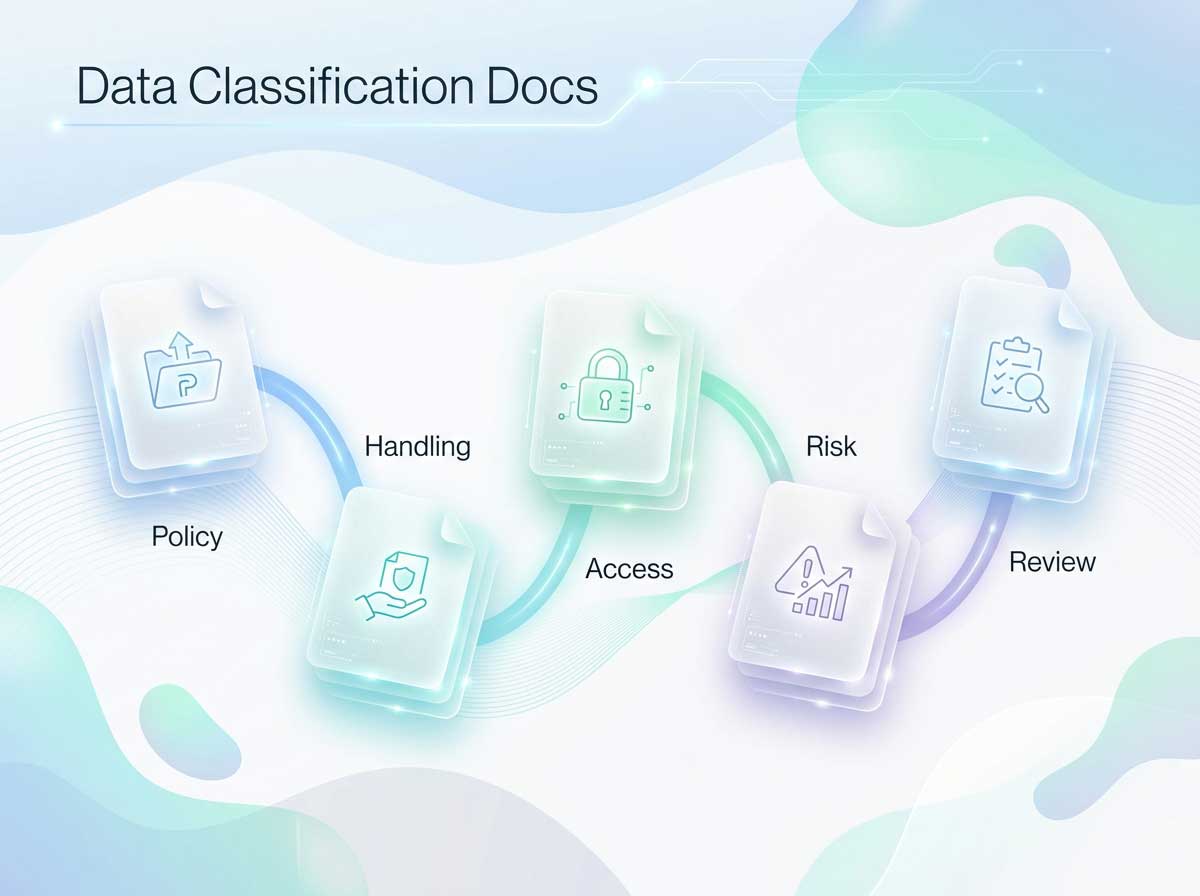
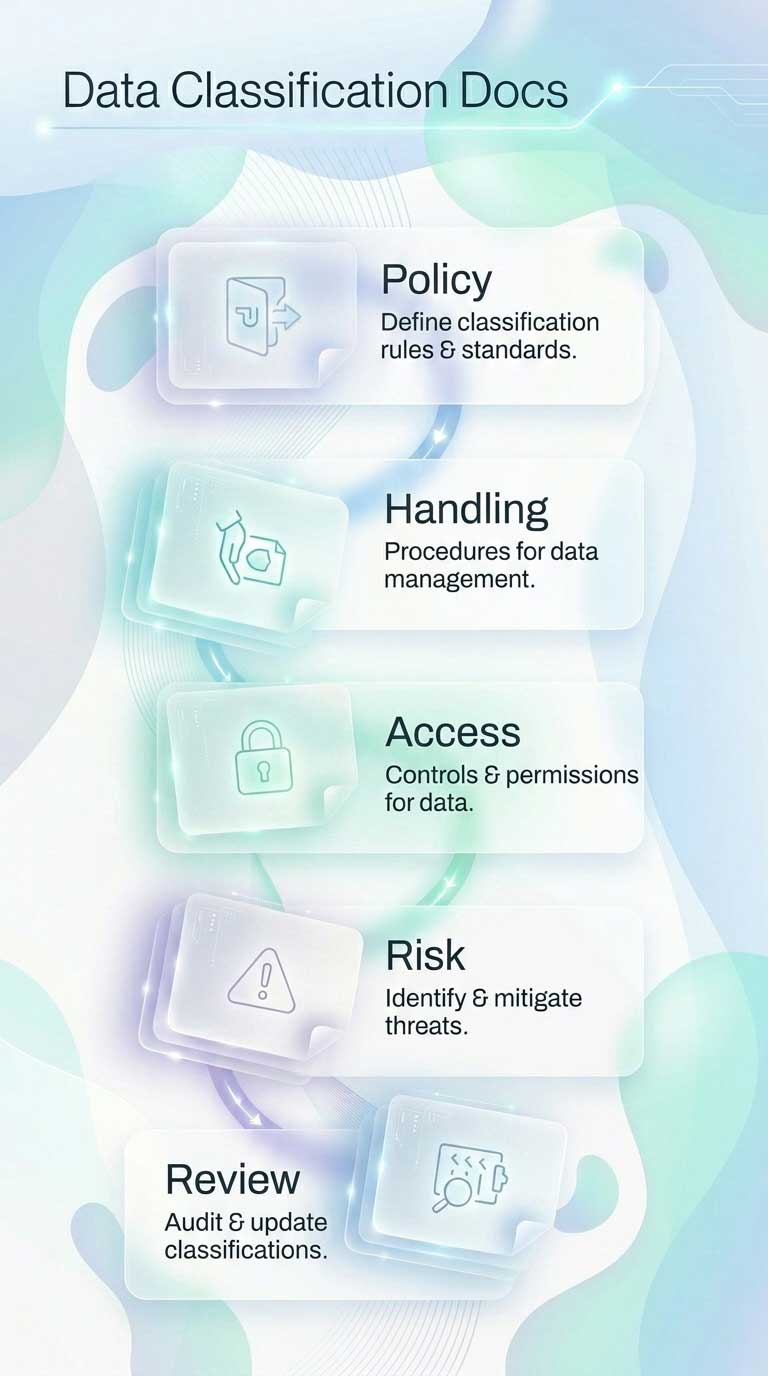
- Documentation supports the entire process.
- We create a data classification policy that defines all levels.
- Data handling procedures explain how data is used and shared.
- Who can view or modify data is determined by access control policies.
- Risk assessment reports highlight sensitive areas.
- These documents help maintain consistency and accountability.
Data Classification Process in India
Discovery
- First, we identify every data asset.
- Files, databases, and systems fall within this category.
- We are aware of the data we possess and its storage location.
Policy Definition
- Next, we define classification rules.
- We decide how data will be categorized and handled.
- Clear policies guide the entire process.
Implementation
- We apply the classification model to our systems.
- This may involve tools, software, or manual processes.
- We ensure that all data follows defined categories.
Tagging
- Each data item is labeled based on its category.
- Tags help users quickly identify sensitivity levels.
- This makes data handling easier and more accurate.
Enforcement
- We apply classification-based regulations.
- Access controls, encryption, and monitoring are applied.
- We also review and update the system regularly.
Timeframe for Data Classification Implementation
- The time required depends on data volume and complexity.
- Small organizations may complete it quickly.
- For bigger firms with more data, it may take longer.
- With the correct equipment and planning, the procedure can be sped up.
- A structured approach ensures smooth implementation.
How Data Classification Connects to ISO 27001 & DPDP Act?
ISO 2700
- ISO 27001 requires organizations to protect information.
- Data classification supports this by defining sensitivity levels.
- It helps in applying the right controls to the right data.
DPDP Act
- The primary objective of India's Digital Personal Data Protection (DPDP) Act is the protection of personal data.
- Classification aids in the identification of sensitive and private information.
- This makes it easier to follow legal requirements.
Data Classification Cost in India
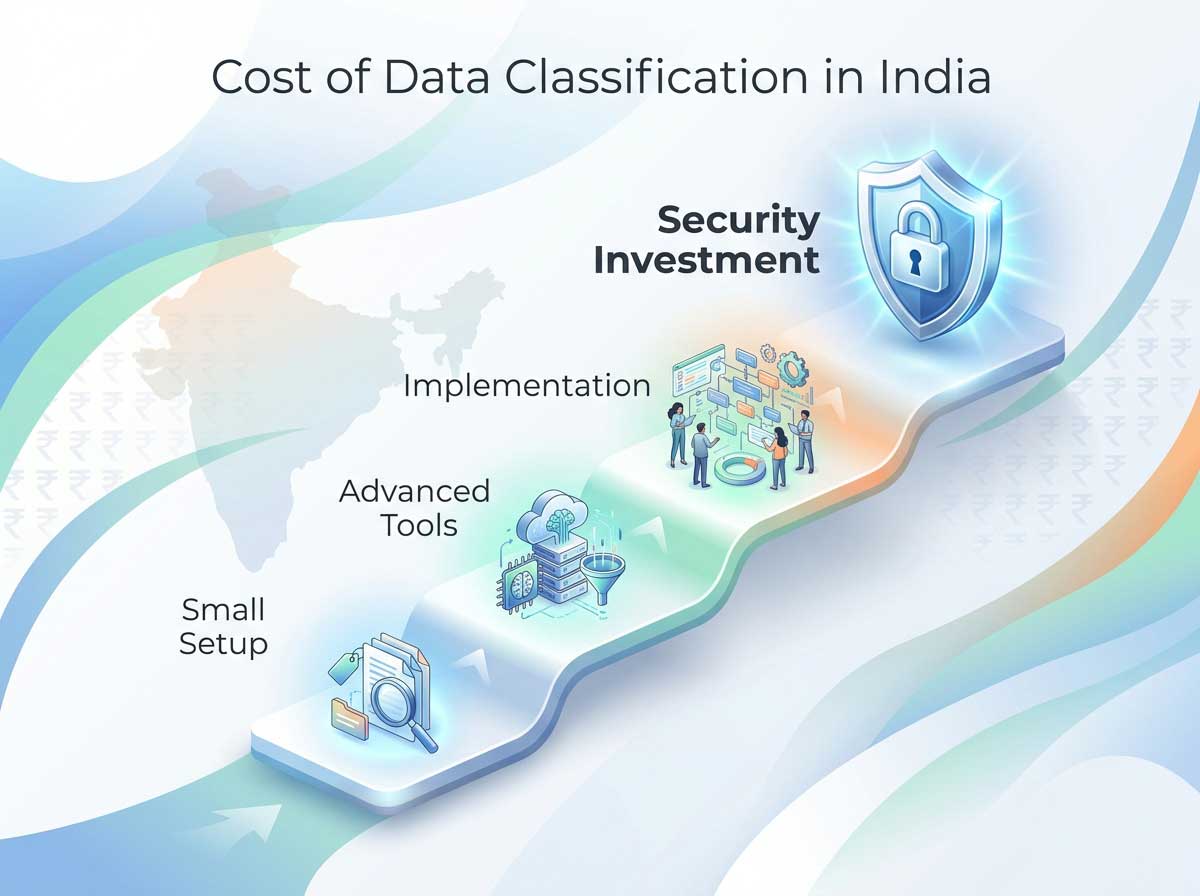
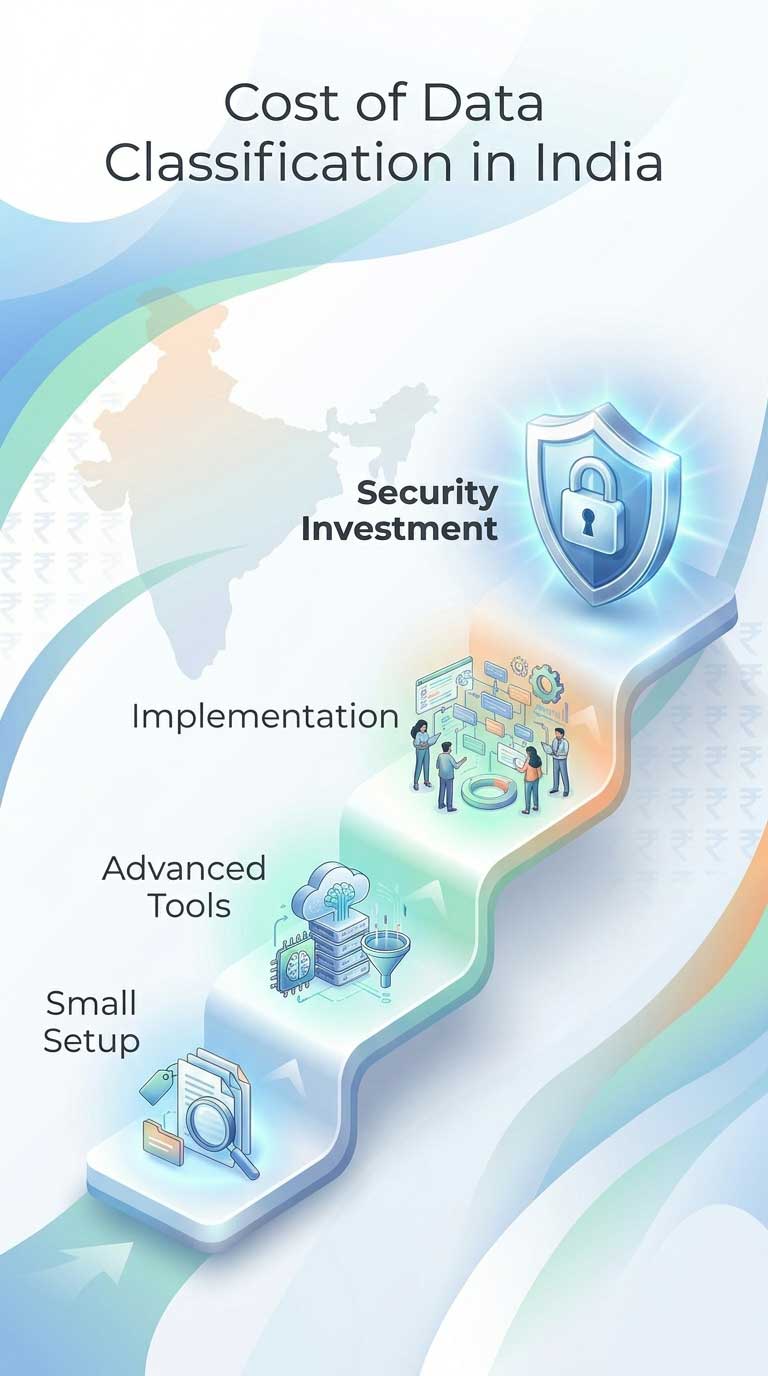
- The cost depends on business size and data complexity.
- Small setups may have lower costs.
- Larger organizations may need advanced tools and consulting.
- Costs include planning, tools, and implementation support.
- It is an investment in better data security.
Why Choose Univate.in for Data Classification
- Univate.in provides expert support for data classification.
- We get clear guidance and practical solutions.
- Their team helps us design and implement the right framework.
- They simplify the process and reduce confusion.
- With the right partner, we can manage data securely and efficiently.
Common Challenges in Data Classification
Organizations may face several challenges during the appraisal process, such as:
- During implementation, many organisations encounter difficulties.
- One common issue is lack of visibility. We may not know all data locations.
- Another challenge is inconsistent classification. Different teams may follow different rules.
- Administering enormous volumes of data can occasionally be difficult.
- Employee awareness is often low, leading to mistakes.
- With proper planning and expert support, we can overcome these challenges and build a strong data classification system.
- During implementation, many organisations encounter difficulties.
- One common issue is lack of visibility. We may not know all data locations.
- Another challenge is inconsistent classification. Different teams may follow different rules.
- Administering enormous volumes of data can occasionally be difficult.
- Employee awareness is often low, leading to mistakes.
- With proper planning and expert support, we can overcome these challenges and build a strong data classification system.