





Cybersecurity Capability Maturity Model (C2M2) in India
Overview of the C2M2 Framework
- C2M2 is a set of rules that help us figure out how good our security measures are. It focuses on improving how we manage and protect critical systems.
- We use it to understand our current security level and plan improvements. It does not just check tools. It looks at processes, people, and control systems.
- C2M2 is widely used in sectors where operations must not fail. It’s especially helpful for businesses that need to keep running.
- In simple terms, it helps us grow from basic security to advanced, well-managed protection.
Understanding the Maturity Indicator Levels (MILs)
MIL 0 (Not Performed)
- At this level, security practices are not in place.
- We may not have defined processes or controls. Activities are either missing or done randomly.
- This step shows that you need an organized method.
MIL 2 (Performed & Documented)
- Here, we follow defined processes.
- Activities are documented and repeatable.
- We ensure that security tasks are performed in a structured way.
MIL 1 (Initiated)
- At this level, we begin to act.
- Some security activities exist, but they may not be consistent.
- We are aware of risks and start addressing them.
MIL 3 (Managed & Optimized)
- At this stage, we manage and improve continuously.
- Processes are measured and refined over time.
- We aim for efficiency, control, and long-term stability.
Importance of C2M2 in India
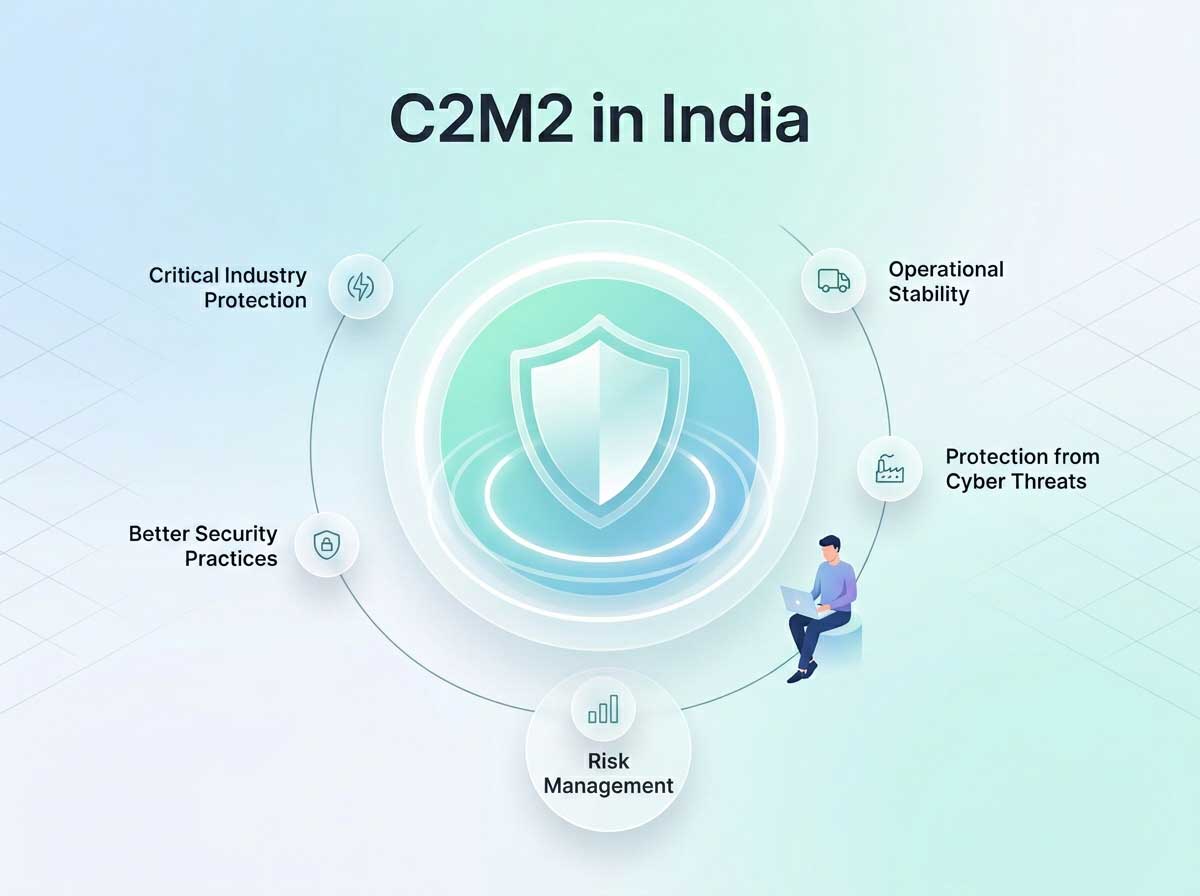
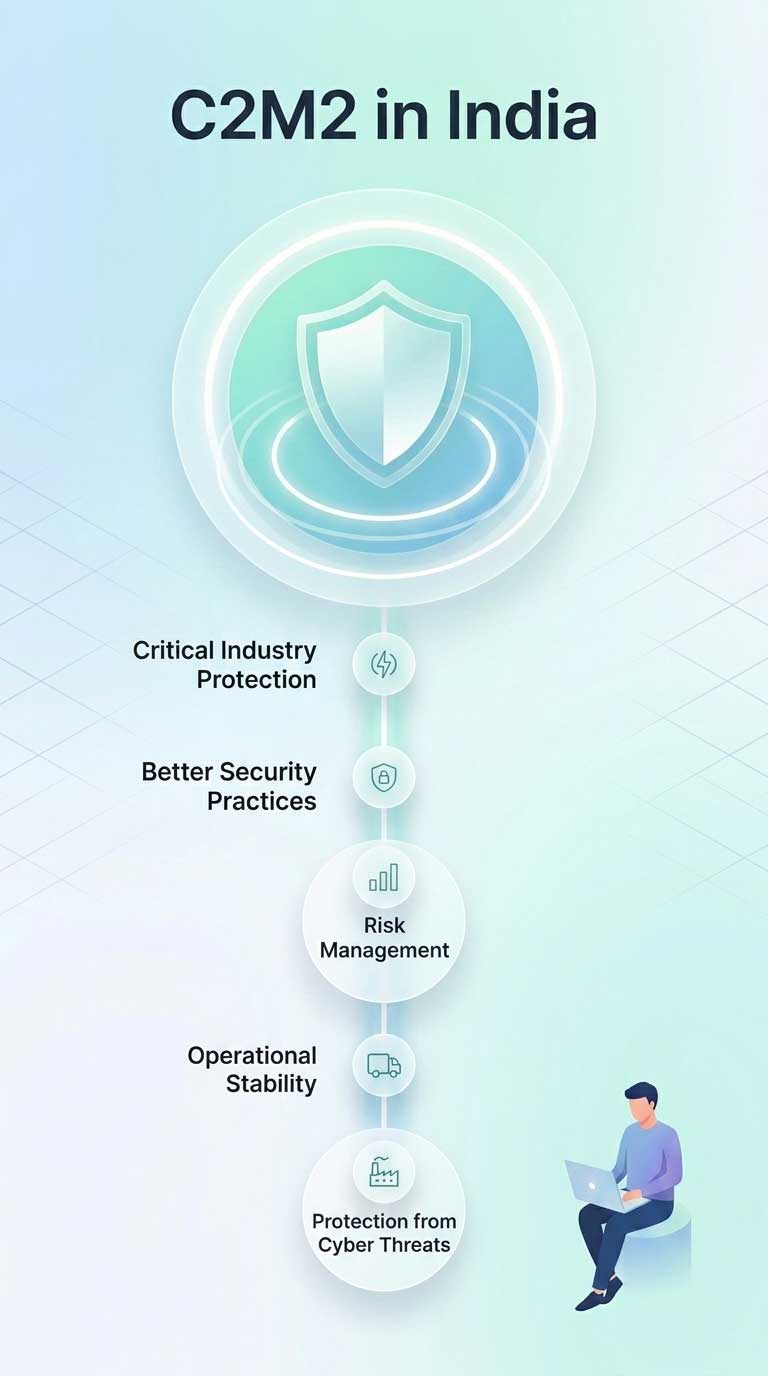
- India has many industries that depend on critical systems. These include power, transport, and manufacturing.
- Any disruption can cause a major impact.
- C2M2 helps us build strong security practices for such environments.
- It also supports better risk management and operational stability.
- With increasing cyber threats, having a maturity model becomes essential.
Who Needs C2M2 Assessment
Groups that take care of important systems can use C2M2.If our operations depend on secure systems, we should consider this model.
Below are key sectors that benefit the most.
Energy & Utilities
- Power plants and utility services must run without interruption.
- A cyberattack can stop supplies and have a big impact on many people.
- C2M2 helps us strengthen system control and resilience.
Oil, Gas, and Petrochemicals
- These industries use complex systems and networks.
- Security gaps can lead to operational and safety risks.
- Assessment helps us protect both data and physical processes.
Manufacturing & Logistics
- Factories and supply chains rely on connected systems.
- Any downtime can affect production and delivery.
- C2M2 helps us maintain smooth and secure operations.
IT/OT Managed Service Providers
- These providers manage both IT and operational technology.
- They handle systems for multiple clients.
- C2M2 ensures they follow strong and consistent security practices.
Key Benefits of C2M2 Adoption
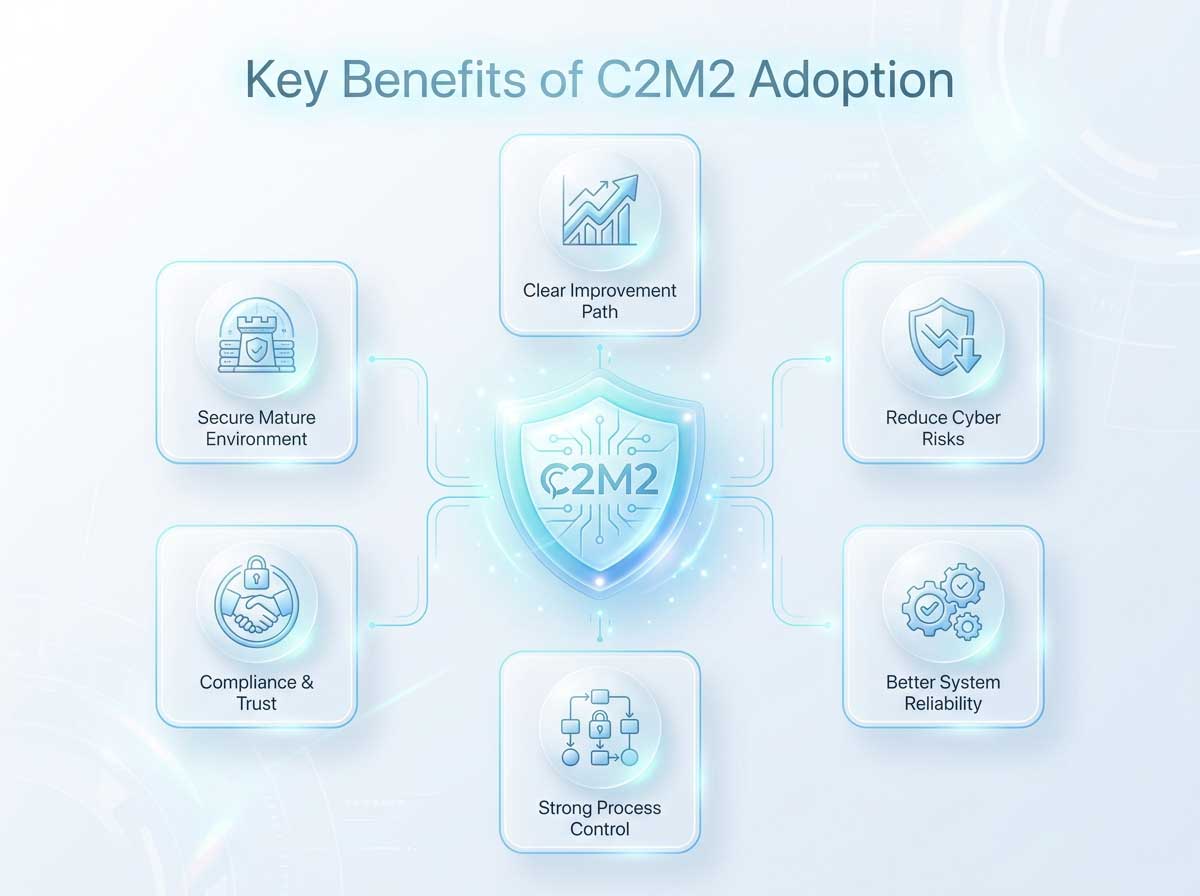
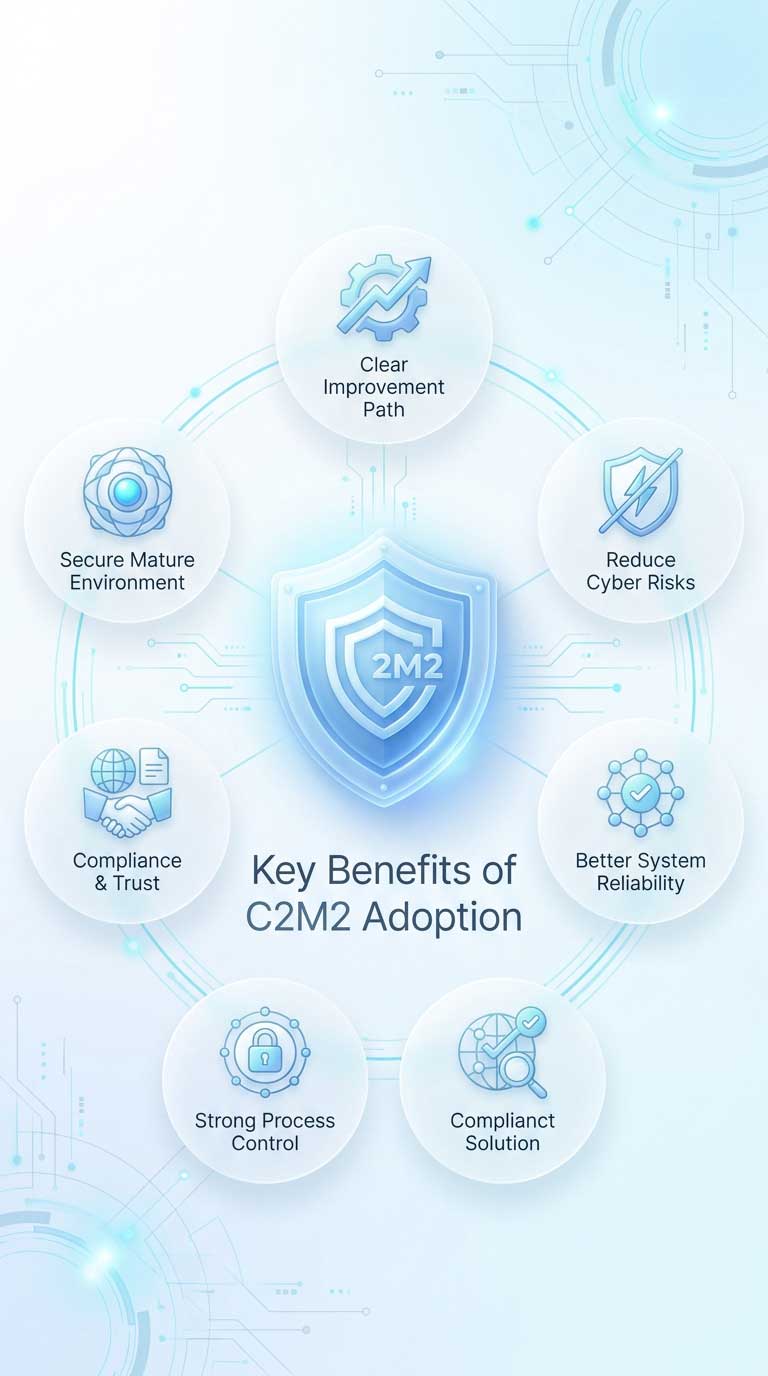
- C2M2 gives us a clear path for improvement.
- We understand where we stand and what to improve next.
- It helps us reduce risks and improve system reliability.
- We also gain better control over operations and processes.
- It helps with compliance and makes people trust you more.
- Overall, it helps us move towards a mature and secure environment.
The 10 Core Domains of C2M2
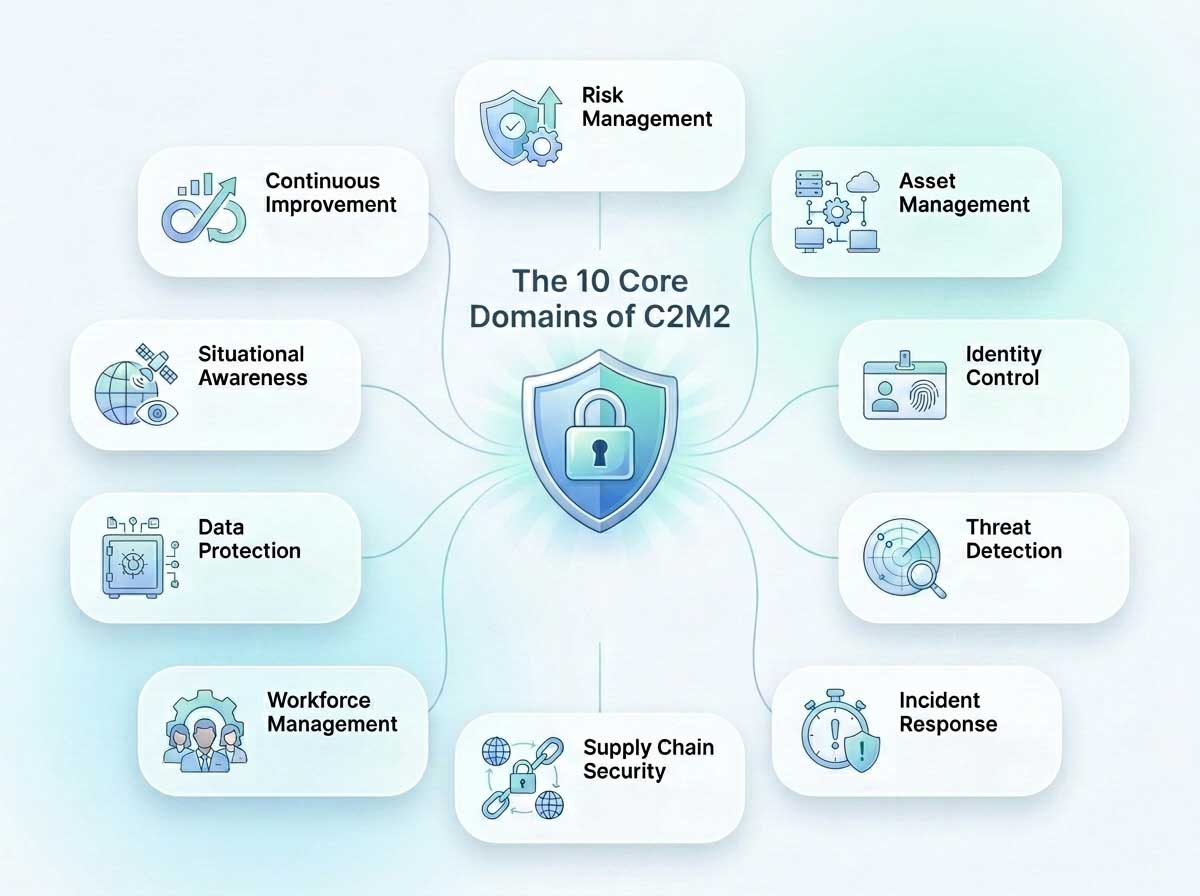
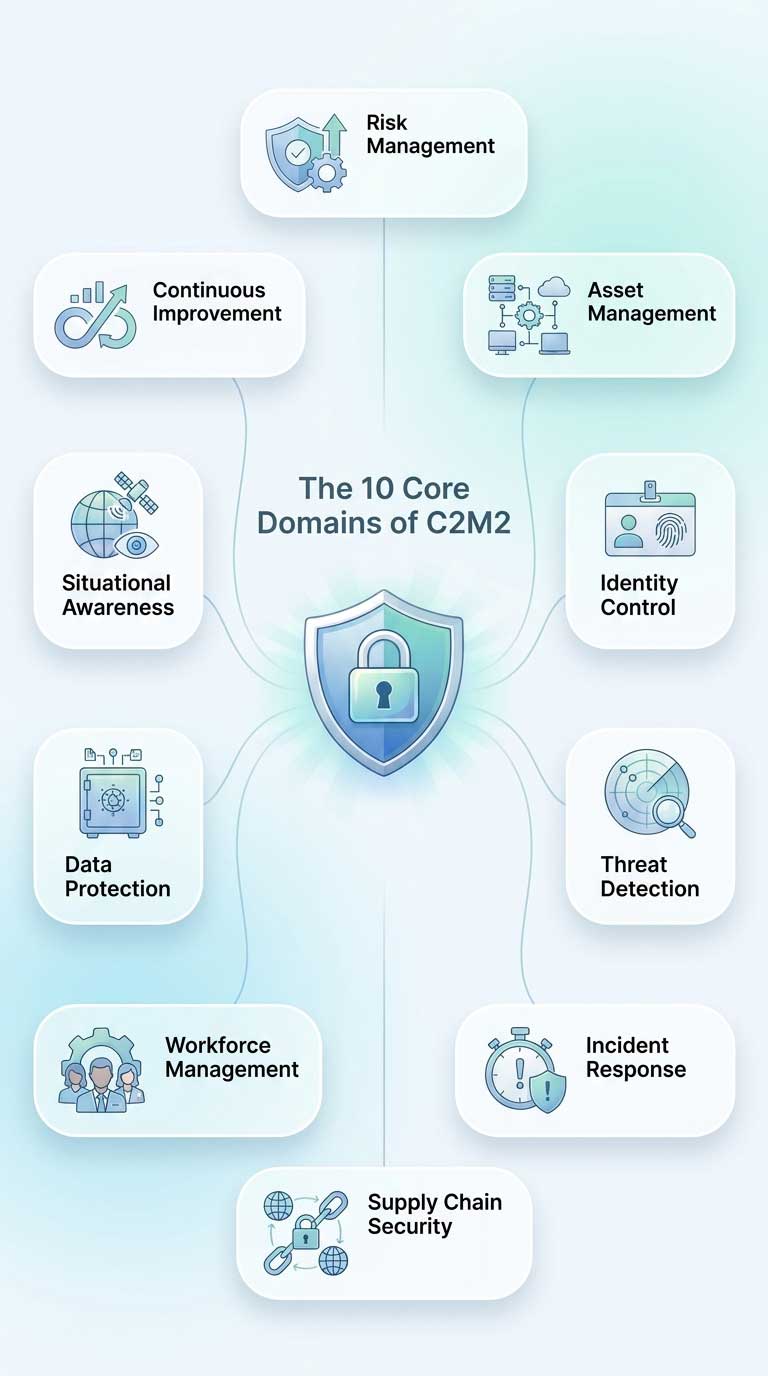
- C2M2 is built around ten key domains. Each domain works on a different part of security.
- These include risk management, asset management, identity control, and threat detection.
- Other domains cover incident response, supply chain security, and workforce management.
- Together, these domains give us a complete view of cybersecurity maturity.
- By improving each domain, we strengthen our overall system.
Documents Required for C2M2 Assessment
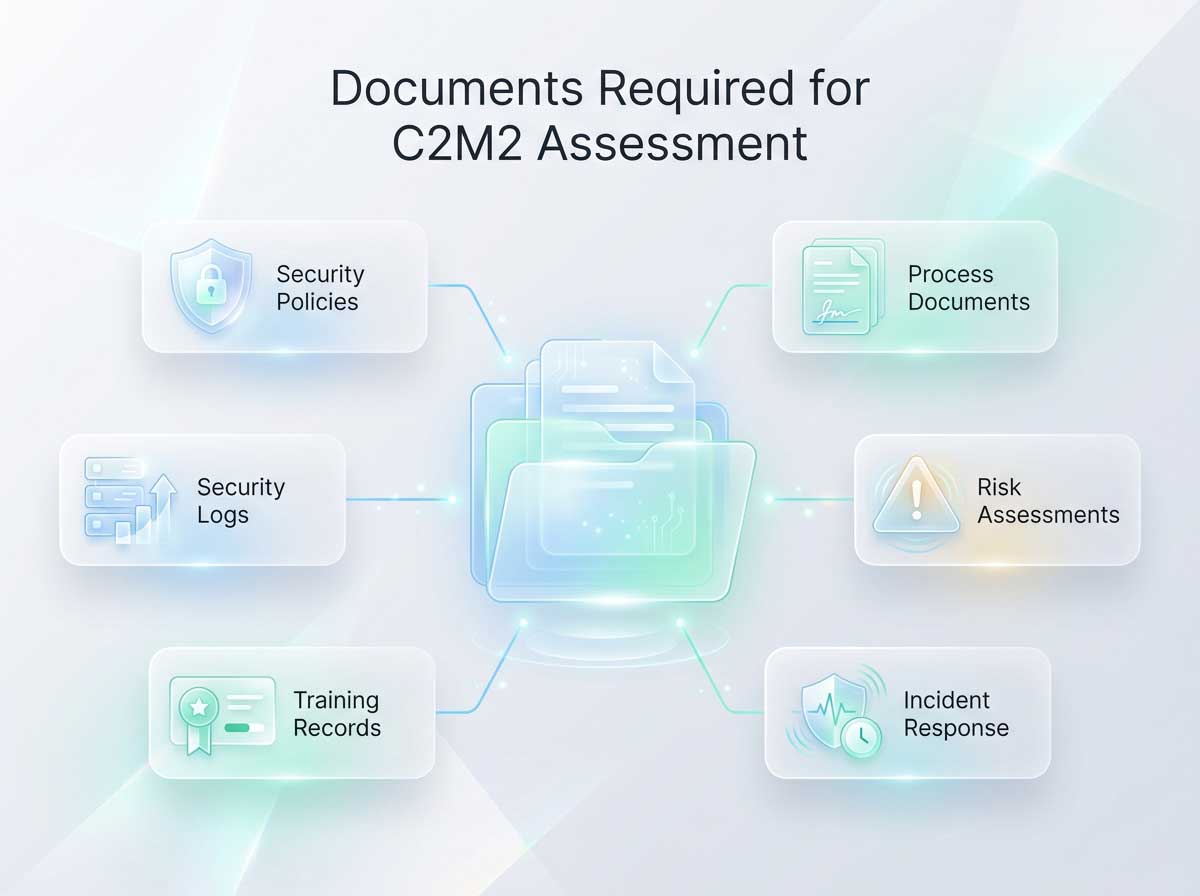
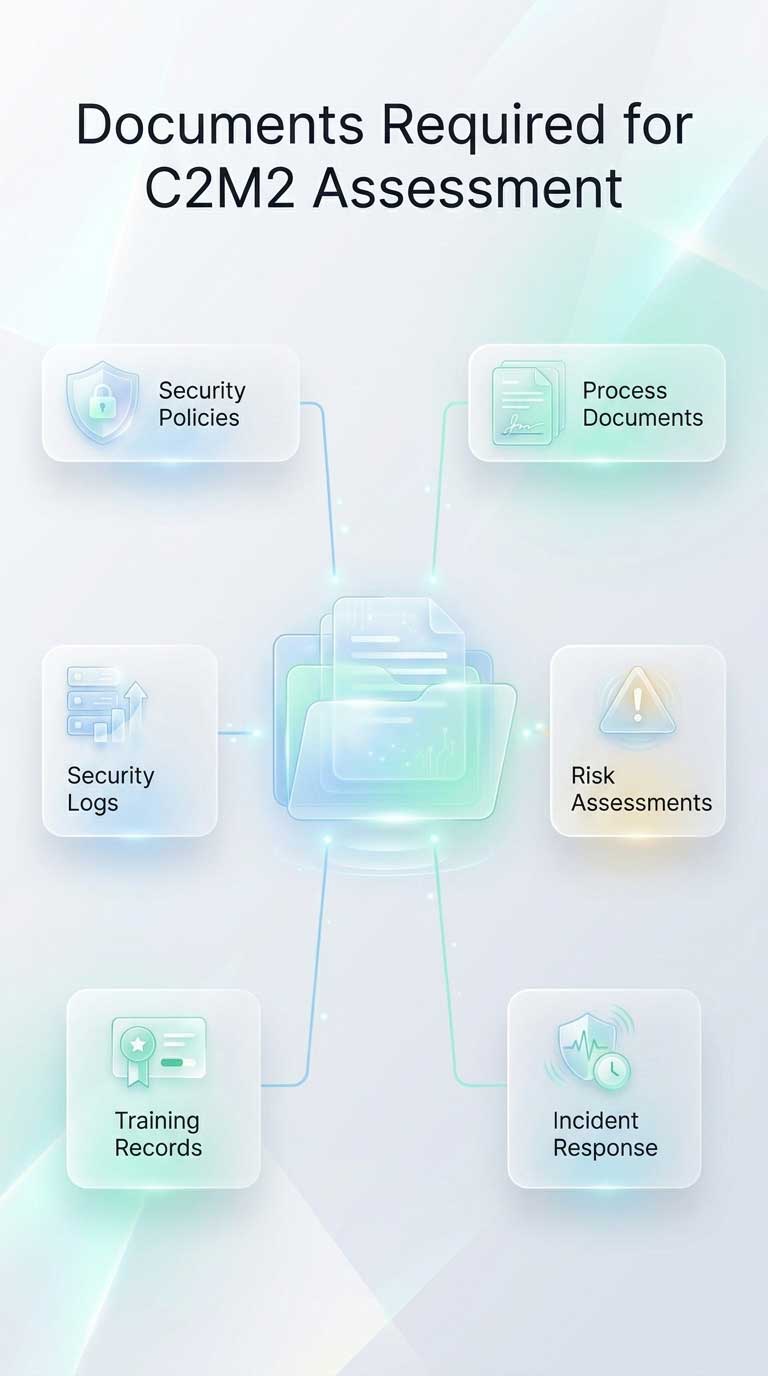
- Proper documentation is essential for assessment.
- We need policies that define security rules and responsibilities.
- Process documents show how tasks are performed.
- Risk assessments highlight potential threats.
- Incident response plans explain how we handle attacks.
- Training records and logs also support the process.
- These documents help us prove that our practices are consistent and effective.
The C2M2 Assessment Process in India
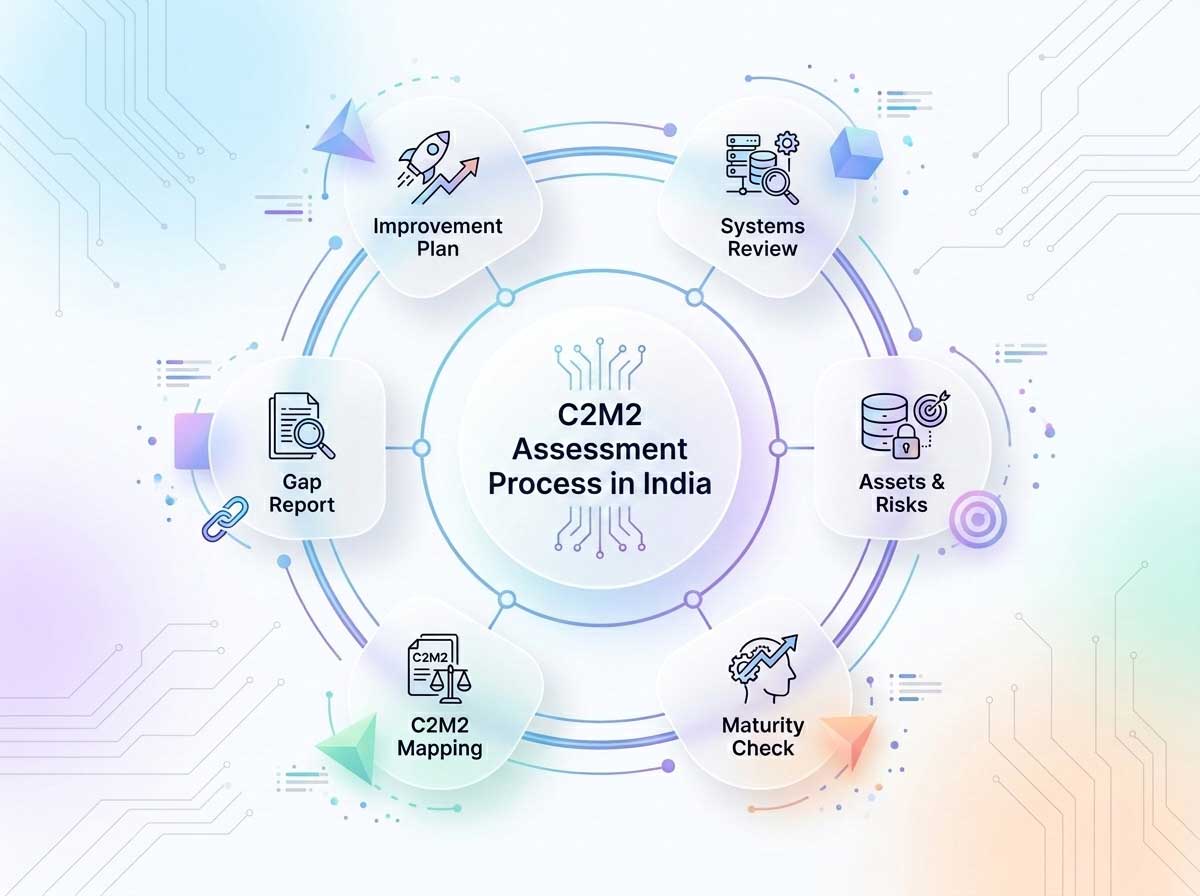
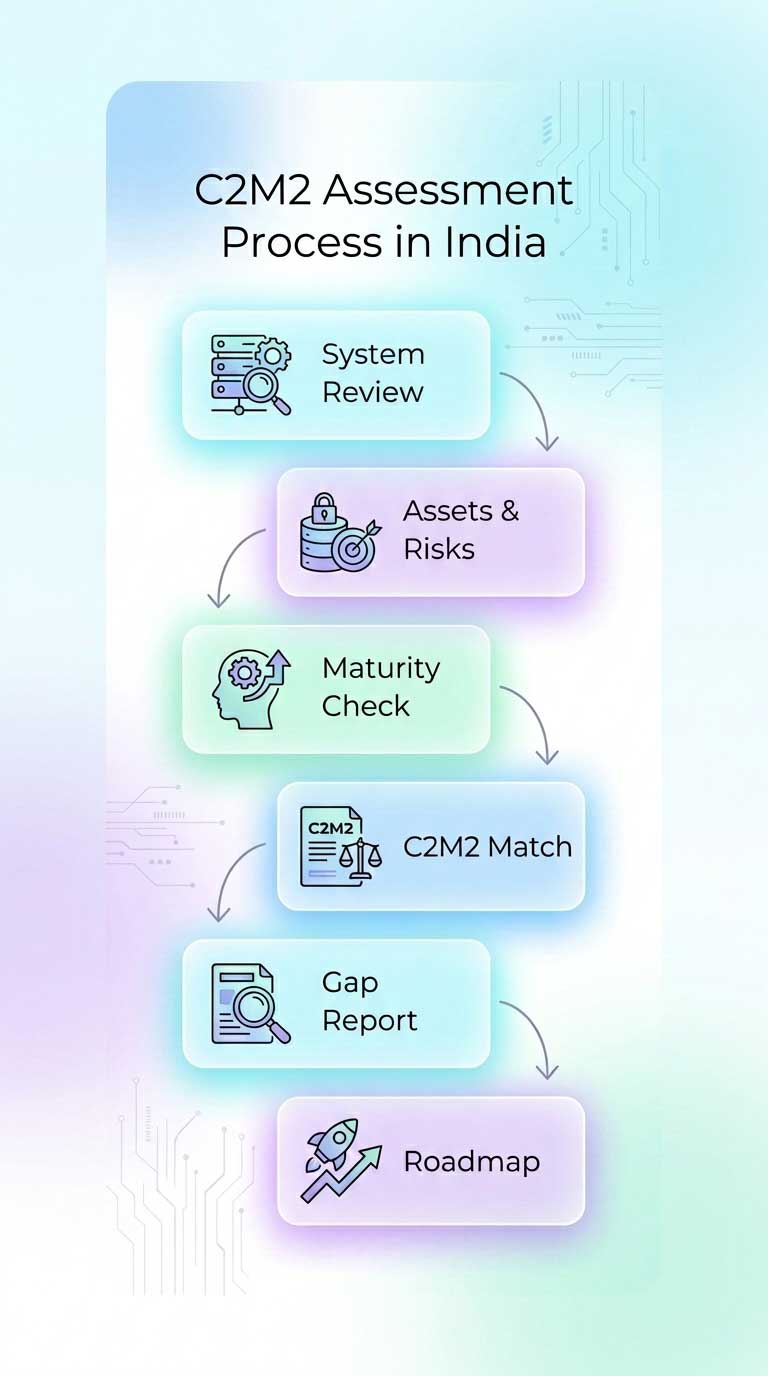
- The assessment begins with understanding our systems.
- We identify key assets, processes, and risks.
- Next, we evaluate each domain based on maturity levels.
- We compare current practices with C2M2 guidelines.
- After that, we prepare a report with findings and gaps.
- Finally, we create a roadmap for improvement.
- This structured approach helps us move forward step by step.
Timeframe for C2M2 Implementation
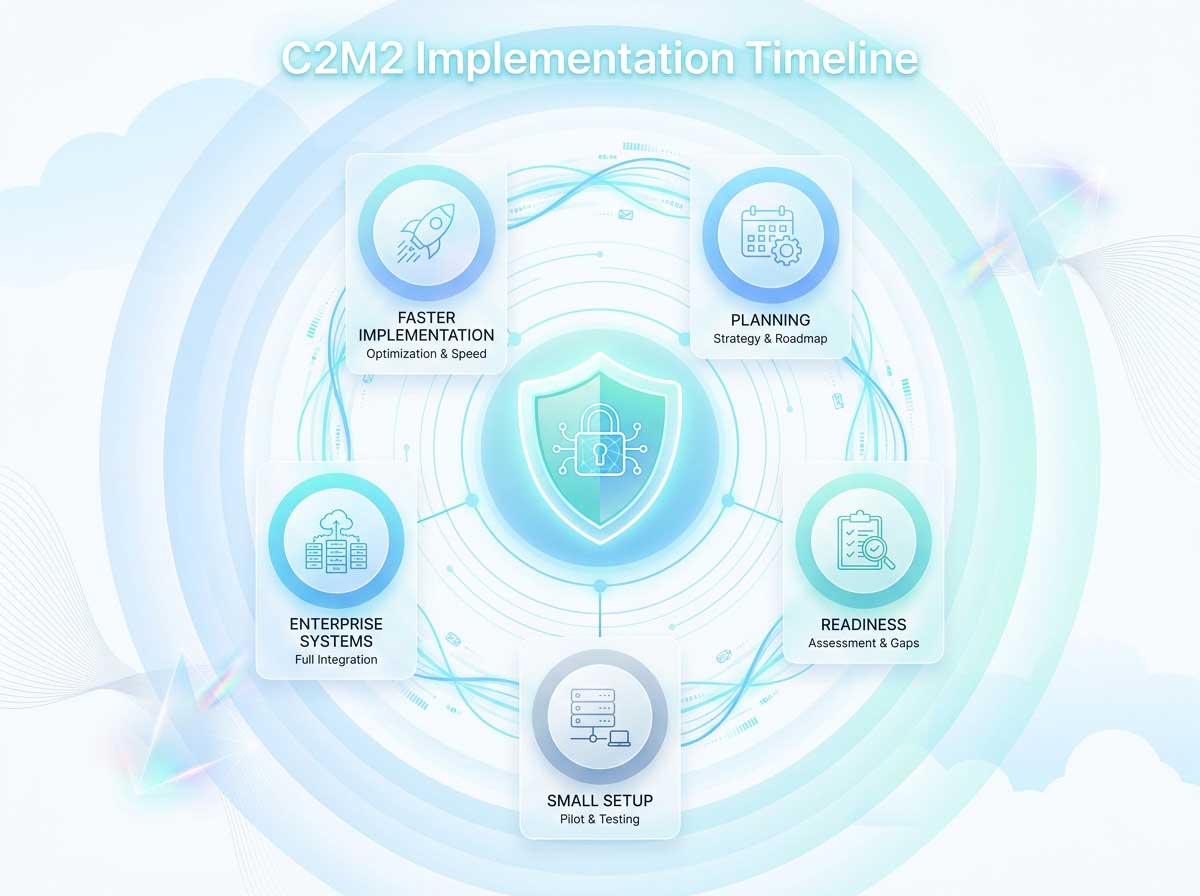
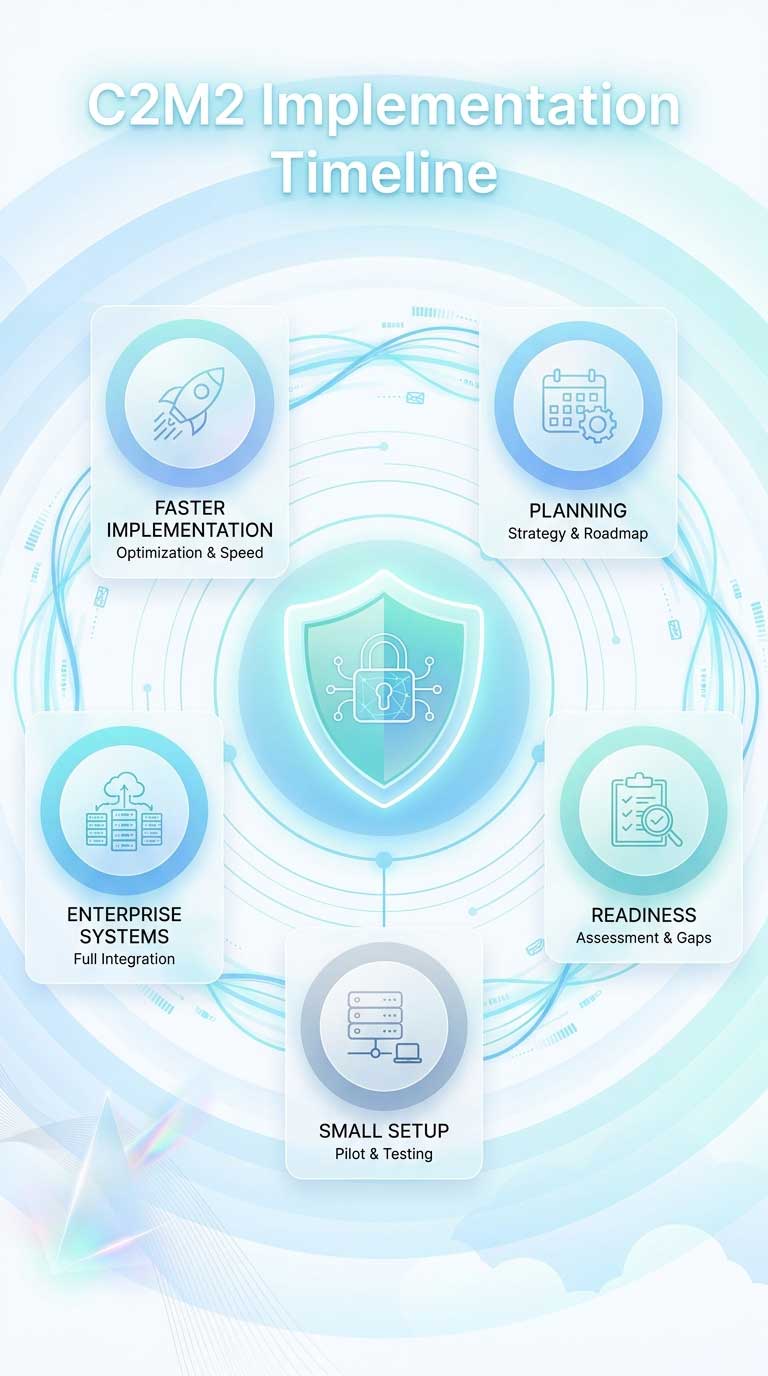
- The time needed depends on the organization.
- Smaller setups may take a few months.
- Larger and complex systems may require more time.
- Factors like existing controls and team readiness affect the timeline.
- With proper planning, we can speed up implementation.
How does C2M2 differ from ISO 27001 and NIST CSF
ISO 27001
- ISO 27001 focuses on building a security management system.
- It provides a set of controls and certification.
- A lot of people use it to keep their information safe.
NIST CSF
- It's easy to change the NIST CSF structure.
- Its main goals are to find threats, protect against them, react to them, and get back to normal after they happen.
- It is widely used for risk-based security planning.
C2M2
- C2M2 focuses on maturity levels.
- It helps us measure how advanced our practices are.
- It's especially helpful for areas with important infrastructure.
C2M2 Assessment Cost in India
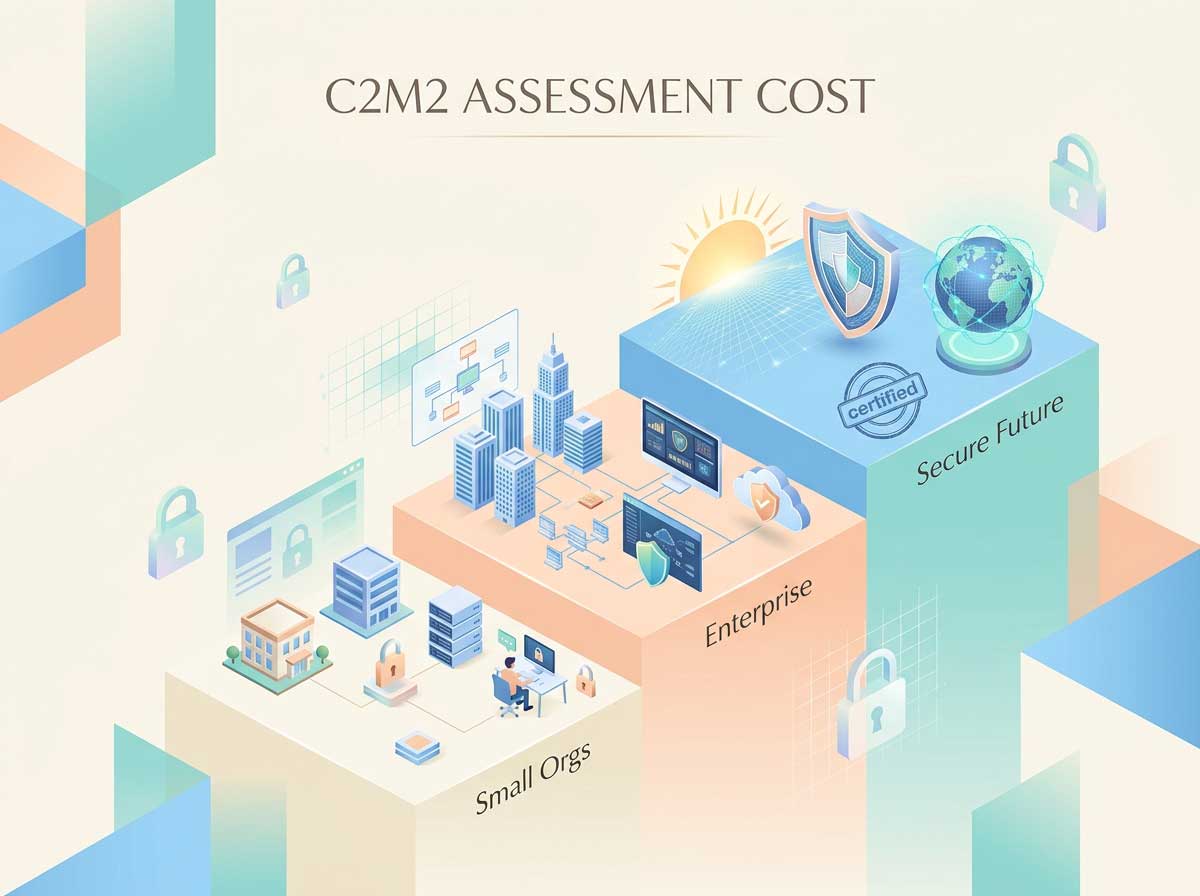
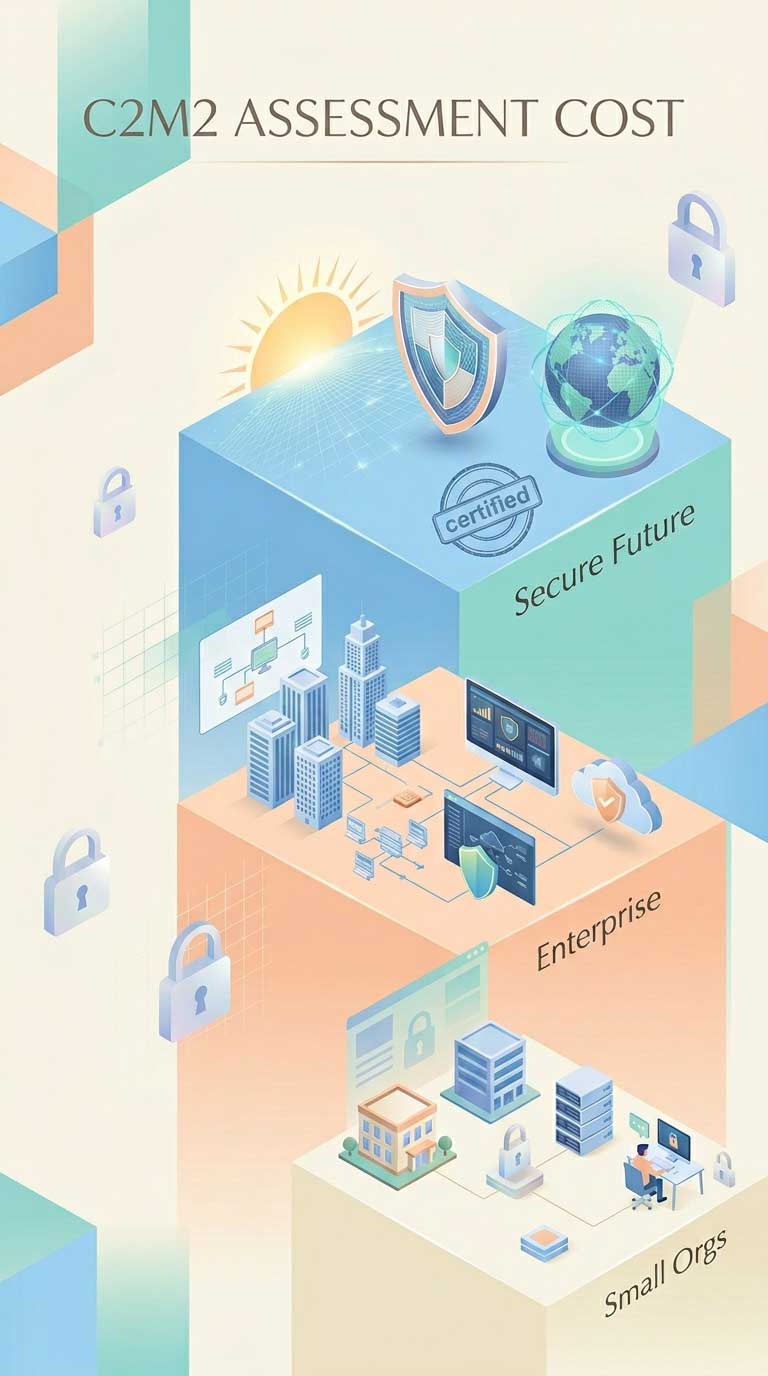
- The cost depends on size and complexity.
- Small organizations may have lower costs.
- Large enterprises may need more detailed assessments.
- Costs include consulting, evaluation, and reporting.
- It is best viewed as an investment in long-term security.
Why Choose Univate for C2M2 Consulting
- Univate.in provides expert guidance for C2M2 implementation.
- We get clear and practical support at every stage.
- Their team focuses on real-world solutions that work.
- They help us understand gaps and fix them efficiently.
- With the right partner, we can achieve strong cybersecurity maturity with confidence.
FAQs
Cybersecurity Capability Maturity Model (C2M2) in India
Not really, because there is no such thing like “C2M2 Certification”. C2M2 is a maturity model which can help you improve your cybersecurity in your organization over time.
No, C2M2 is not mandatory in India. Companies can opt-in for C2M2 with their own choice for improving cybersecurity maturity.
C2M2 was specifically created for the energy industry. But today, C2M2 can also be used in other sectors to enhance cybersecurity maturity.
IT security refers to protecting information technology resources. OT security relates to the protection of physical assets such as industrial control systems.
The workshop will last for a few days. The actual duration will depend on several factors, such as the nature and size of your organization.
No, there is no requirement that you must reach MIL 3 in each domain. Each organization chooses its maturity level according to its needs.
No, you will not be asked to spend extra money on software solutions. Improvements in processes, practices, and governance are what C2M2 is all about.
C2M2 assessment can certainly be conducted remotely. The workshops and assessment process may be done virtually with key stakeholders.
C2M2 assessments should be conducted annually. Alternatively, you may want to conduct them whenever there are significant changes in your systems or security strategies.
Absolutely! They can help you in identifying the gaps and resolving them. Univate.in helps improve process maturity and assists you in reaching better maturity levels in cybersecurity.