





COBIT Framework Implementation in India
Overview of COBIT Framework
The international framework that organizations use for IT governance and management exists in COBIT system. The system enables organizations to achieve their business objectives through IT system alignment. It also ensures better control, performance, and risk management.
What is COBIT?
The Control Objectives for Information and Related Technologies framework establishes an organized method to handle IT system administration and operational governance. Organizations use it to improve decision-making and ensure IT supports business objectives.
Importance of COBIT for Organizations in India
COBIT is important for Indian organizations that rely on IT for operations and growth. It helps improve efficiency, manage risks, and ensure compliance with regulations. It also supports better alignment between business and IT teams.
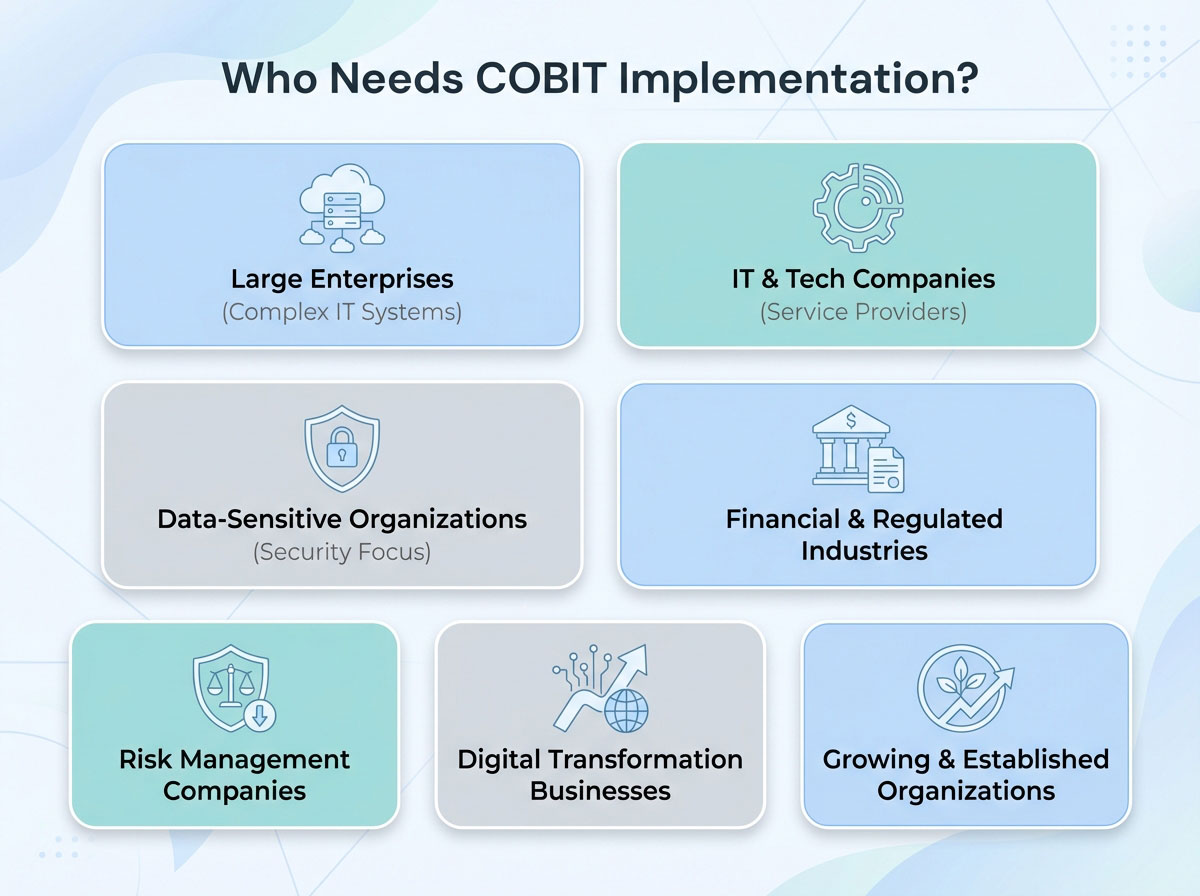
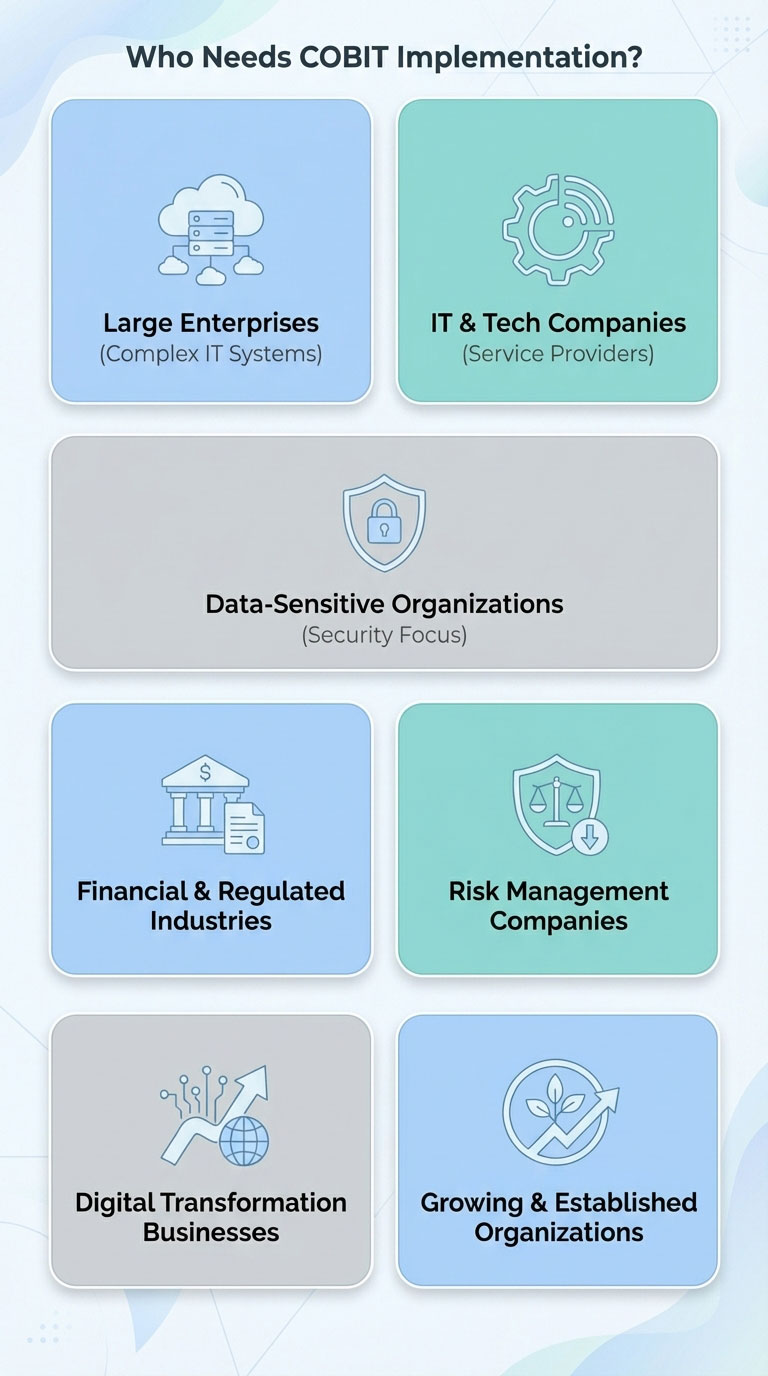
Who Needs COBIT Implementation?
COBIT implementation is useful for organizations that want to improve IT governance and align IT with business goals, such as:
- Large enterprises with complex IT systems
- IT service providers and technology companies
- Organizations handling sensitive data
- Financial institutions and regulated industries
- Companies aiming for better risk management
- Businesses undergoing digital transformation
Both growing and established organizations can benefit from COBIT implementation.
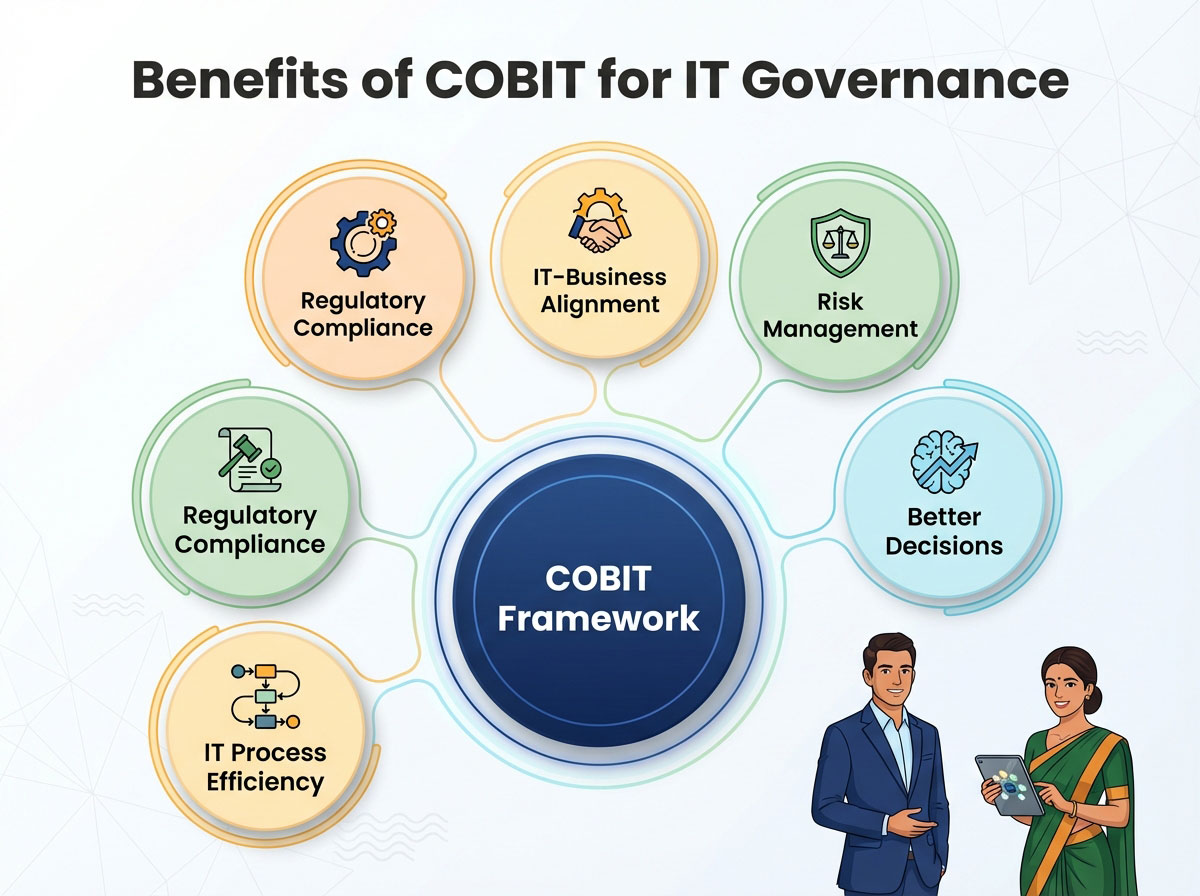
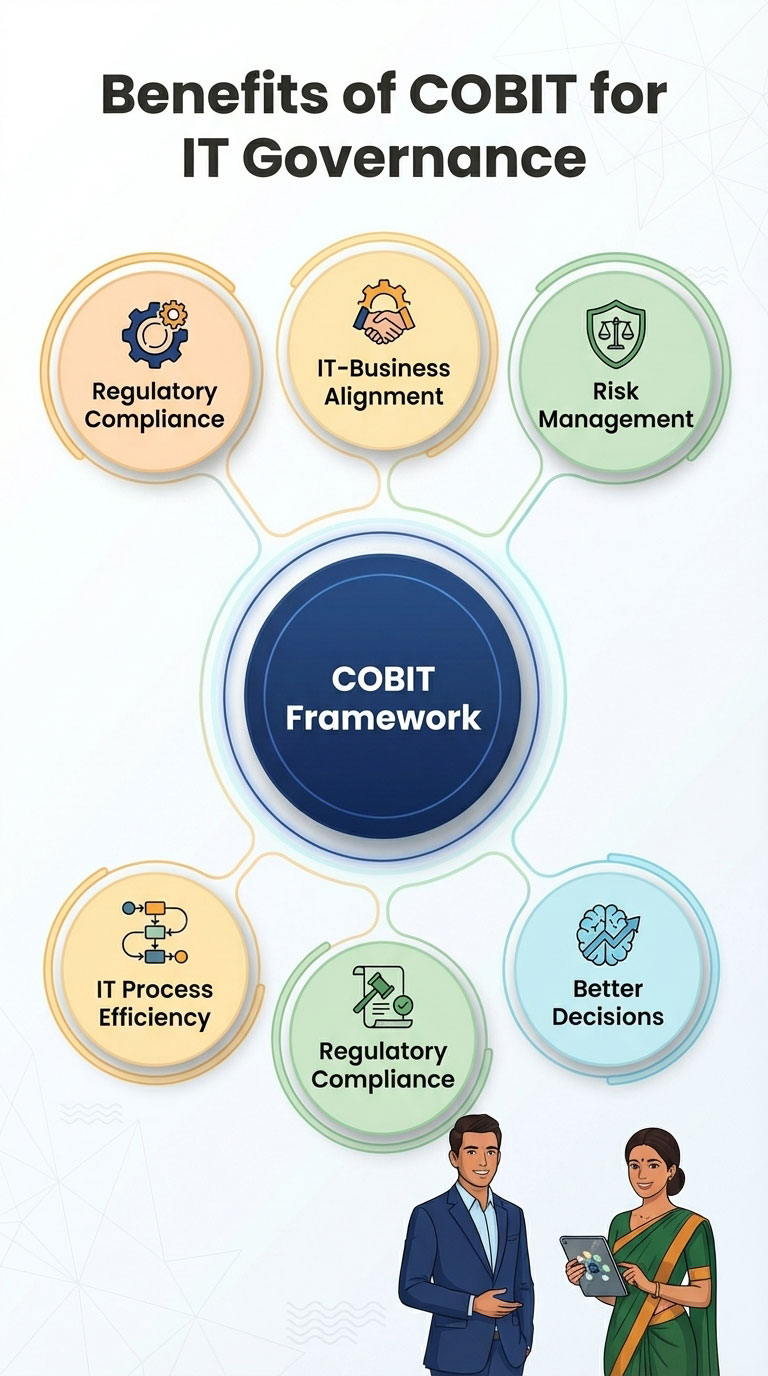
Benefits of COBIT for IT Governance
COBIT provides several benefits that help organizations manage IT effectively and achieve business goals, including:
- Better alignment between IT and business
- Improved risk management and control
- Enhanced decision-making
- Increased efficiency in IT processes
- Stronger compliance with regulations
- Better performance measurement
These benefits help organizations build a strong IT governance system.
Key Components of the COBIT Framework
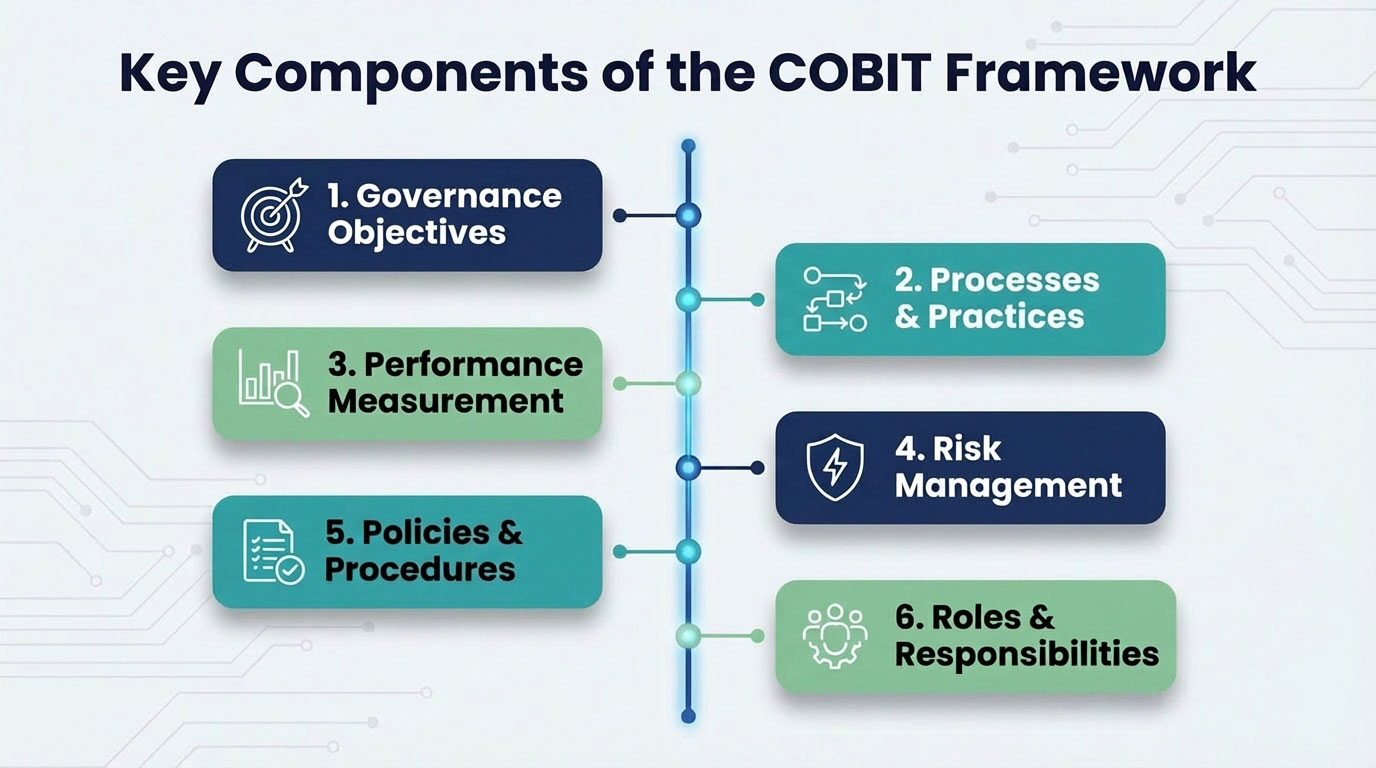
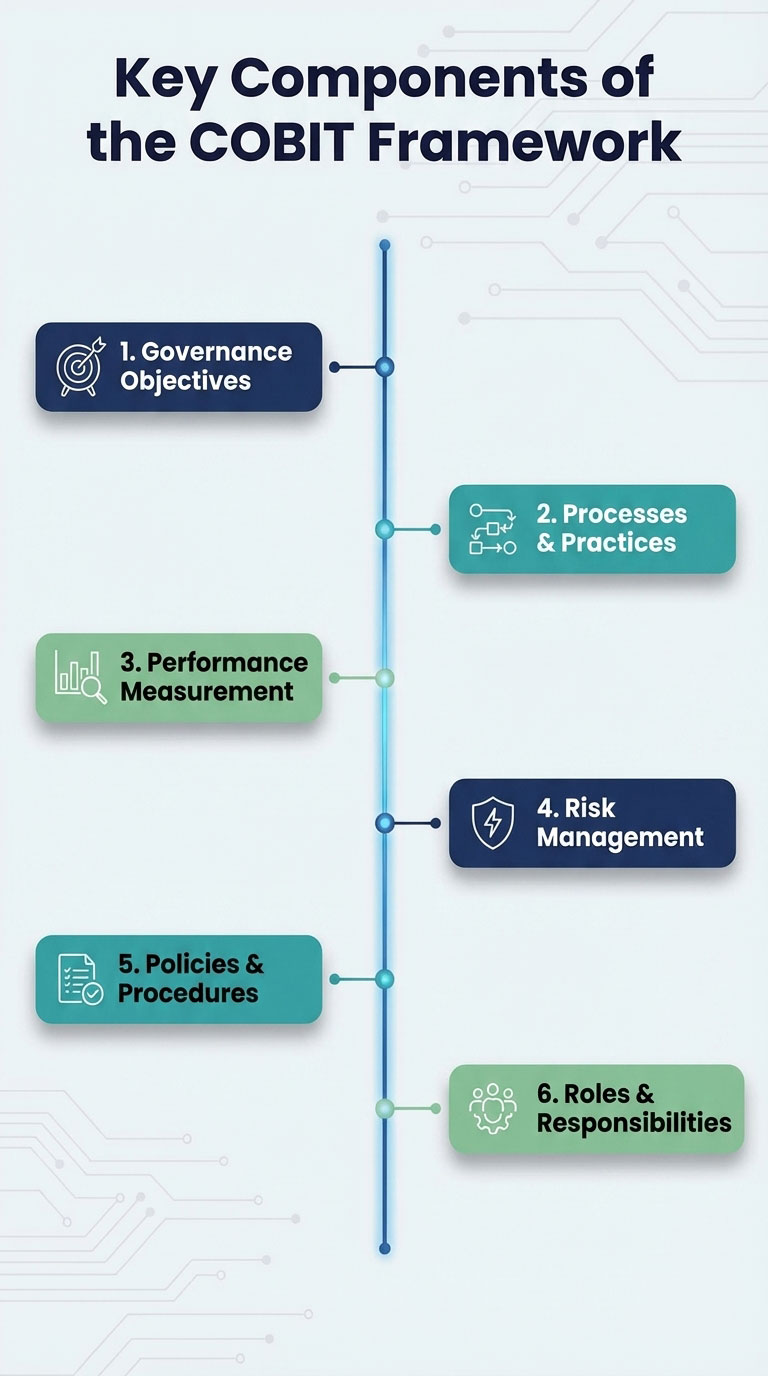
The COBIT framework includes key components that help organizations manage IT processes effectively, such as:
- Governance and management objectives
- Processes and practices
- Performance measurement systems
- Risk management guidelines
- Policies and procedures
- Roles and responsibilities
The IT governance system, which includes all its components, establishes a comprehensive framework for effective governance operations.
COBIT Implementation Process
The implementation process starts with understanding current IT practices. Then, organizations identify gaps and define improvement areas. They execute the process after which they track the results. The organization uses continuous improvement processes to ensure its operations will succeed throughout time.
COBIT Assessment and Maturity Evaluation
The assessment process uses COBIT Assessment and Maturity Evaluation to determine the maturity level of IT process management. It evaluates maturity levels and identifies areas for improvement. The assessment enables organizations to evaluate their current operational state while creating their future development strategy.
Integration of COBIT with Other Frameworks
COBIT can be integrated with other frameworks to improve overall governance and management, such as:
- ISO 27001 for information security
- ITIL for IT service management
- CMMI for process improvement
- Risk management frameworks
- Compliance standards
- Internal audit practices
- ISO 27001 for information security
- ITIL for IT service management
- CMMI for process improvement
- Risk management frameworks
- Compliance standards
- Internal audit practices
Integration helps organizations create a unified and effective system.
COBIT Implementation Challenges
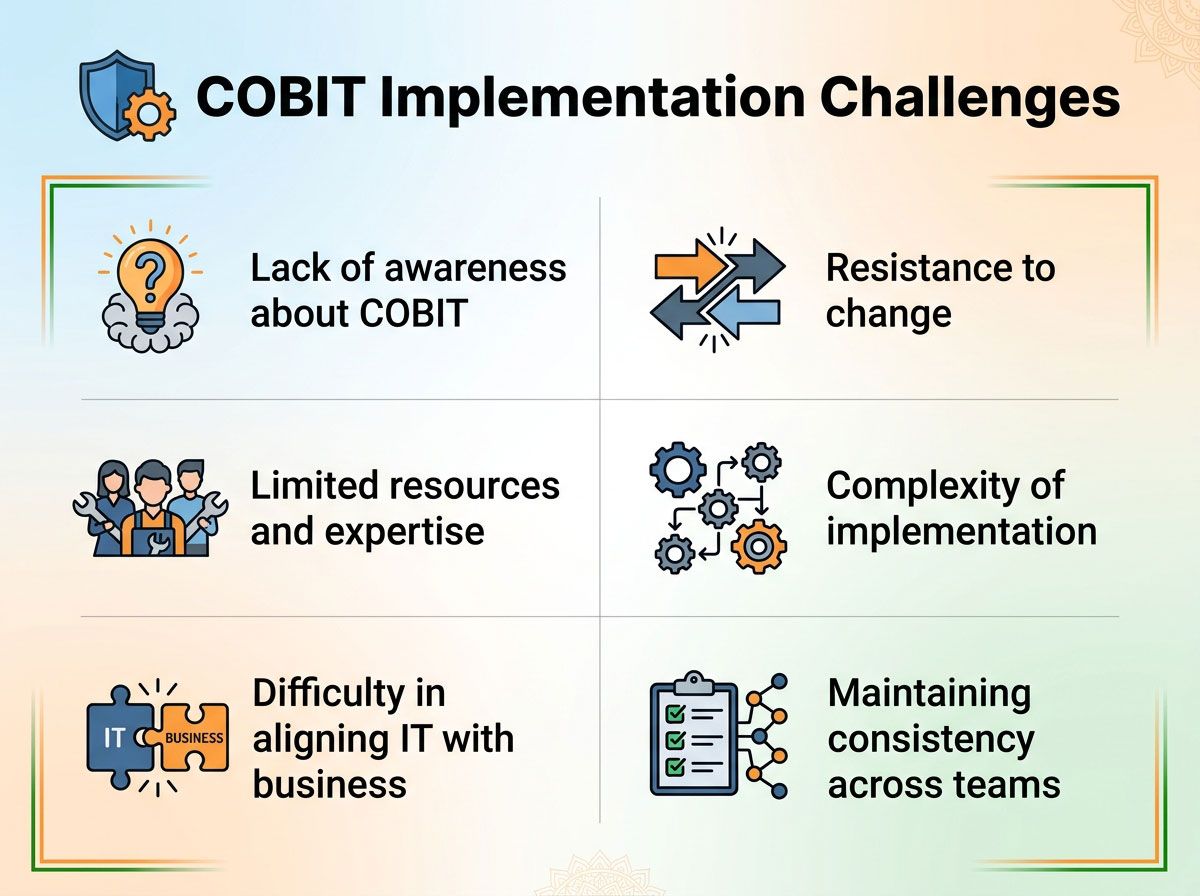
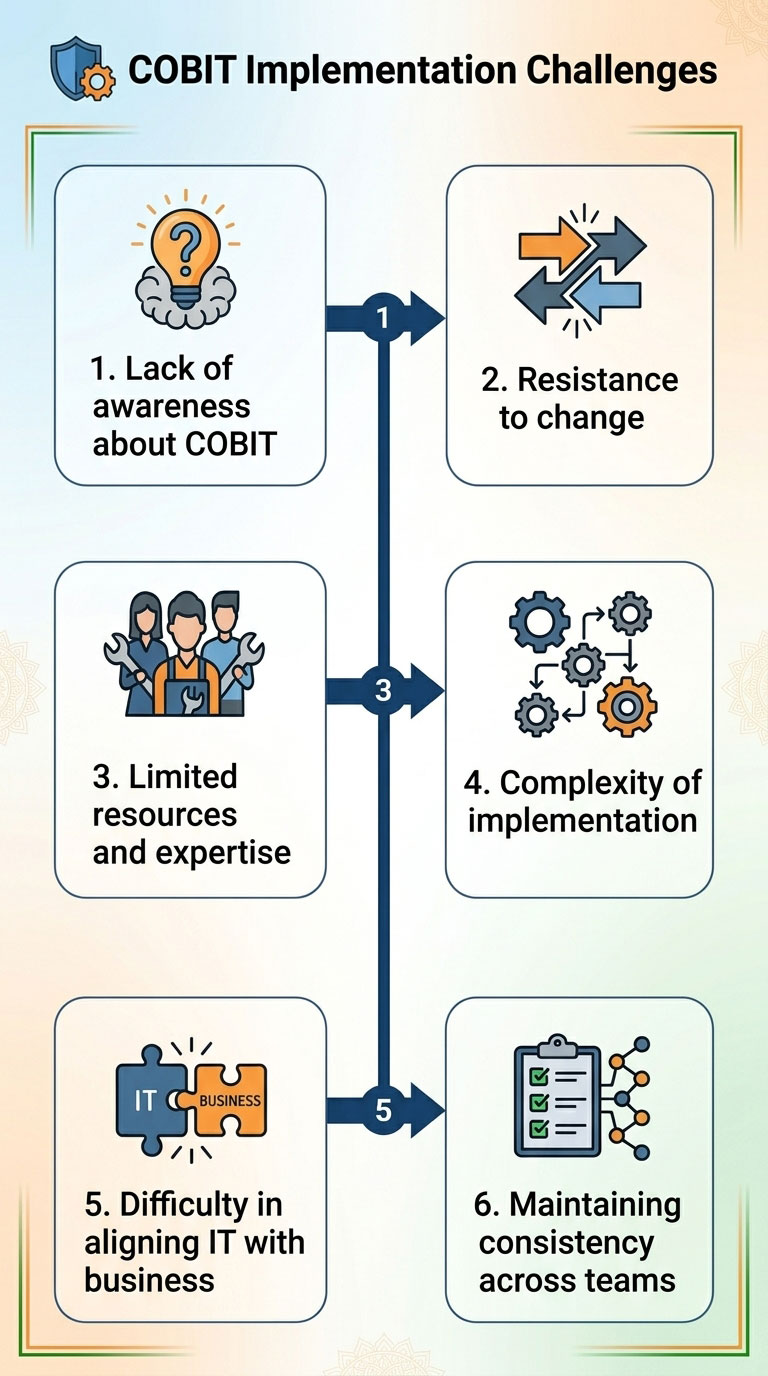
Organizations may face several challenges while implementing COBIT, especially during the initial stages, such as:
- Lack of awareness about COBIT
- Resistance to change
- Limited resources and expertise
- Complexity of implementation
- Difficulty in aligning IT with business
- Maintaining consistency across teams
Addressing these challenges early helps ensure successful implementation.
Why Choose Univate for COBIT Consulting in India
Organizations looking for expert support can choose Univate for COBIT implementation due to the following reasons:
- Experienced IT governance consultants
- End-to-end implementation support
- Customized solutions for business needs
- Proven track record of success
- Strong focus on compliance and risk management
- Practical and result-oriented approach
- Experienced IT governance consultants
- End-to-end implementation support
- Customized solutions for business needs
- Proven track record of success
- Strong focus on compliance and risk management
- Practical and result-oriented approach
Univate helps organizations achieve strong IT governance and long-term success.