





HACCP Certification in India
What is HACCP Certification
- Risk Assessment and Critical Control Points is what HACCP stands for. This is how they make sure food is safe at every step of the way.
- We use HACCP to find possible dangers in the way we handle food. Then we take care of those risks before they hurt someone.
- This approach focuses on prevention, not just inspection. It helps us keep food safe from raw material to final delivery.
- HACCP certification shows that our processes meet global food safety standards.
Importance of HACCP in India
- Food safety is a growing concern in India. With rising demand, businesses must ensure quality and hygiene.
- HACCP helps us build safe and reliable food systems. Because of this, there is less chance of pollution and health risks.
- It also helps people follow the rules for food safety.
- By following HACCP, we improve trust with customers and regulators.
Who Needs HACCP Certification
Food Processing Units
- These units handle raw materials and convert them into finished products.
- They must control risks at every stage. HACCP helps ensure safe processing.
Food Packaging Manufacturers
- Packaging plays a key role in food safety.
- Unsafe materials can affect food quality. HACCP ensures safe packaging practices.
Hotels & Cloud Kitchens
- Food service businesses handle food daily.
- They must follow hygiene and safety standards. HACCP helps maintain quality in preparation and delivery.
FMCG & Beverages
- Companies producing packaged foods and drinks need strict quality control.
- HACCP helps maintain consistency and safety in large-scale production.
Logistics & Cold Storage
- Food needs to be stored and moved in the right way.
- HACCP helps maintain temperature control and prevent spoilage.
Key Benefits of HACCP Implementation
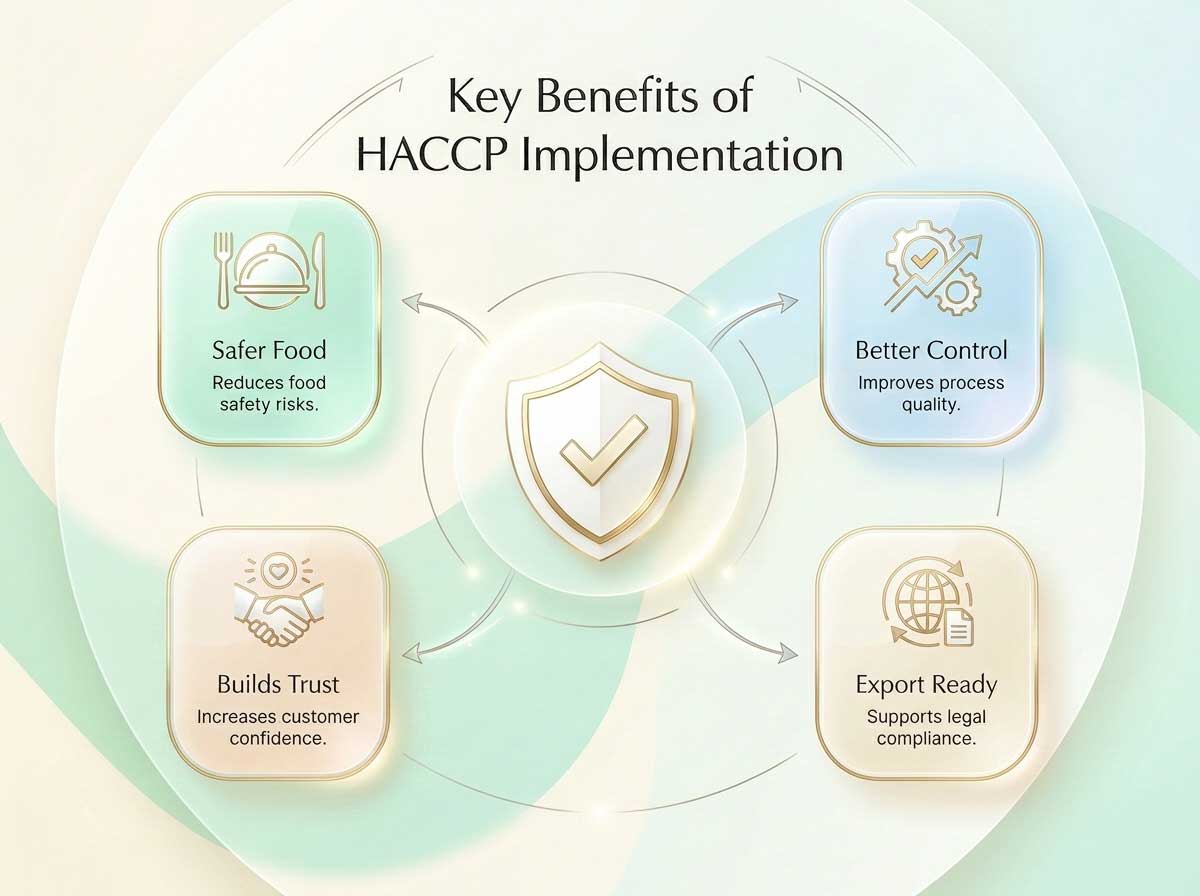
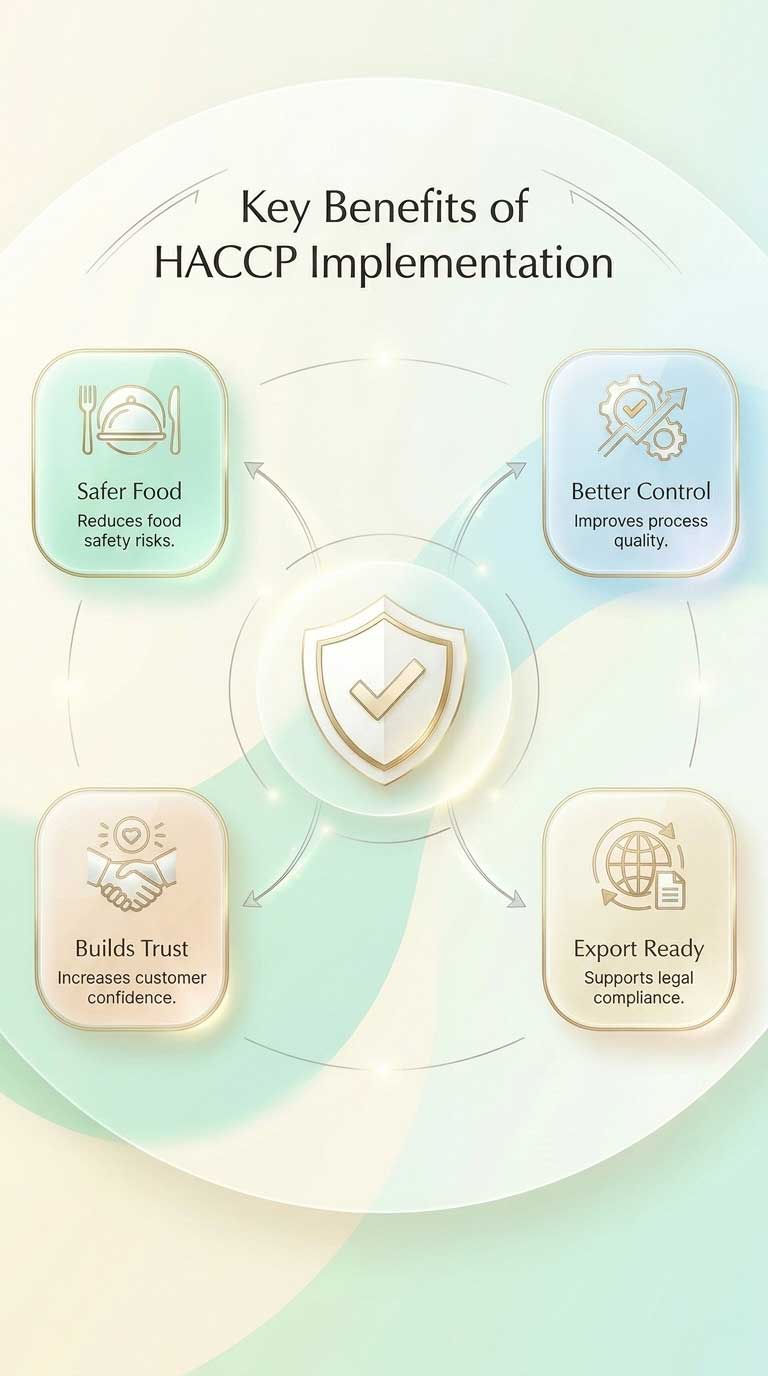
HACCP offers many benefits.
- It lowers risks and makes food safer.
- We get a better handle on quality and methods.
- Clients and business partners will trust you more.
- It also helps in meeting legal and export requirements.
Overall, it strengthens our food safety system.
The 7 Core Principles of HACCP
Conduct a Hazard Analysis
- We identify potential hazards in the process.
- Some of these risks are chemical, biological, or physical.
- Understanding hazards helps us control them.
Determine Critical Control Points (CCPs)
- We find points where control is essential.
- These are stages where risks can be prevented or reduced.
- CCPs are key to maintaining safety.
Establish Critical Limits
- We set limits for each CCP.
- This may include temperature, time, or other factors.
- Limits ensure that processes stay within safe conditions.
Establish Monitoring Procedures
- We track each CCP regularly.
- Monitoring helps us quickly spot any changes.
- It makes sure that the tools are working right.
Establish Corrective Actions
- If something goes wrong, we take action.
- Corrective steps fix the issue and prevent it from repeating.
- This keeps the system reliable.
Record-Keeping and Documentation
- We maintain records of all activities.
- Documentation shows compliance and supports audits.
- It helps us track performance over time.
Establish Verification Procedures
- We verify that the system works as planned.
- This includes testing, audits, and reviews.
- Verification ensures effectiveness.
The HACCP Certification Process
Prerequisite Programs (PRP) Audit
- We begin by checking basic hygiene practices.
- This includes sanitation, staff hygiene, and facility conditions.
- PRPs form the foundation of HACCP.
HACCP Plan Development
- We create a detailed HACCP plan.
- This includes hazards, CCPs, limits, and controls.
- The plan guides implementation.
External Audit
- A certification body reviews our system.
- They check if all requirements are met.
- If successful, we receive HACCP certification.
Process Flow Mapping
- We map each step of the process.
- This helps us figure out how the food gets from one place to another.
- It supports hazard analysis.
Training & Implementation
- We train staff on HACCP practices.
- Then we put the plan into action in our daily work.
- Training ensures consistency.
Implementation Requirements Explained
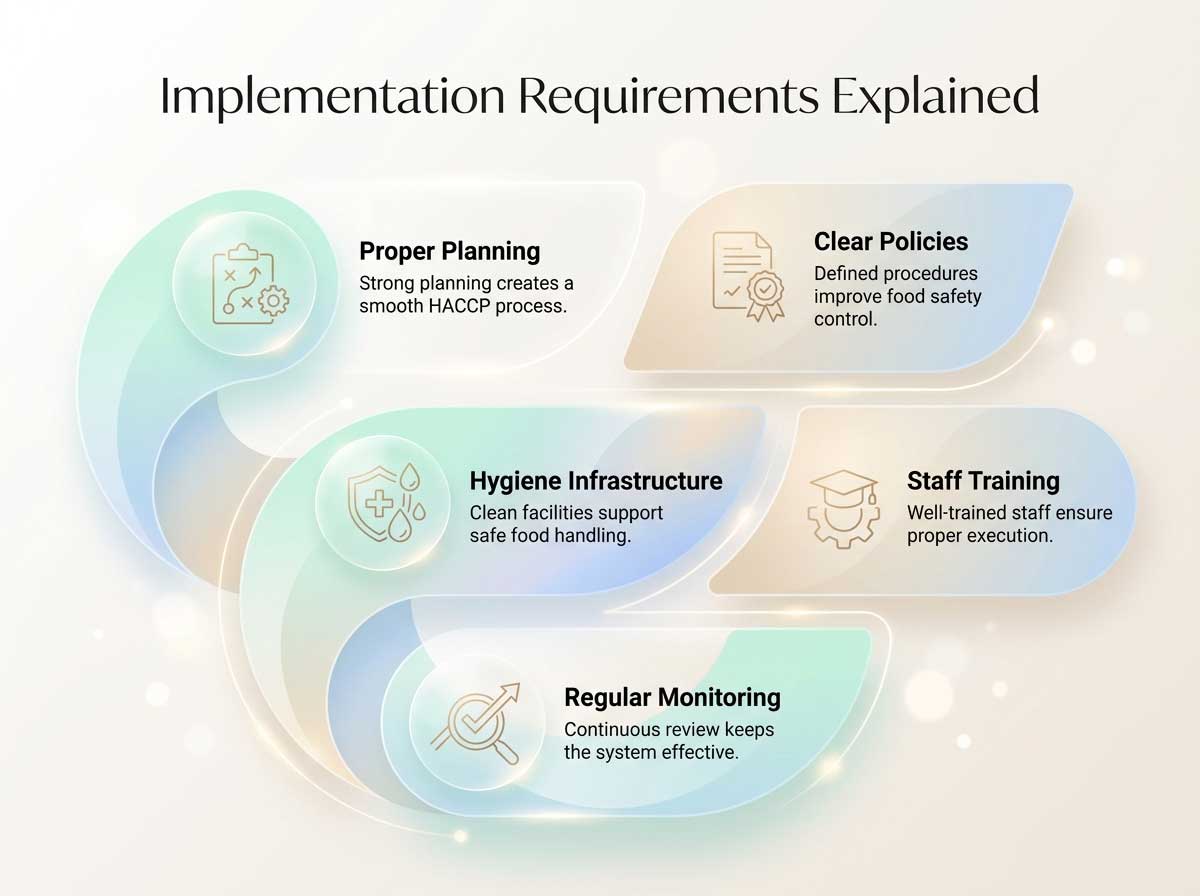
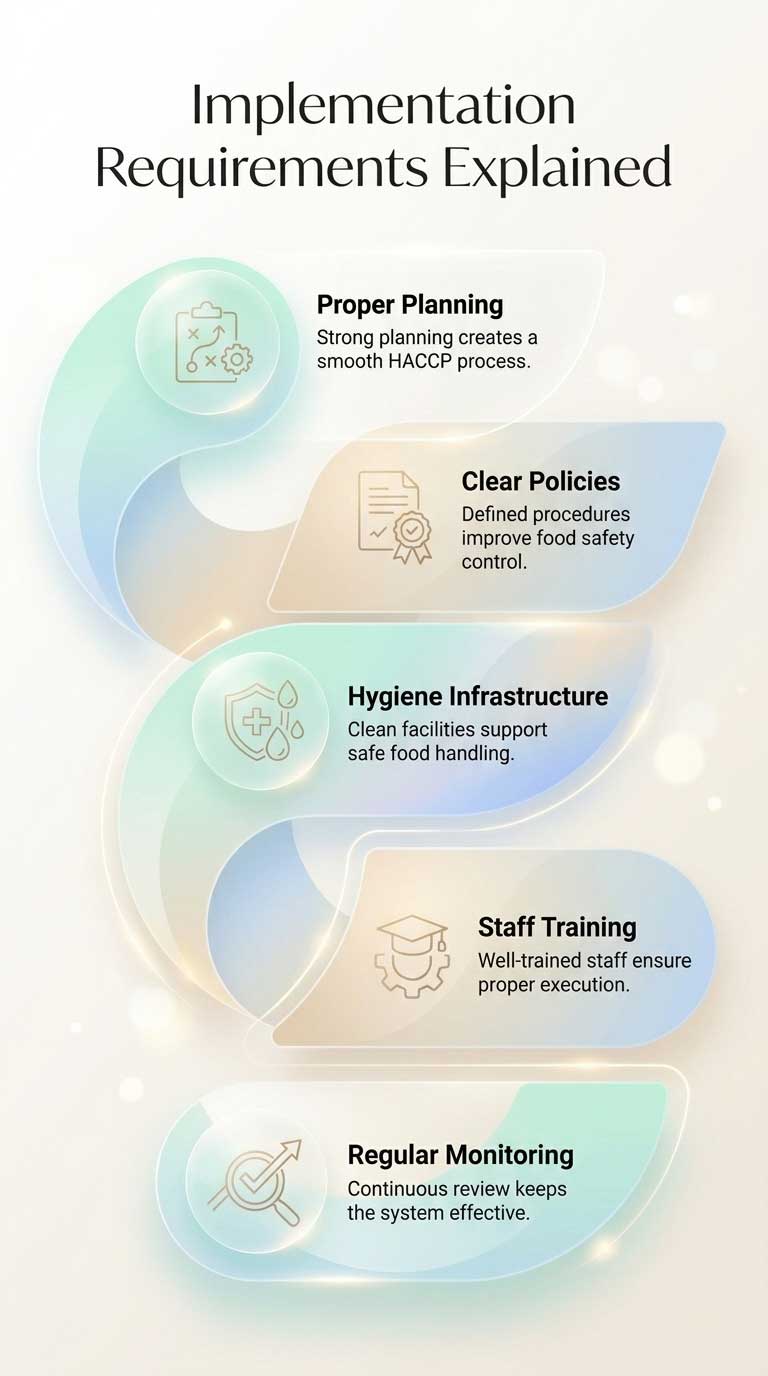
- To implement HACCP, we need proper planning.
- We must set clear policies and procedures.
- Infrastructure should support hygiene and safety.
- Staff training is essential for effective execution.
- Regular monitoring and review keep the system strong.
- All these things work together to keep food safe.
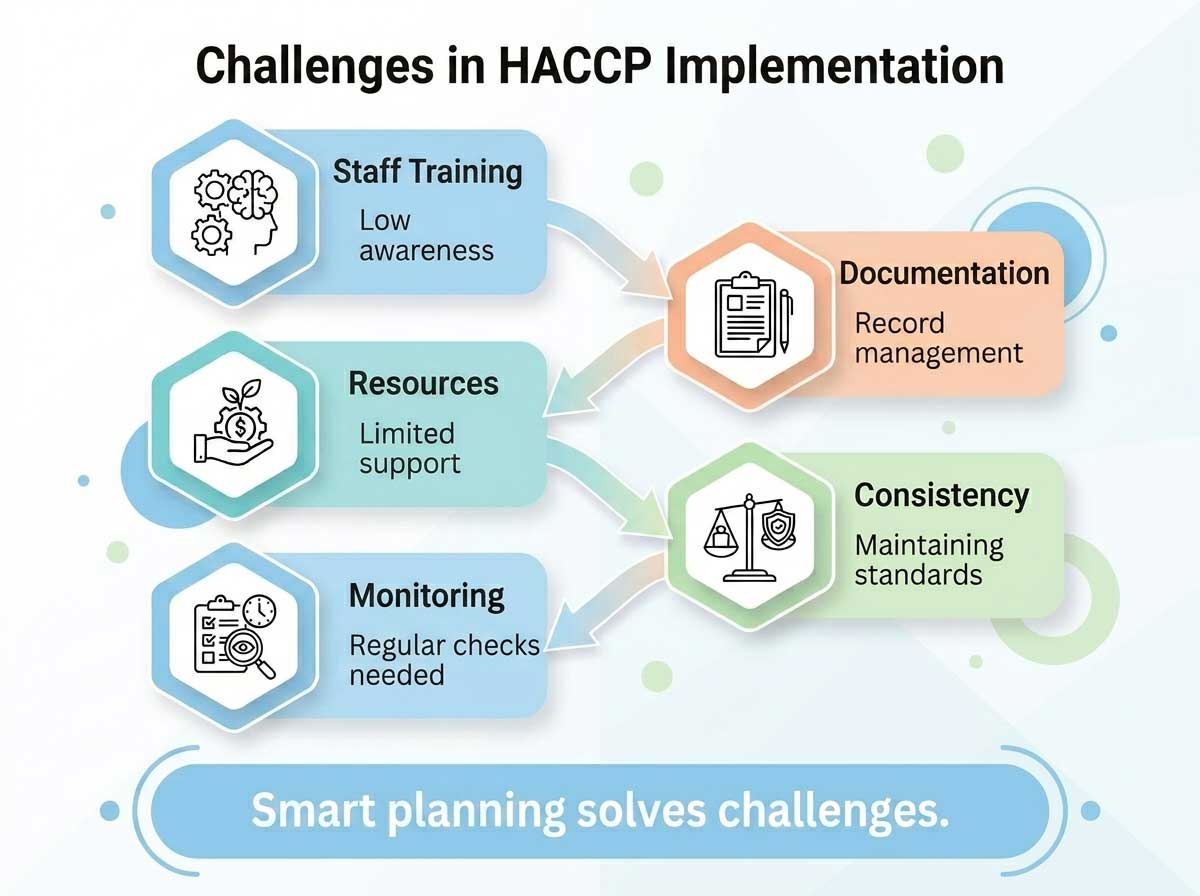
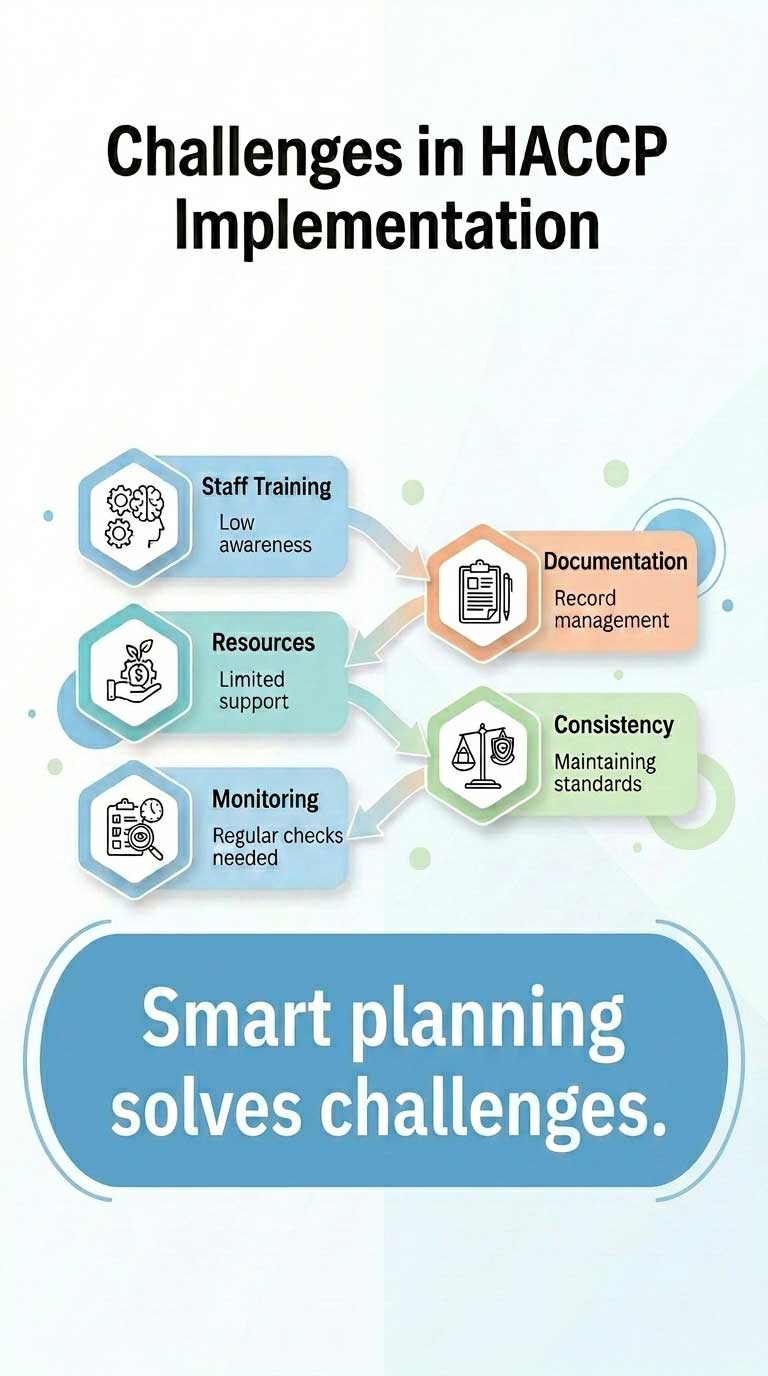
Common Challenges in HACCP Implementation
- Many businesses face challenges during implementation.
- One issue is lack of awareness among staff.
- Another challenge is maintaining proper documentation.
- Limited resources can also slow progress.
- Ensuring consistent monitoring is not always easy.
- With proper guidance, we can overcome these challenges.
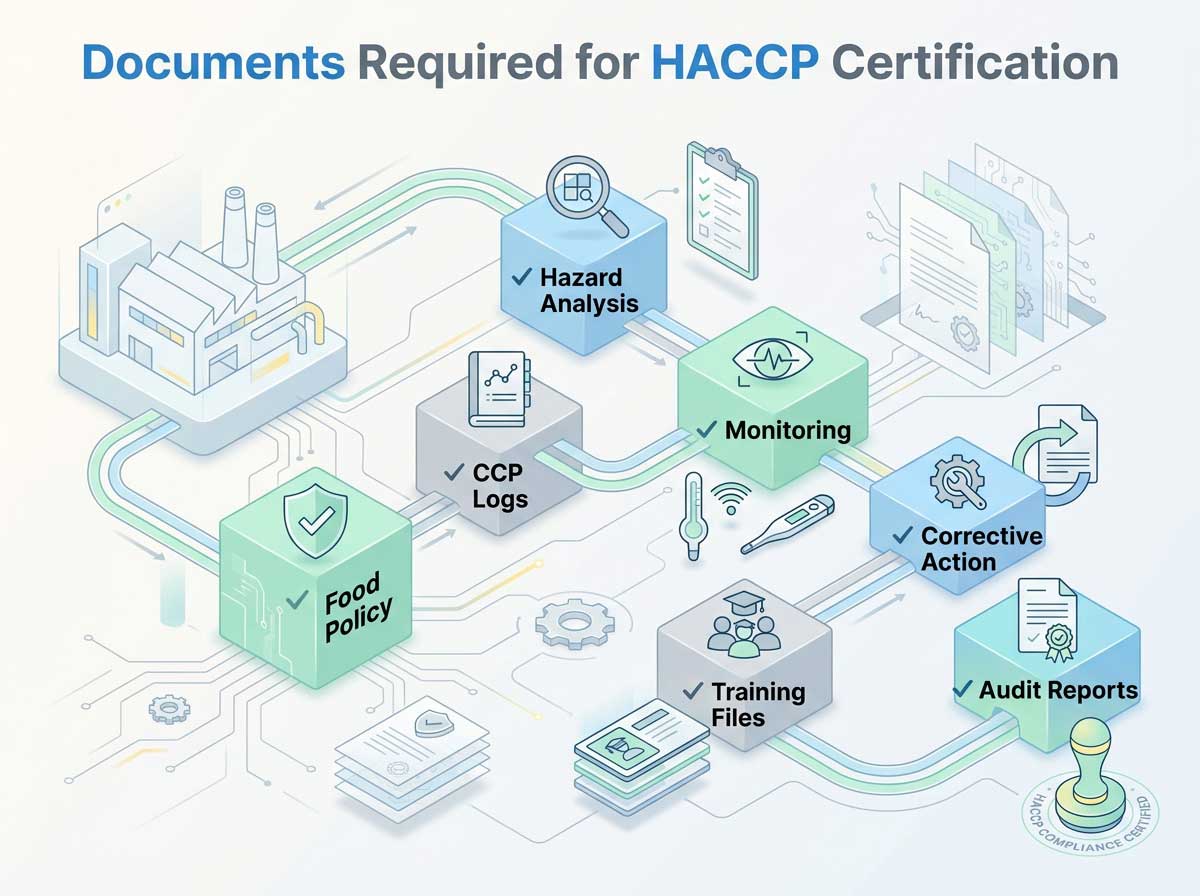
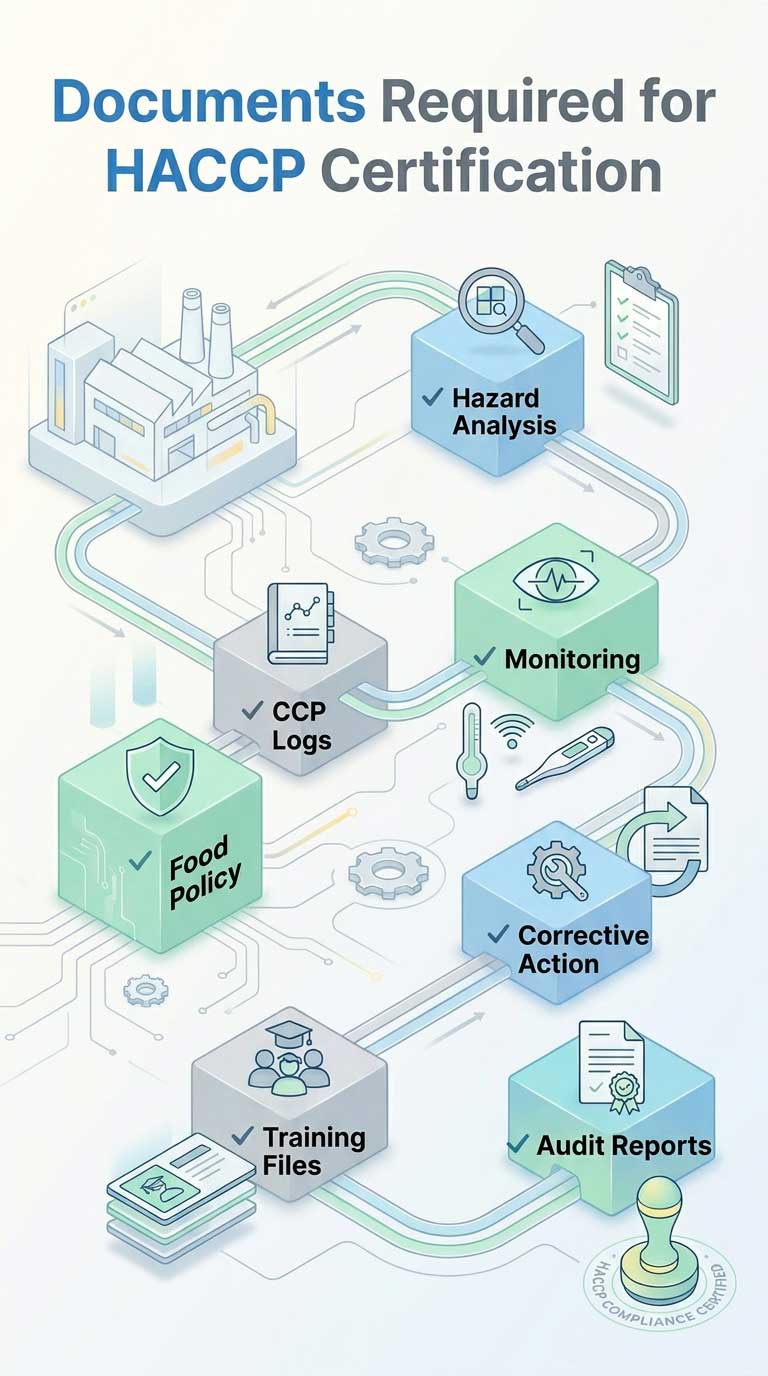
Documents Required for HACCP Certification
- Documentation is an important part of HACCP.
- We need food safety policies and procedures.
- Hazard analysis reports and CCP records are required.
- Records of monitoring and remedial action must be kept.
- Training records and audit reports are also needed.
- These documents help prove compliance.
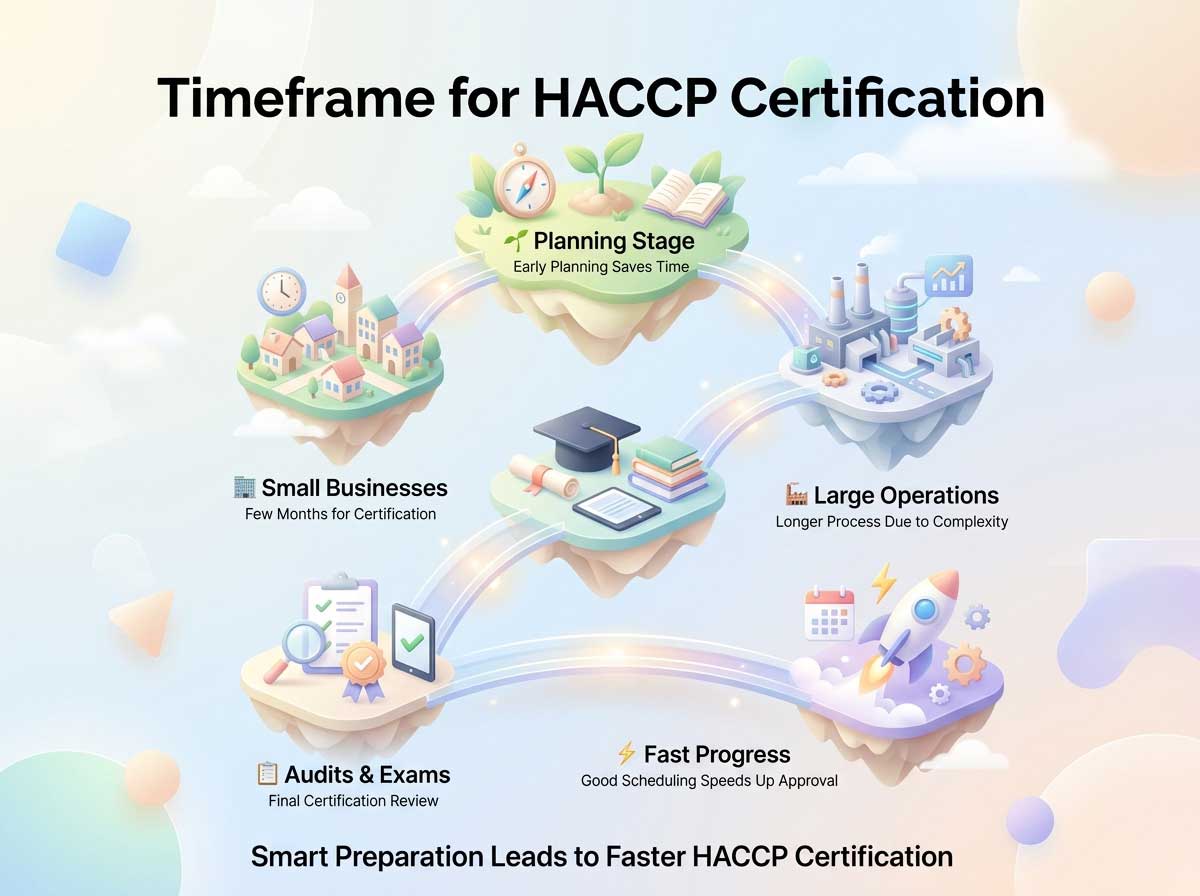
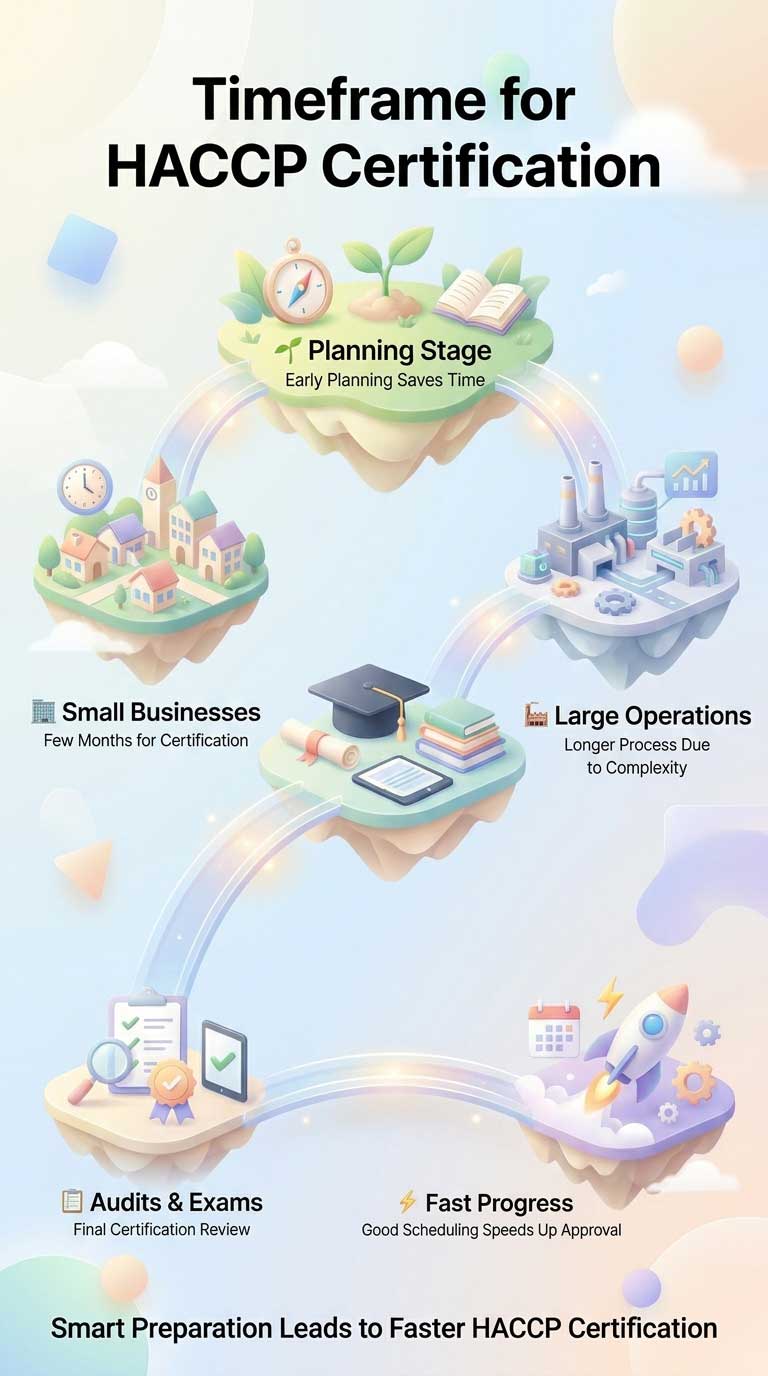
Timeframe for HACCP Certification
- The time required depends on the organization.
- Small businesses may complete it in a few months.
- Larger operations may take longer due to complexity.
- The schedule is affected by training, preparation, and exams.
- Making plans ahead of time speeds up the process.
HACCP Certification Cost in India
- The cost varies based on business size and scope.
- Small units may have lower costs.
- Larger companies may need more investment.
- Costs include consulting, training, and audit fees.
- It is best seen as an investment in food safety and quality.
FAQs
HACCP Certification in India
HACCP focuses on food safety hazard control, while ISO 22000 is a broader food safety management system that includes HACCP principles, documentation, communication, and continual improvement.
A Critical Control Point (CCP) is a step where food safety hazards can be prevented, eliminated, or reduced to acceptable levels through proper monitoring and control measures.
Yes, packaging material manufacturers can implement HACCP to control contamination risks, improve product safety, and meet food industry requirements for safe food-contact packaging materials.
No, laboratory testing for every batch is not always required. Testing frequency depends on product risk, regulations, customer requirements, and the effectiveness of existing process controls.
Yes, cloud kitchens and small restaurants can implement HACCP to improve food safety, maintain hygiene standards, reduce contamination risks, and strengthen customer confidence.
If a Critical Limit is breached, corrective actions must be taken immediately to control risks, identify affected products, and restore the process to safe operating conditions.
A HACCP certificate is usually valid for three years, subject to periodic surveillance audits by the certification body to ensure continued compliance with food safety standards.
HACCP helps exporters meet international food safety requirements, improve buyer confidence, comply with global regulations, and increase opportunities in international food markets.
HACCP certification is not always legally mandatory, but many food businesses implement it to improve food safety, meet customer requirements, and comply with industry or export standards.
HACCP can be implemented by any food business with support from trained internal teams, food safety professionals, or experienced consultants specializing in food safety management systems.