





PCI DSS Benchmark Appraisal Services in Singapore
Overview of PCI DSS Benchmark Appraisal
PCI DSS sets the international benchmark for securing cardholder data. A benchmark appraisal evaluates your organization’s readiness ahead of formal audits. Univate delivers expert consulting, gap analysis, and comprehensive support to guide you toward seamless compliance.
What is PCI DSS?
The Payment Card Industry Data Security Standard PCI DSS defines essential security measures which must be implemented to protect card data. It equips businesses to thwart fraud and prevent breaches effectively.
What is a PCI DSS Benchmark Appraisal?
This pre-audit evaluation maps your existing controls against PCI DSS criteria. It uncovers gaps and delivers a prioritized roadmap to prepare for full certification.
Importance of PCI DSS Compliance in Singapore
In Singapore’s payment landscape, PCI DSS compliance safeguards customer data and curbs fraud. It enhances trust, meets industry mandates, and aligns with local regulations.
Contact Us
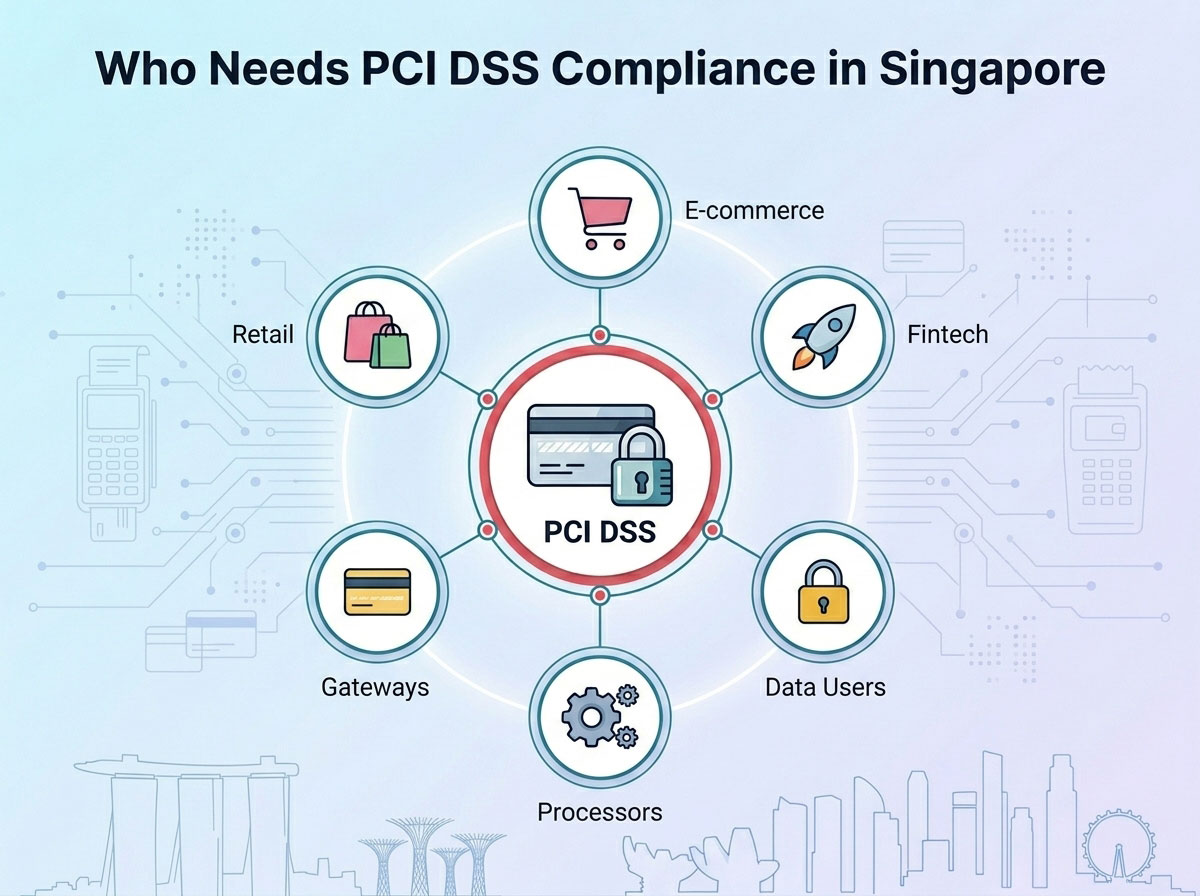
Who Needs PCI DSS Compliance in Singapore?
Any entity which handles cardholder data through storage or processing or transmission must comply with PCI DSS requirements which apply to their operations.
- Retailers accepting card payments
- Payment gateways and aggregators
- Processors
- Fintech innovators
- E-commerce sites
- Organizations aiming for Level 4 or Level 5
Card data handlers must prioritize PCI DSS for robust security.
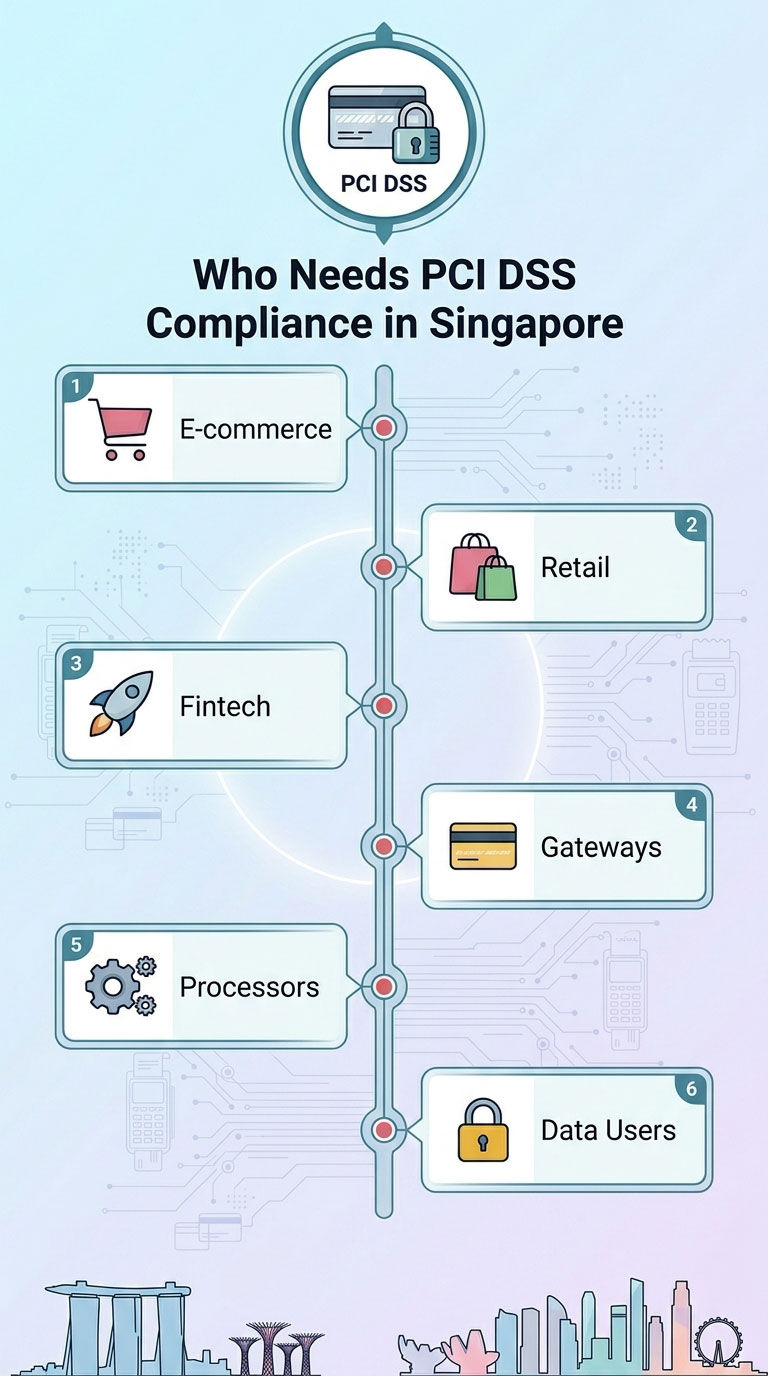
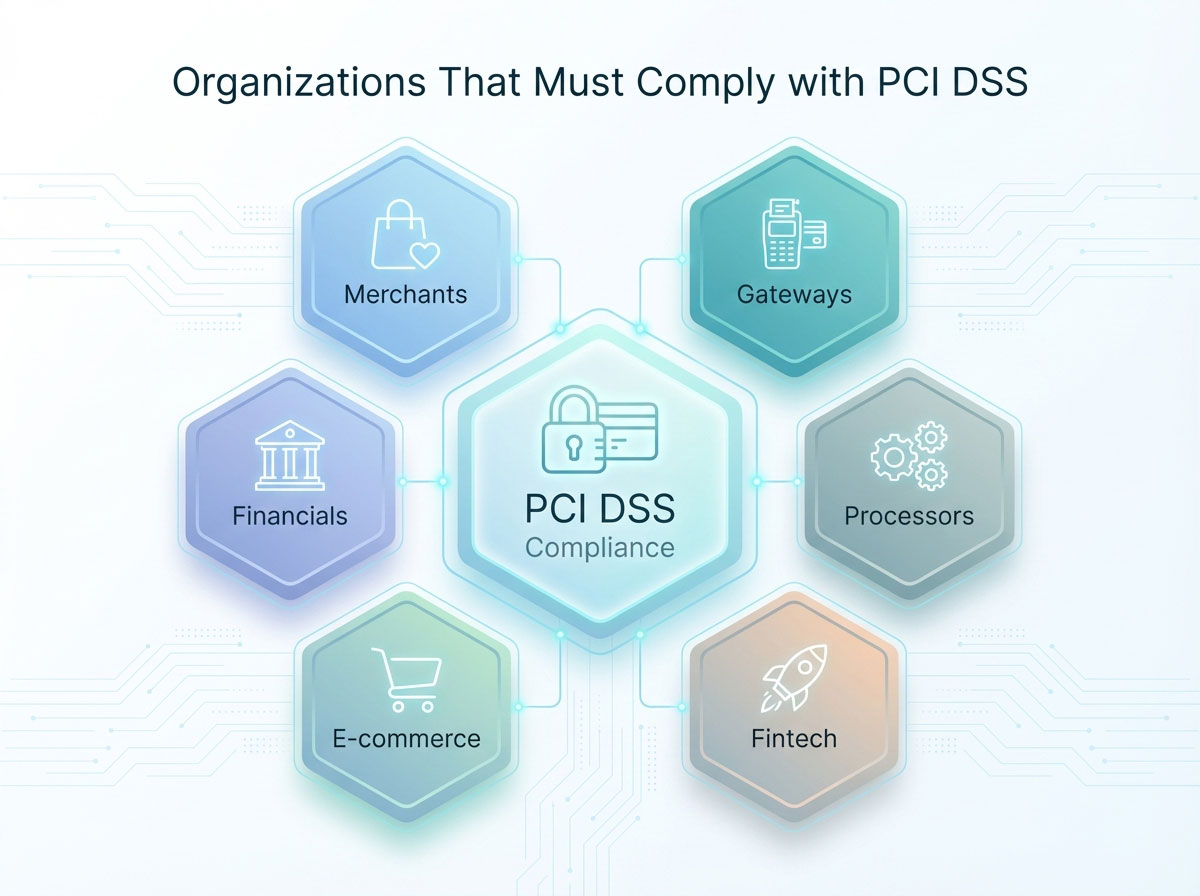
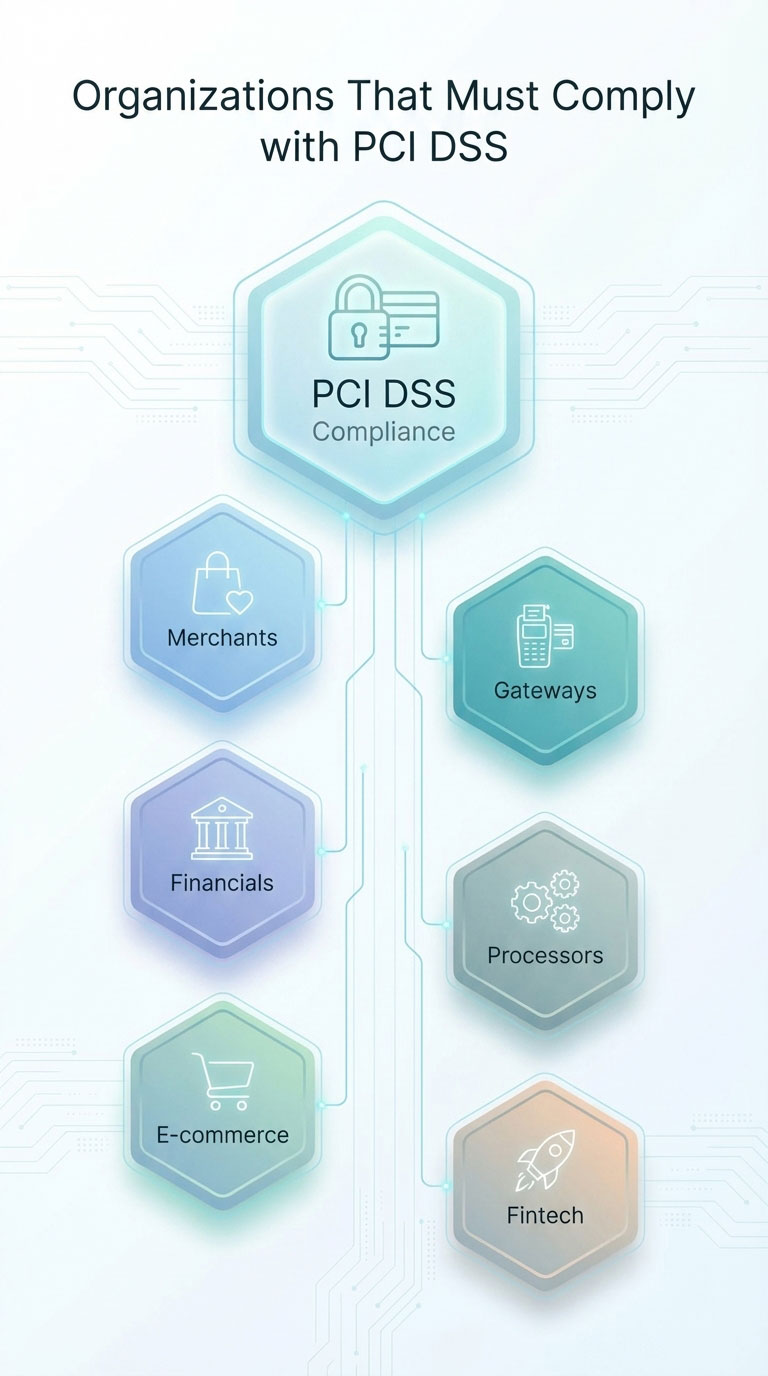
Organizations That Must Comply with PCI DSS
Commonly mandated entities include:
- Merchants processing card payments
- Payment gateways
- Processors
- Fintech companies
- E-commerce platforms
- Financial institutions
These must rigorously protect cardholder data per PCI DSS guidelines.
PCI DSS Version 4.0 Overview
The newest iteration, PCI DSS 4.0, bolsters defenses with adaptable controls against evolving threats. It emphasizes proactive security in dynamic environments.
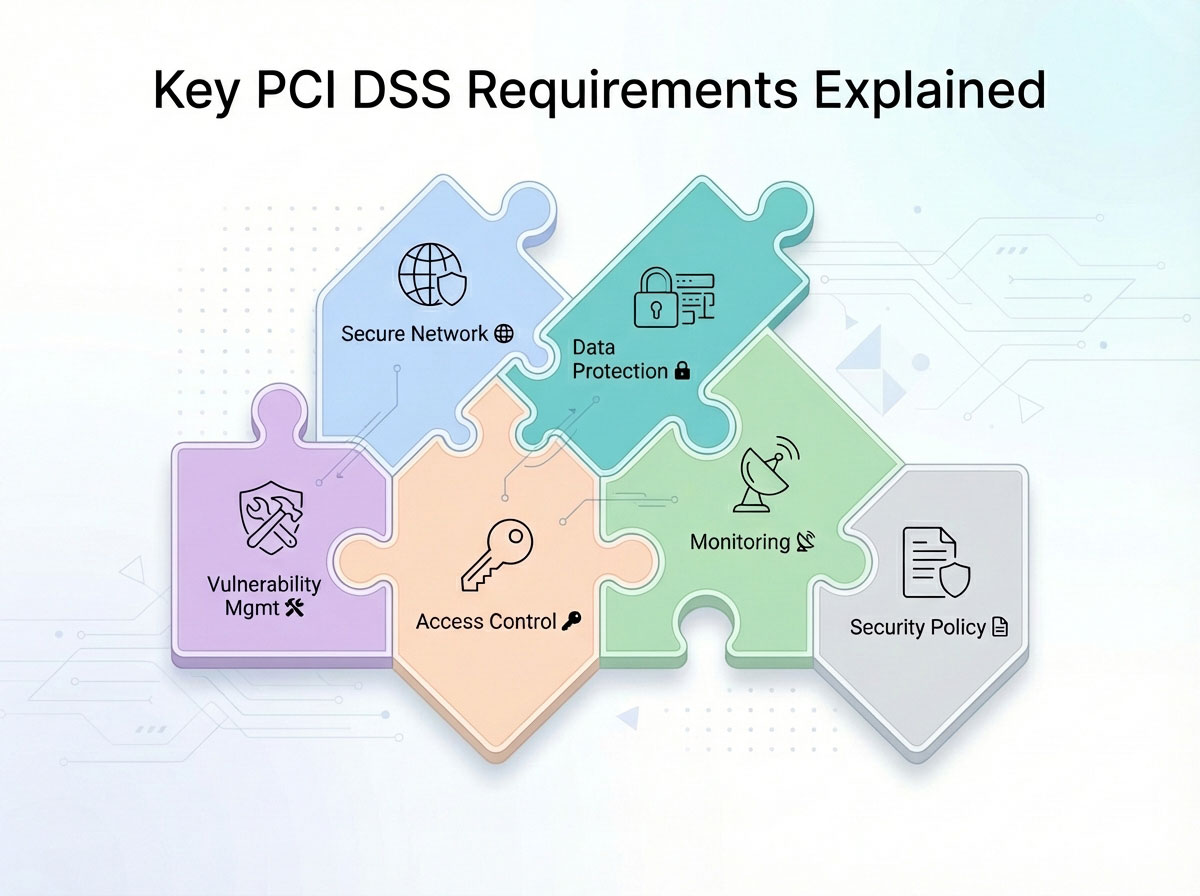
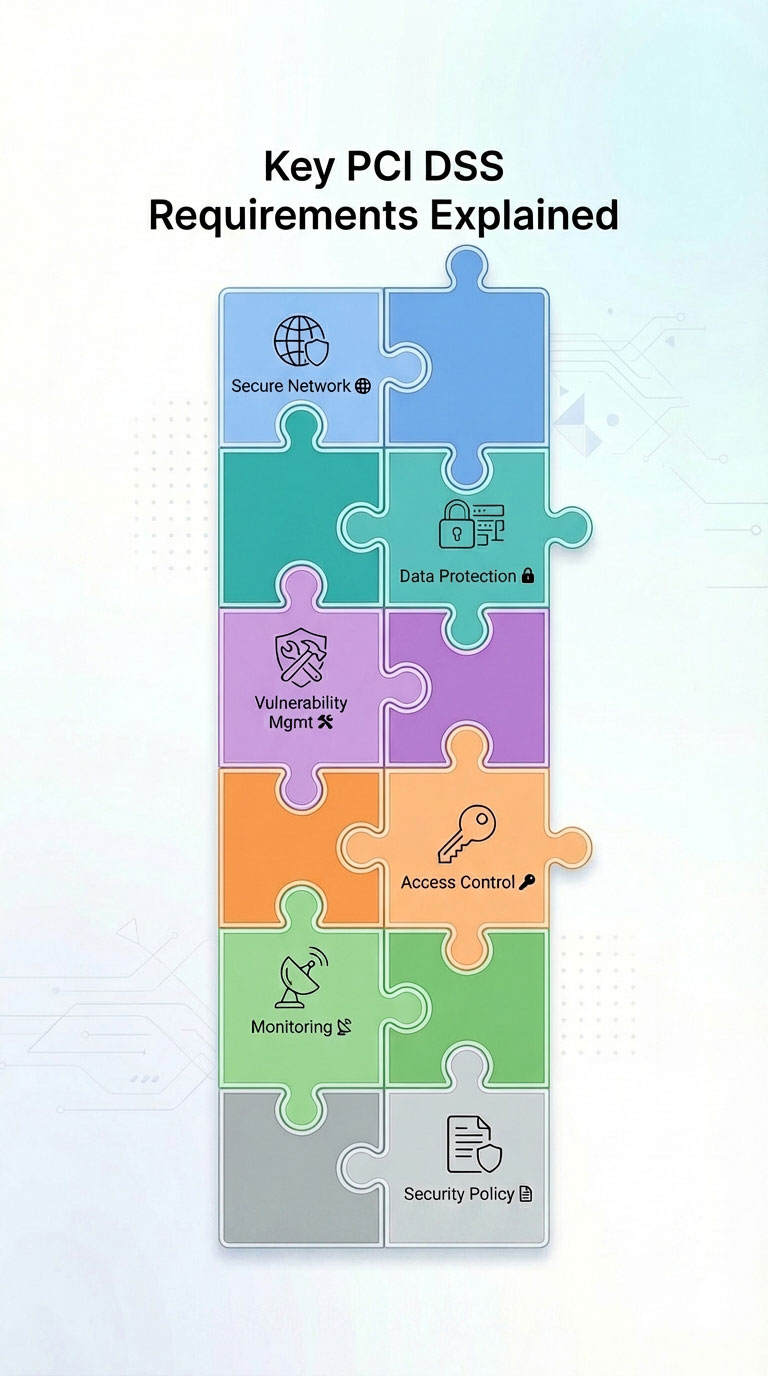
Key PCI DSS Requirements Explained
The standard’s foundational pillars secure card data through:
- Build and Maintain a Secure Network
- Protect Cardholder Data
- Maintain a Vulnerability Management Program
- Implement Strong Access Control Measures
- Monitor and Test Networks
- Maintain an Information Security Policy
Adhering to these fortifies overall defenses.
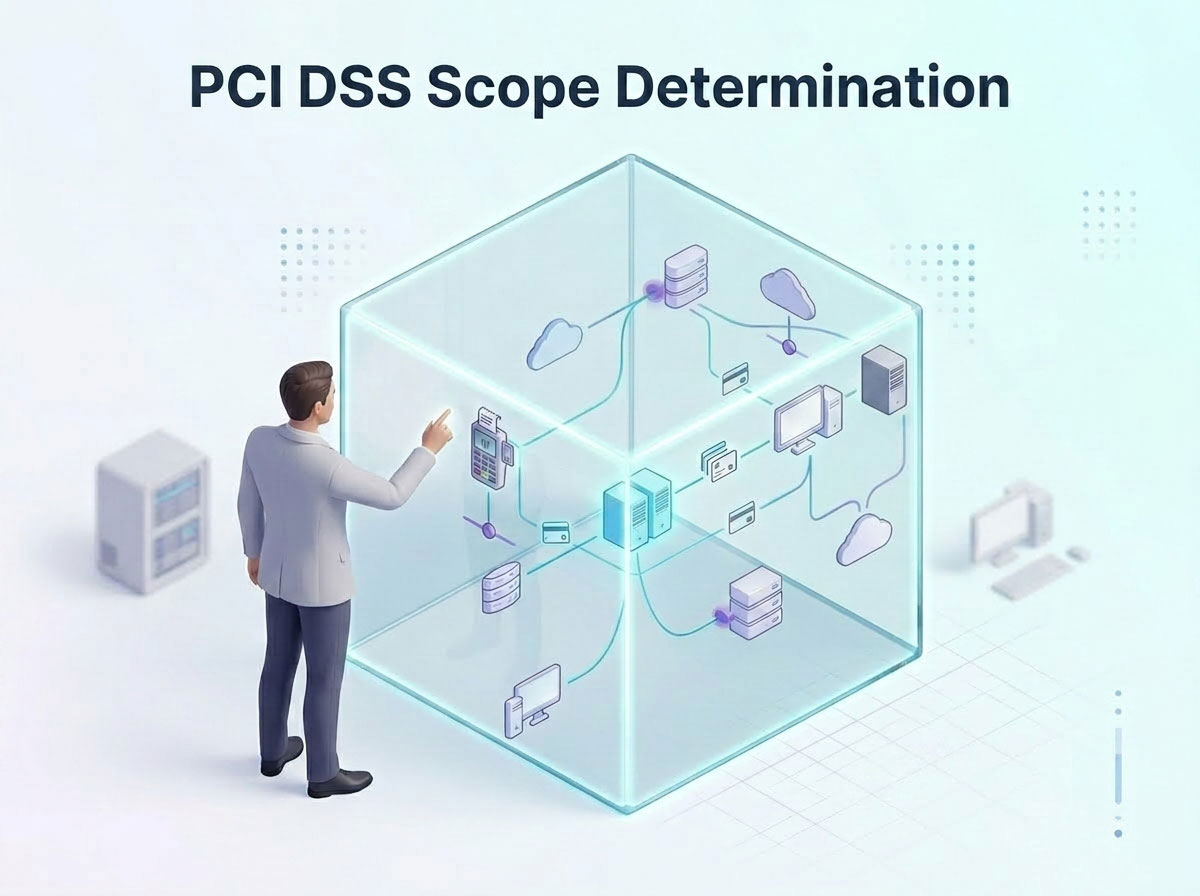
PCI DSS Scope Determination
Scoping pinpoints systems and processes touching card data. It streamlines security efforts, cuts costs, and avoids unnecessary complexity.
Documents Required for PCI DSS Benchmark Appraisal
Prepare these essentials to showcase readiness:
Security policies
Access logs
Network diagrams
Risk assessments
Data flow maps
Incident response strategies
Solid documentation streamlines the appraisal process.
PCI DSS Gap Assessment and Benchmark Process
Gap analysis contrasts your operations with PCI DSS benchmarks, spotlighting deficiencies and risks. The benchmark phase then charts a clear path to compliance.
PCI DSS Implementation Roadmap
A clear step-by-step process for PCI DSS implementation includes:
- Define scope and identify systems handling cardholder data
- Conduct a detailed gap assessment against PCI DSS requirements
- Implement required security controls and configurations
- Update policies, procedures, and documentation
- Prepare for final external audit and certification
- Perform internal audits and fix identified gaps
- Define scope and identify systems handling cardholder data
- Conduct a detailed gap assessment against PCI DSS requirements
- Implement required security controls and configurations
- Update policies, procedures, and documentation
- Prepare for final external audit and certification
- Perform internal audits and fix identified gaps
PCI DSS Audit Preparation in Singapore
Preparation entails control validation and document reviews. Meeting all criteria boosts audit success rates significantly.
Timeline for PCI DSS Compliance
Duration hinges on scale and current state, ranging from weeks to months. Proactive planning shortens the journey.
PCI DSS Certification Cost in Singapore
Fees scale with scope, size, and maturity, covering consulting, rollout, and audits. The upfront cost yields lasting security gains.
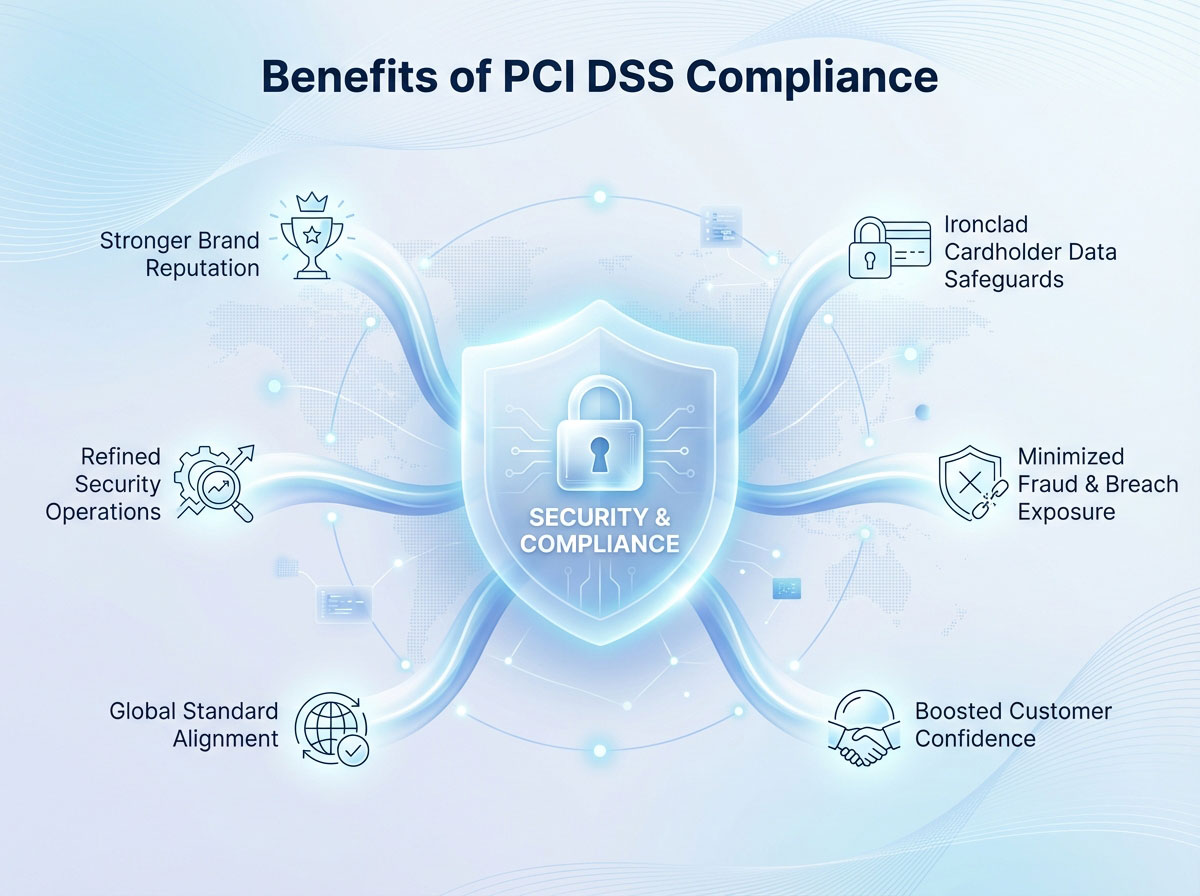
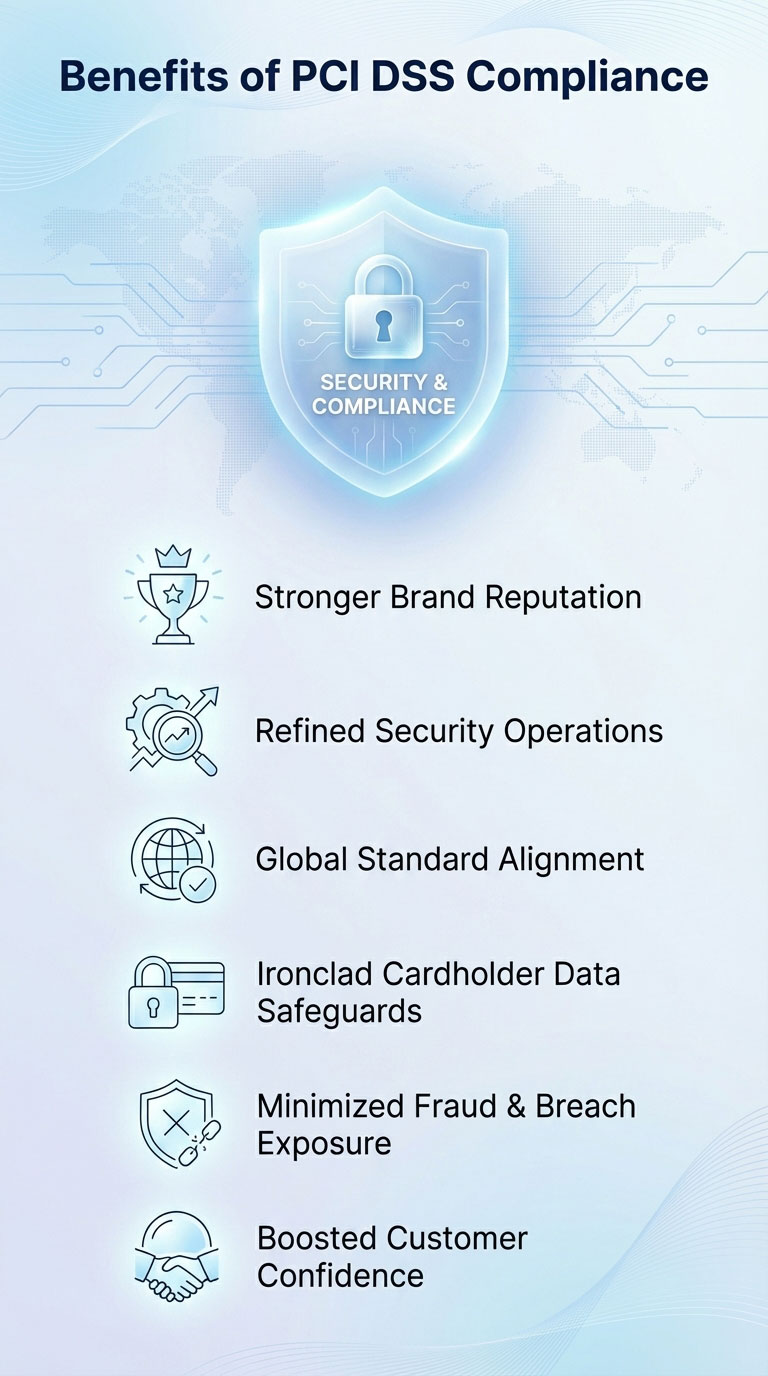
Benefits of PCI DSS Compliance
Key advantages encompass:
- Ironclad cardholder data safeguards
- Minimized fraud and breach exposure
- Boosted customer confidence
- Global standard alignment
- Refined security operations
- Stronger brand reputation
These propel growth and reliability.
Common PCI DSS Implementation Challenges
Hurdles often involve:
- Scope definition struggles
- Technical complexities
- Resource shortages
- Documentation gaps
- Multi-system coordination
- Sustained compliance efforts
- Scope definition struggles
- Technical complexities
- Resource shortages
- Documentation gaps
- Multi-system coordination
- Sustained compliance efforts
Expert partners like Univate ease these, excelling in scoping, docs, and prep.
Why Choose Univate.in for PCI DSS Benchmark Appraisal in Singapore
Univate excels with:
- Seasoned PCI DSS specialists
- Full-cycle compliance assistance
- Tailored business solutions
- Proven security standard mastery
- Streamlined execution
- Demonstrated project wins
Count on Univate for hassle-free PCI DSS success.